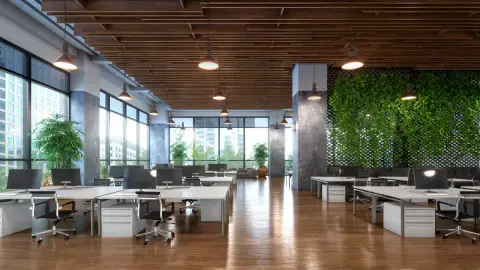

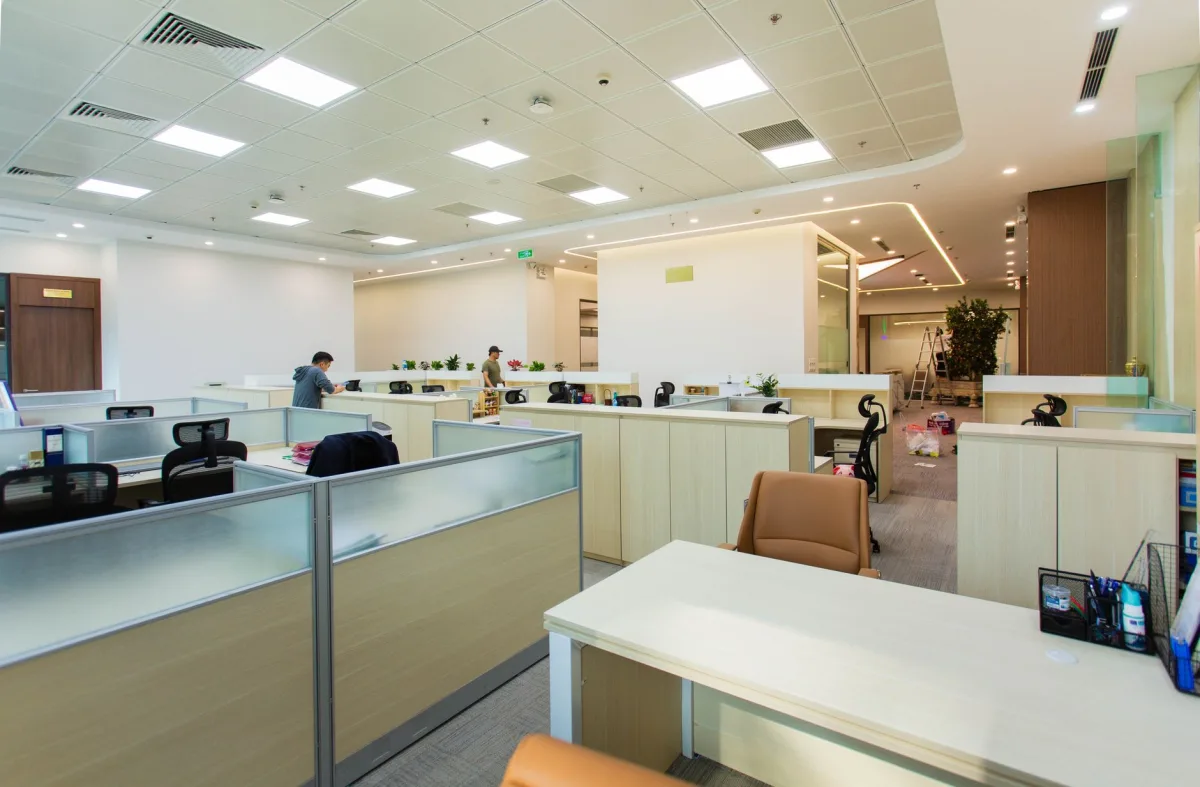
The single-sensor experience is built for one household: one Terrestream in the living room, one dashboard in the household. Schools, offices, and industrial facilities have a different problem. They need to track conditions across many rooms, on many floors, in many buildings, with different owners and different occupancy patterns. The hardware is the same Terrestream sensor; what changes is the management plane on top of it.
The central dashboard. In a Facilities deployment, each sensor belongs to an organization account rather than a household account, and the team works in a separate Facilities workspace instead of the household dashboard. Rooms are organized by campus and building: an attention queue lists the rooms that need a check, a campus overview counts the rooms in each building that need action, and each room keeps a history of temperature, humidity, and CO2 from every sensor in it. Team roles, such as administrators, facilities managers, and responders, decide who sees which buildings, and each incident keeps a record of who acknowledged it, who was assigned, and what the site visit found.
Current Facilities workflow. The current Facilities release provides a prioritized workspace for room review, history, and response tracking. Alerts are sent to a verified primary contact by email and text message. If no one acknowledges an urgent alert, a backup contact gets it after the delay you set. Alerts go out only during the coverage hours your team chooses, around the clock or on a weekly schedule; an alert raised outside those hours waits until coverage starts. Administrators can see delivery status, and each incident records who acknowledged it. Optional local HTTP and MQTT interfaces can support workflows on your own network; discuss hosted and building-management integrations while scoping a deployment.
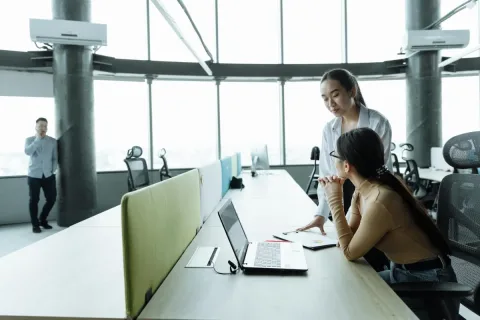
Where the deployment already maps to known playbooks. Schools track CO2 per classroom and surface ventilation-rate issues to facilities before they become an academic-performance problem (see classroom CO2 and learning for the underlying research). Offices run the same playbook for conference rooms, where eight people in a closed room can push CO2 past 1,500 ppm inside thirty minutes (see meeting rooms and CO2). Industrial settings use PM trend monitoring plus VOC and NOx Index context to flag slow deviations that may warrant ventilation maintenance or a professional OSHA/ACGIH exposure workflow.
How to get a B2B deployment. The sensor hardware is the same unit as the consumer product; the organization offering adds a multi-sensor workspace, role-based access, room history, response tracking, and CSV exports of incidents and their activity log. Local HTTP and MQTT can support customer-owned network integrations; hosted API, webhook, ticketing, and building-management requirements are scoped with the team. Pricing is per sensor. Build an estimate to see hardware and annual monitoring costs for the rooms you want to cover. For larger or custom deployments, reach out through the sales form with the rough number of rooms and buildings and your timeline.
References
- ASHRAE 62.1/62.2 - Ventilation for acceptable IAQ www.ashrae.org
- EPA - IAQ Tools for Schools www.epa.gov
- OSHA - Indoor Air Quality www.osha.gov
- EPA/NIOSH - Building Air Quality guide for owners and facility managers www.epa.gov