

Best for
Bedrooms, kitchens, wildfire-smoke days, dust questions, and households that want explanations instead of isolated numbers.

Breathe Better. Live Smarter.®
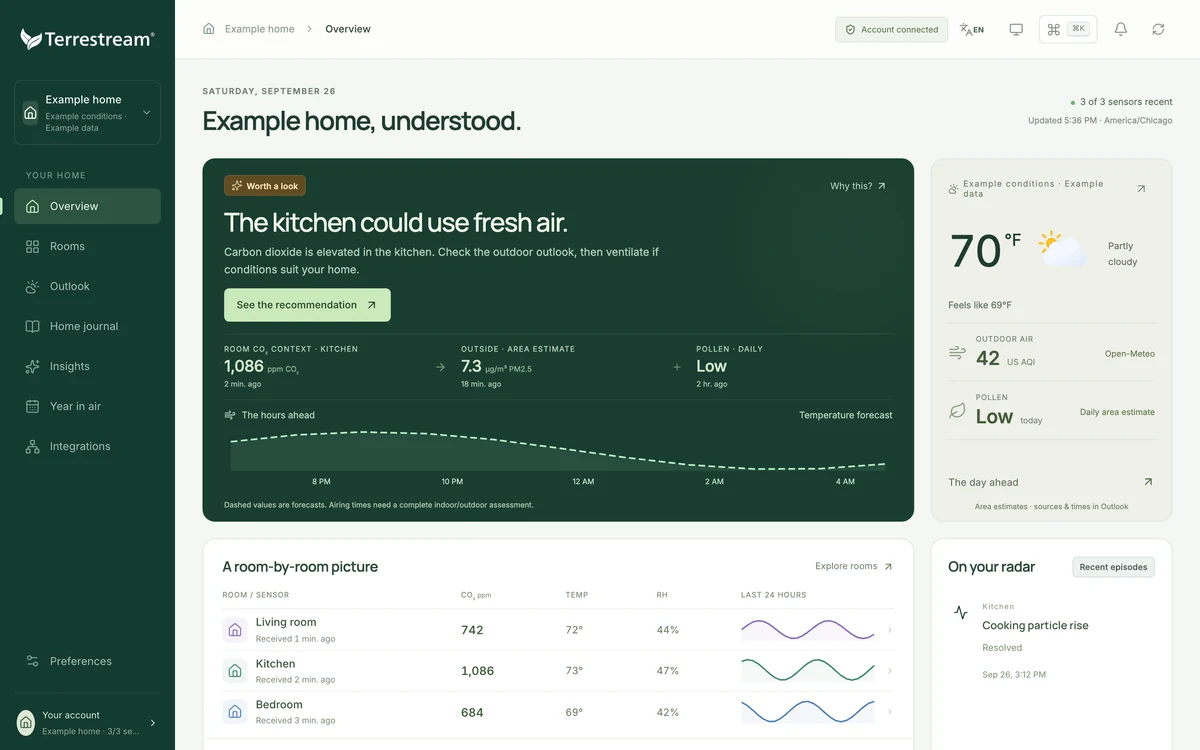
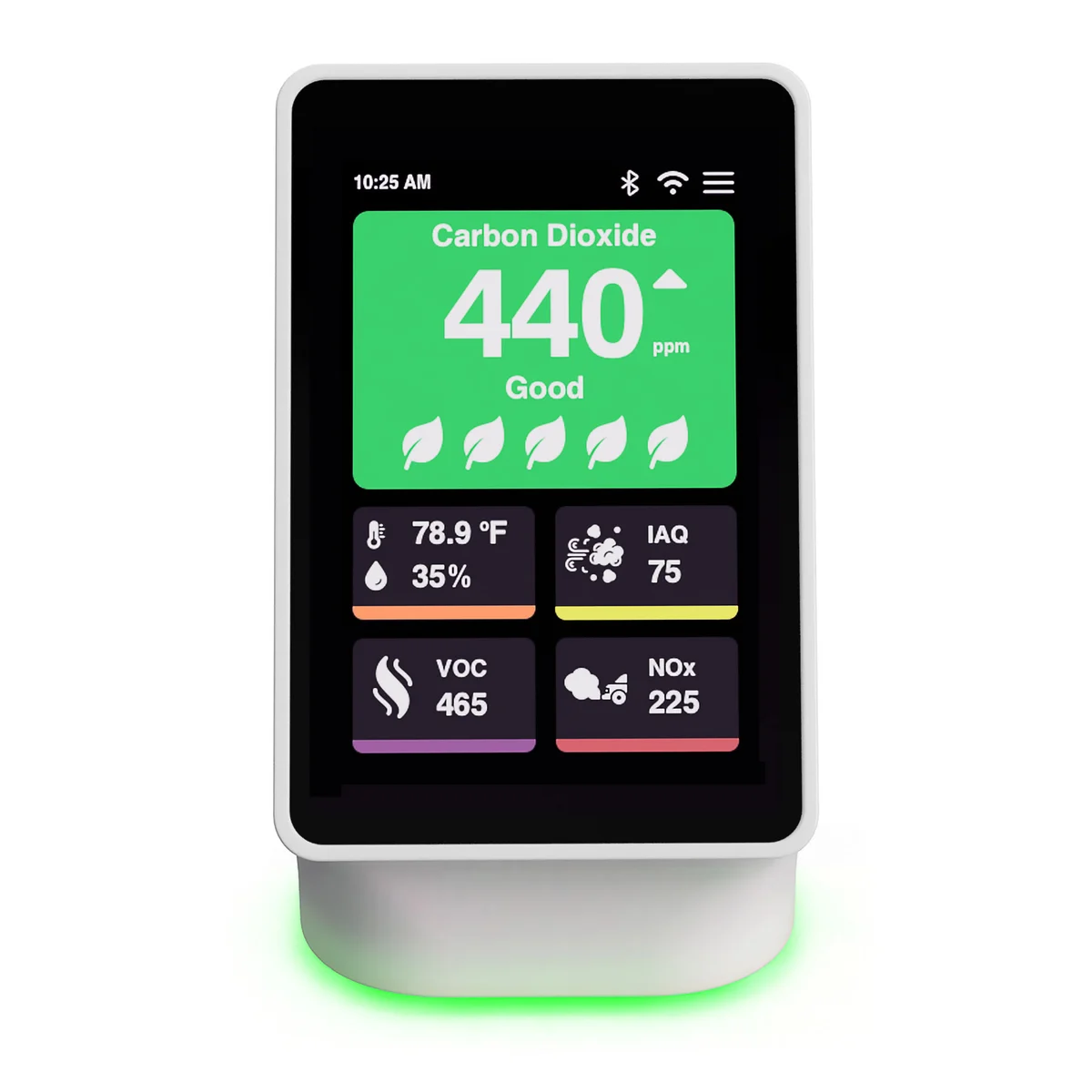
One device. Six sensors. Twelve signals. Indoor readings connected to outdoor context and plain-English recommendations. Terrestream fuses your home's air with live weather, pollen, and smoke data, so every suggestion fits your real conditions.
$249 USD Fast shipping via FedEx
Order yours See the connected experience
Six sensors. Twelve signals.
Terrestream measures CO2, PM1.0, PM2.5, PM4.0, PM10, VOC Index, NOx Index, temperature, humidity, pressure, and light, calculates an IAQ index from the particle readings, then connects those indoor readings to outdoor context and plain-English recommendations.
Terrestream is an IAQ monitor, not a smoke alarm, carbon-monoxide alarm, combustible-gas alarm, radon monitor, medical device, or certification by itself.
Bedrooms, kitchens, wildfire-smoke days, dust questions, and households that want explanations instead of isolated numbers.
Compatible with Alexa. Home Assistant and MQTT for local workflows. Alexa setup →
The film could not start. Use the direct film link or read the transcript. Open the product film
Scenarios
Illustrative scenarios with example readings, not measured case studies. Room size, ventilation, activity, and sensor placement change the readings you may see. Explore how the display responds as conditions change.

Wok over the gas burner. Peanuts tossing, chilies smoking in oil. Window closed (January). Within five minutes the device sees what your nose half-registers: VOC index climbing through Yellow into Orange, PM2.5 trailing. By minute twenty, chilies blooming, the underglow touches a brief Maroon. Screen reads VOC 489.

Door shut. One sleeper, lights off. At lights-out the device reads CO2 450 ppm (Green). By midnight, 880. By 3am, 1,250, with the underglow crossed into Orange. By morning it's reached 1,580 and the ring is Red.

Home office. Door closed, sun tracking across the desk. At 9am the device reads CO2 450, temp 21°C (Green). By noon, 900 and 23° (Yellow). By 3pm, 1,250 and 25°, and the underglow has shifted to Orange. By 5pm: CO2 1,460, temp 25.8°. IAQ tracks particles, so it stays Green at 33.

A bright day in May, windows cracked. At 7am the device reads PM10 35 µg/m³ (Green). By 11am, 140 (Yellow). By 2pm, 240 (Orange). By 5pm the underglow has shifted to Purple: PM10 380 µg/m³, PM2.5 55 µg/m³. Pollen drifting in on the breeze.
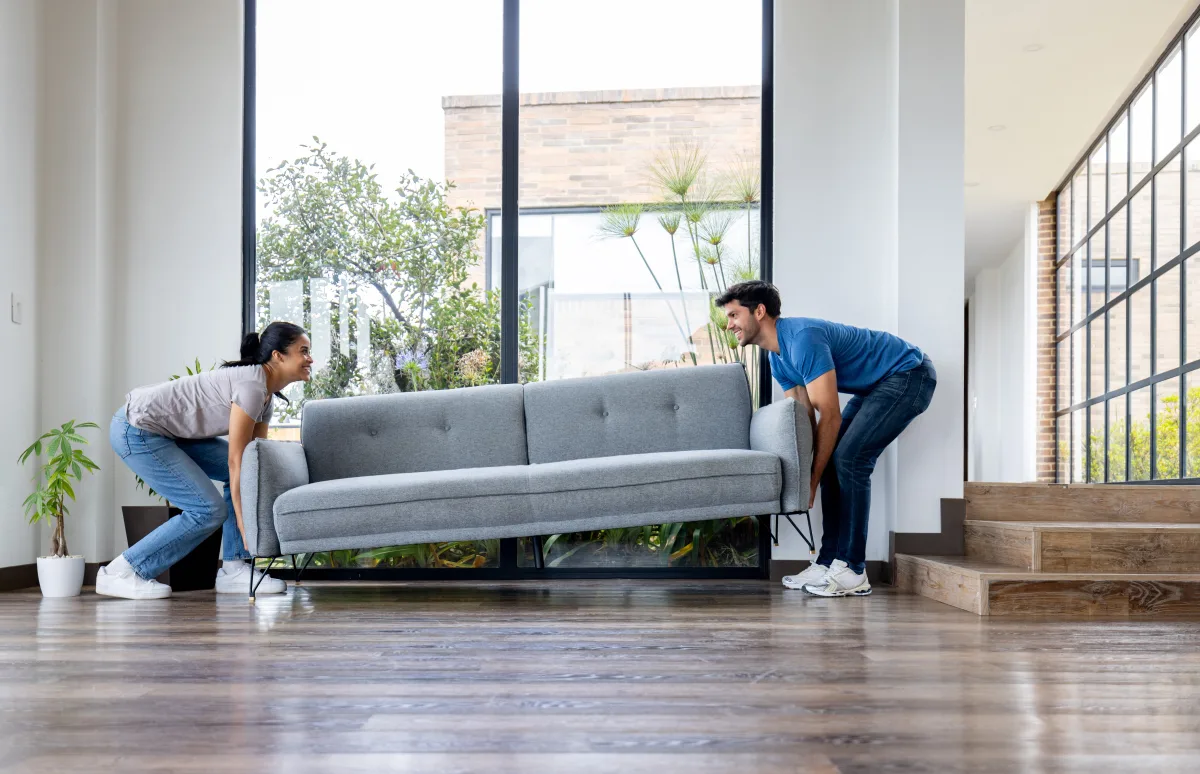
Couch delivery, late afternoon. Before it's in the door the device reads VOC index 28 (Green). Within an hour: 280 (Orange). By morning, the foam and fabric still off-gassing, it's reached 475 (Purple). The ring sits in the deep end for two days while the new-couch smell fades.

Patio doors open to the garden. The device reads CO2 430 ppm, PM2.5 5 µg/m³, VOC index 30, humidity 47%, temp 22°. The ring sits Green and the screen reads its calm baseline.
The app is quiet. No notes, no flags. Most days, your home reads like this. The device speaks up when something shifts. The rest of the time, it just keeps watching.
Signals
Try a scenario:

The gas you exhale. Climbs in closed rooms; outdoors it sits near 420 ppm.

How warm the room is. Comfort sits around 68–72 °F.

Calculated from particles, not measured: the worse of the PM2.5 and PM10 scores on the U.S. EPA AQI scale (0–500).

Invisible smelly stuff: cooking, cleaning, paint, candles, new furniture.
Combustion's signature. Gas stoves, candles, and traffic creeping in from outside.

The smallest particles the sensor reports, a subset of PM2.5. Shown for completeness; there is no air-quality standard for this fraction yet.

Smoke-fine particles. Small enough to slip past your nose deep into the lungs.

The respirable coarse fraction, between PM2.5 and PM10. Reported for completeness; no dedicated standard exists for it.

Larger particles: pollen, dust, building debris. Mostly trapped in the airways.

The weight of the atmosphere above you. Drops often signal a storm coming.

How much moisture is in the air. Comfort and low mold risk sit between 30 and 50 percent.

How bright the room is. Used for the screen night-dimming and circadian context, not air quality.
Same six bands across every signal.
Band labels reflect Terrestream's interpretation of US EPA AQI category thresholds applied to indoor measurements. They are not an EPA-regulated indoor air-quality rating. Terrestream is a monitoring tool, not a medical device, and does not diagnose, treat, or prevent any health condition. See Terms §6.5.
The System
The device, web dashboard and apps help you follow your air and decide what to do next.
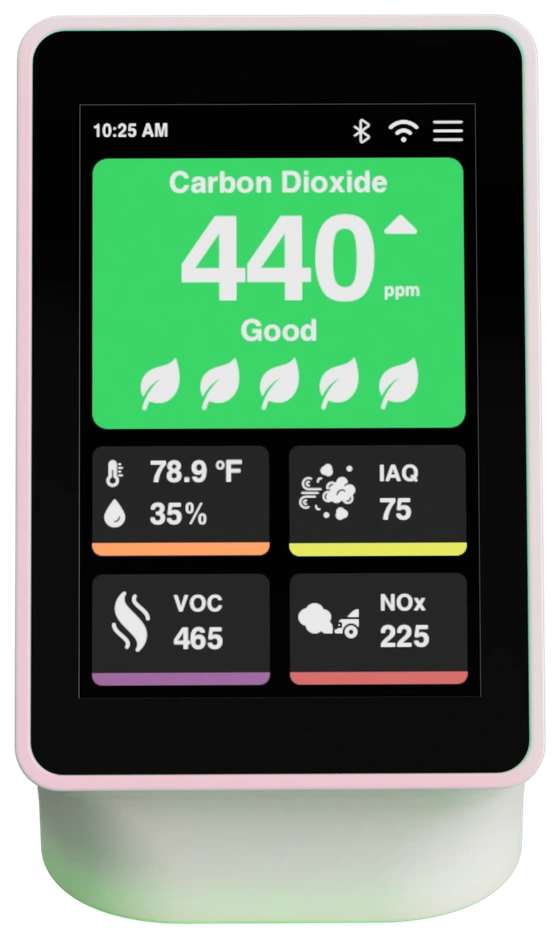
Always on. Glance-and-go. Twelve signals, one color language. The screen is your at-a-glance answer; the underglow is the across-the-room answer.
The long view. Hours, days, weeks of trend data, so you can spot what you wouldn't notice on the device itself: the rooms that drift, the times of day that keep crossing a warning level, the events that cluster. Your Year in Air record lives here too.
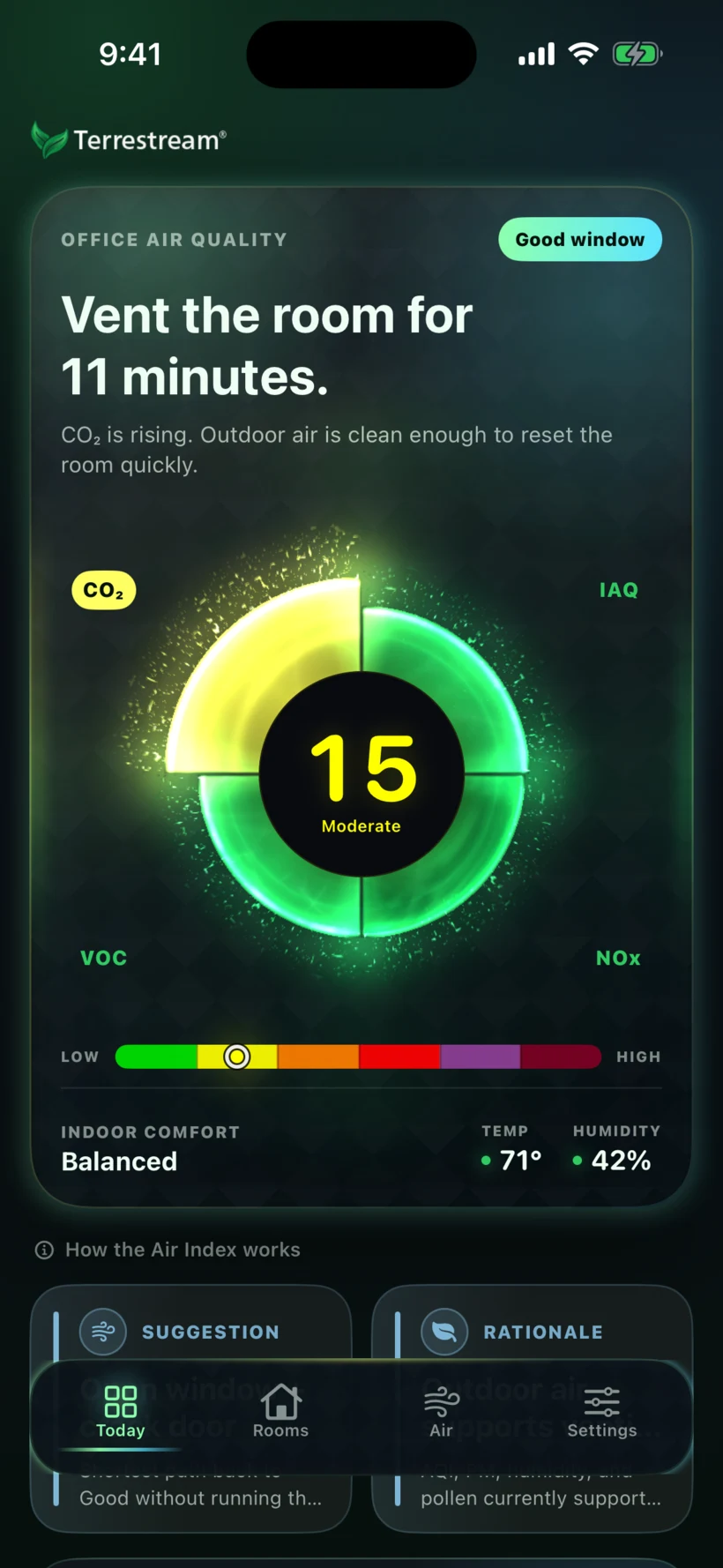
What the device noticed while you were out. Quiet notifications with a practical next step. Set up the device and see your home from anywhere.
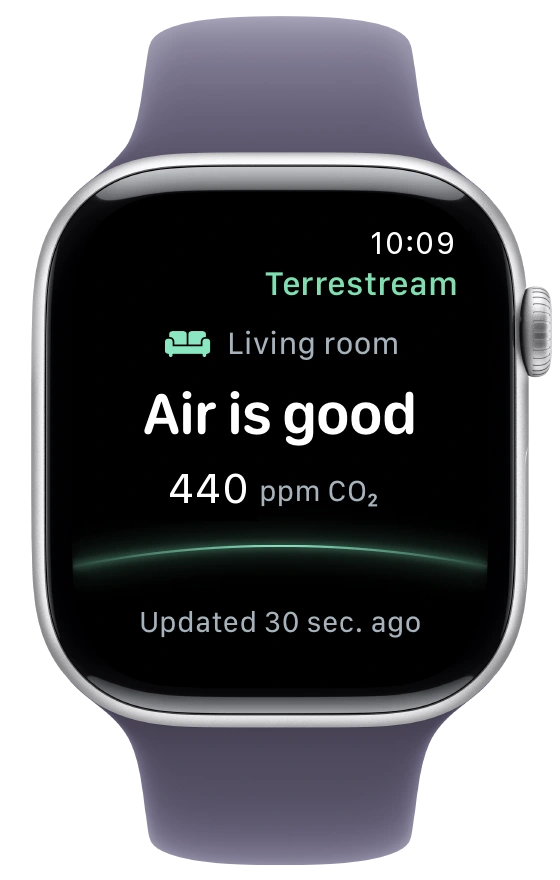
Room status, readings and ventilation guidance, a glance away. A companion to the iPhone app.
Optional Apple Watch companion requires a compatible Apple Watch and paired iPhone, sold separately. Explore the Watch app
Use Cases
A single home or a manufacturing floor — the same twelve signals, the same sensor inside, the same calibration data published by the manufacturer.
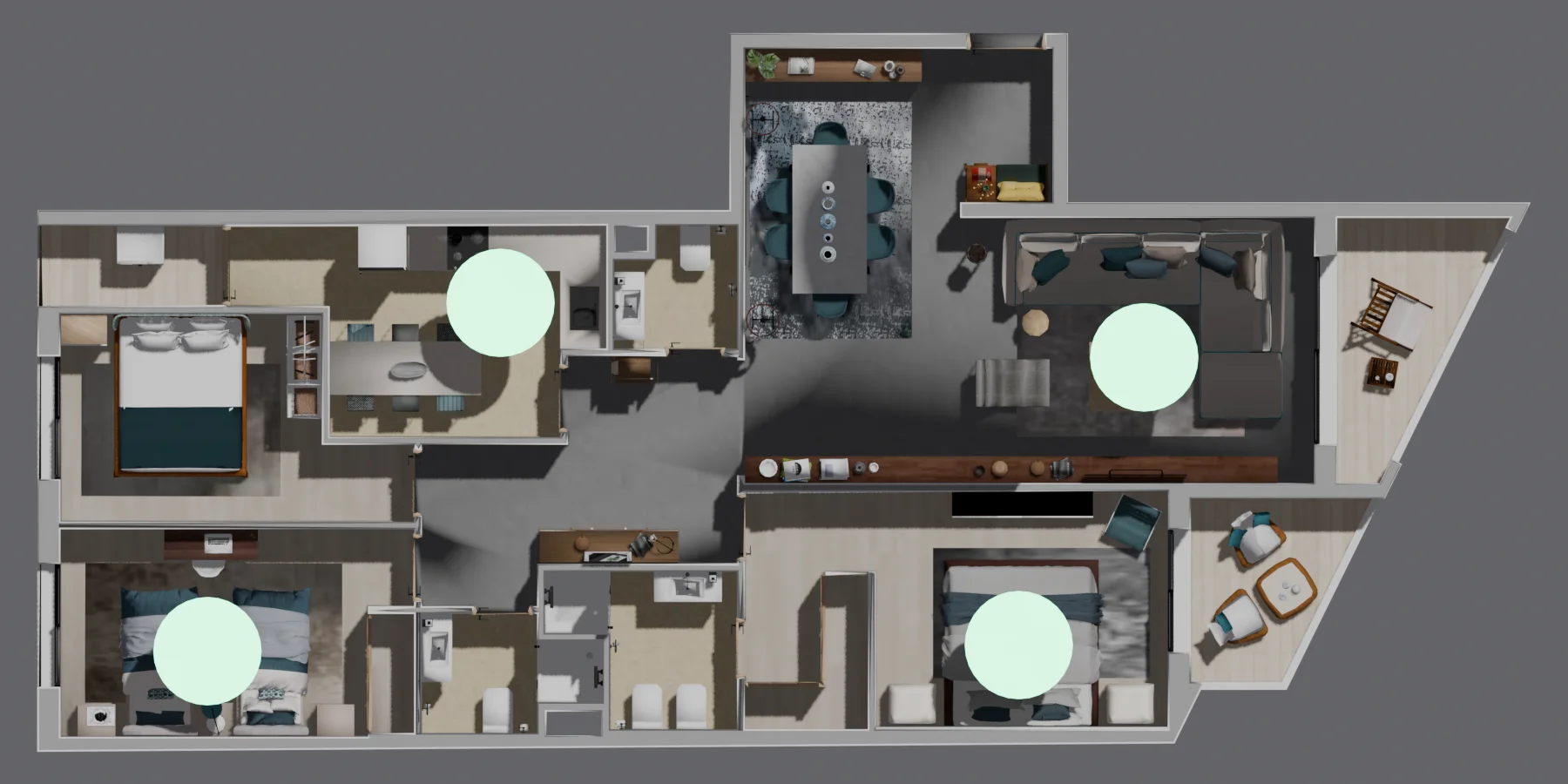
Drag to rotate · click a dot to highlight that room's tile below.
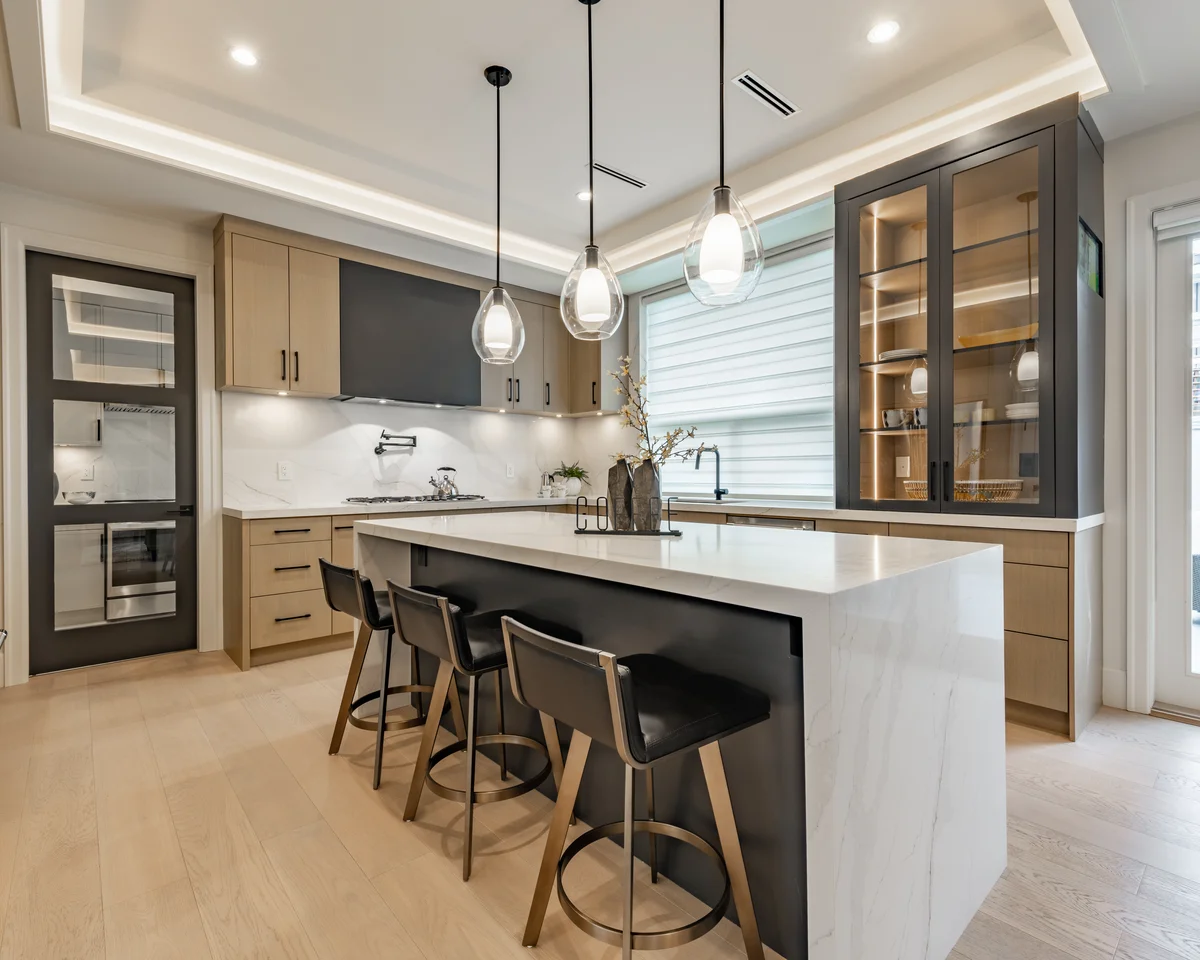
See cooking particles and gas-index changes as they happen, so you know when to run the hood or air out the room.
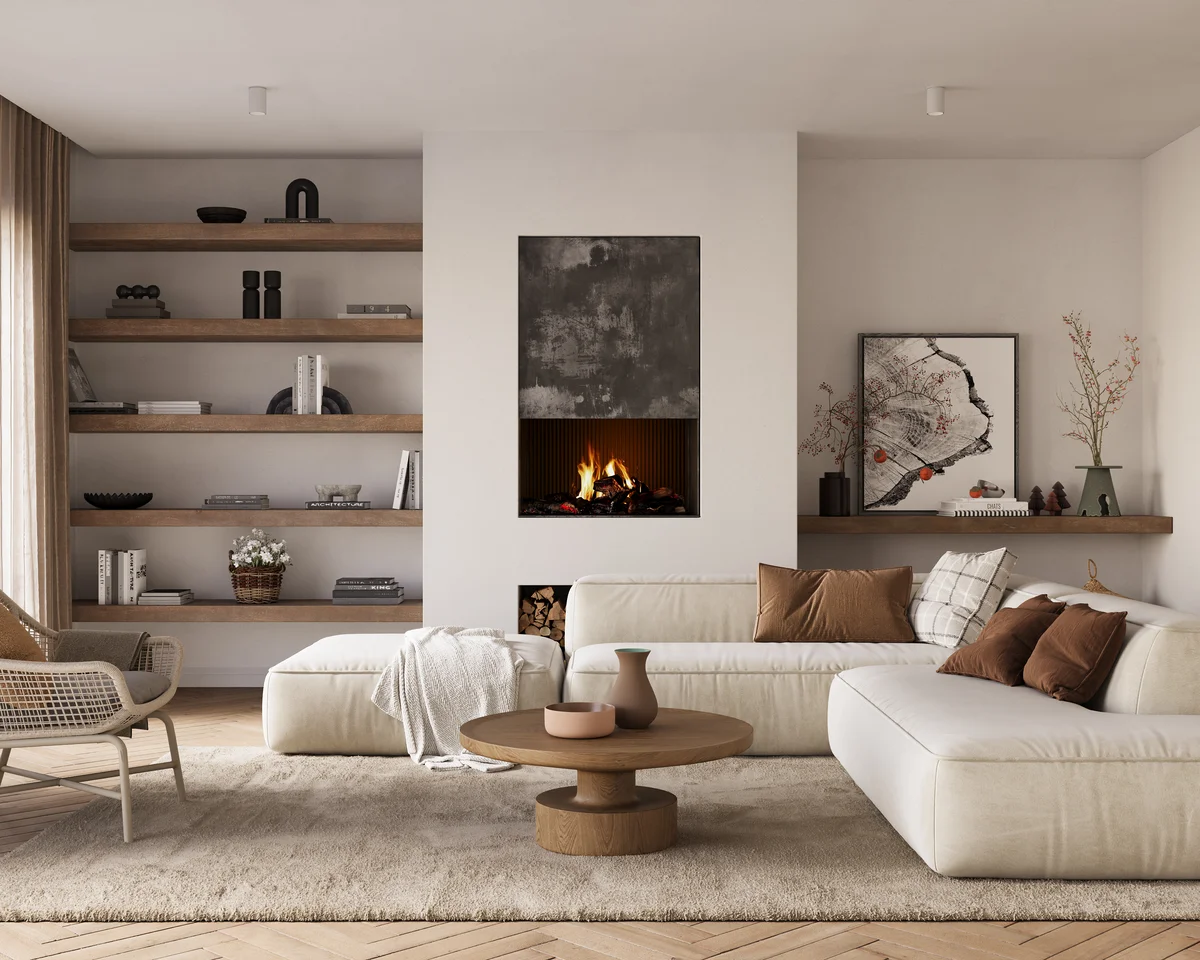
Track the air everyone shares, from cooking drift and rising CO2 to particles coming through open doors and windows.

See how CO2 builds overnight and whether ventilation keeps pace. Terrestream shows the pattern; it does not diagnose a health condition.
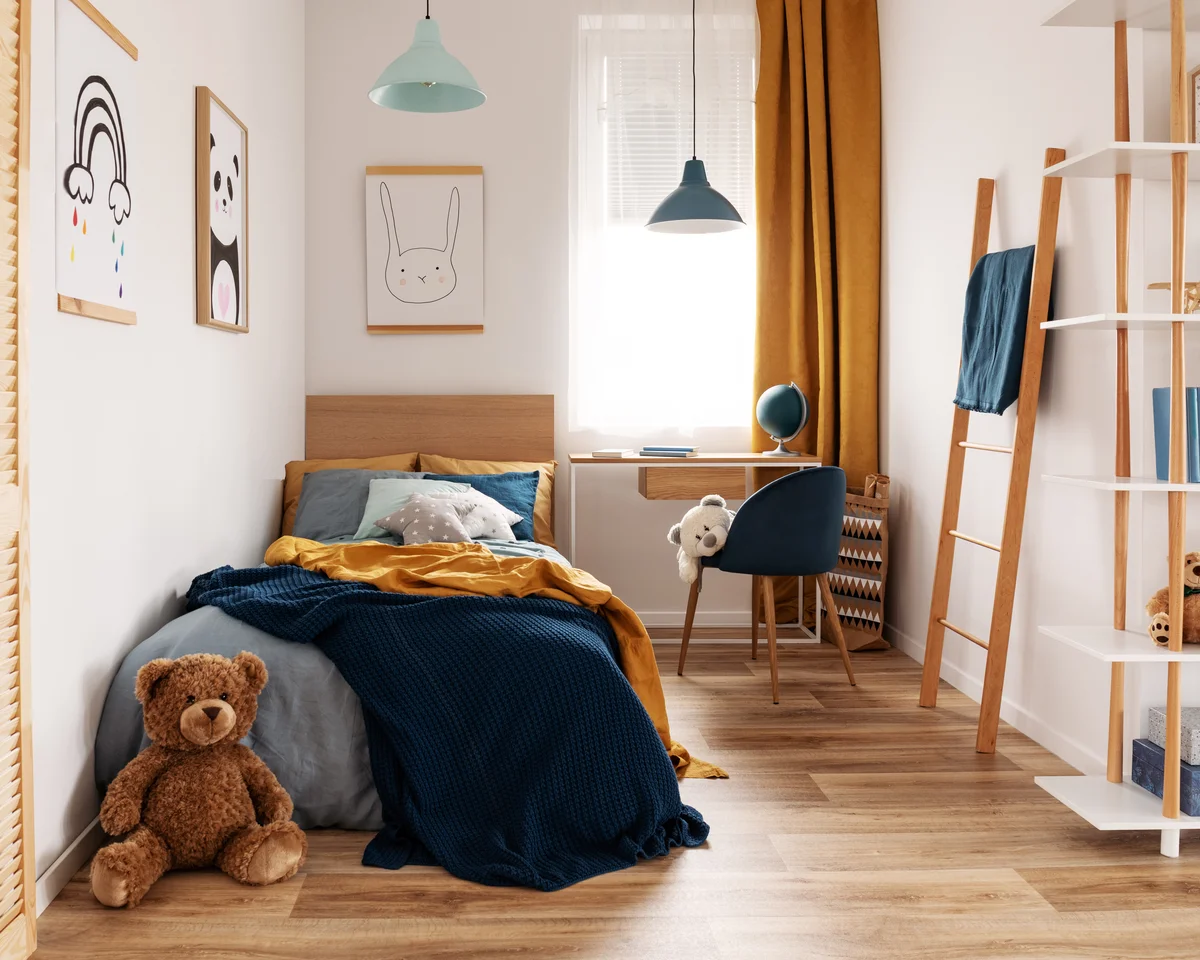
Watch overnight CO2, particles, and pollen in a smaller sleeping space, then compare indoor changes with outdoor conditions.

Catch CO2 buildup and particle spikes during the workday, with a clear cue when fresh air or filtration may help.
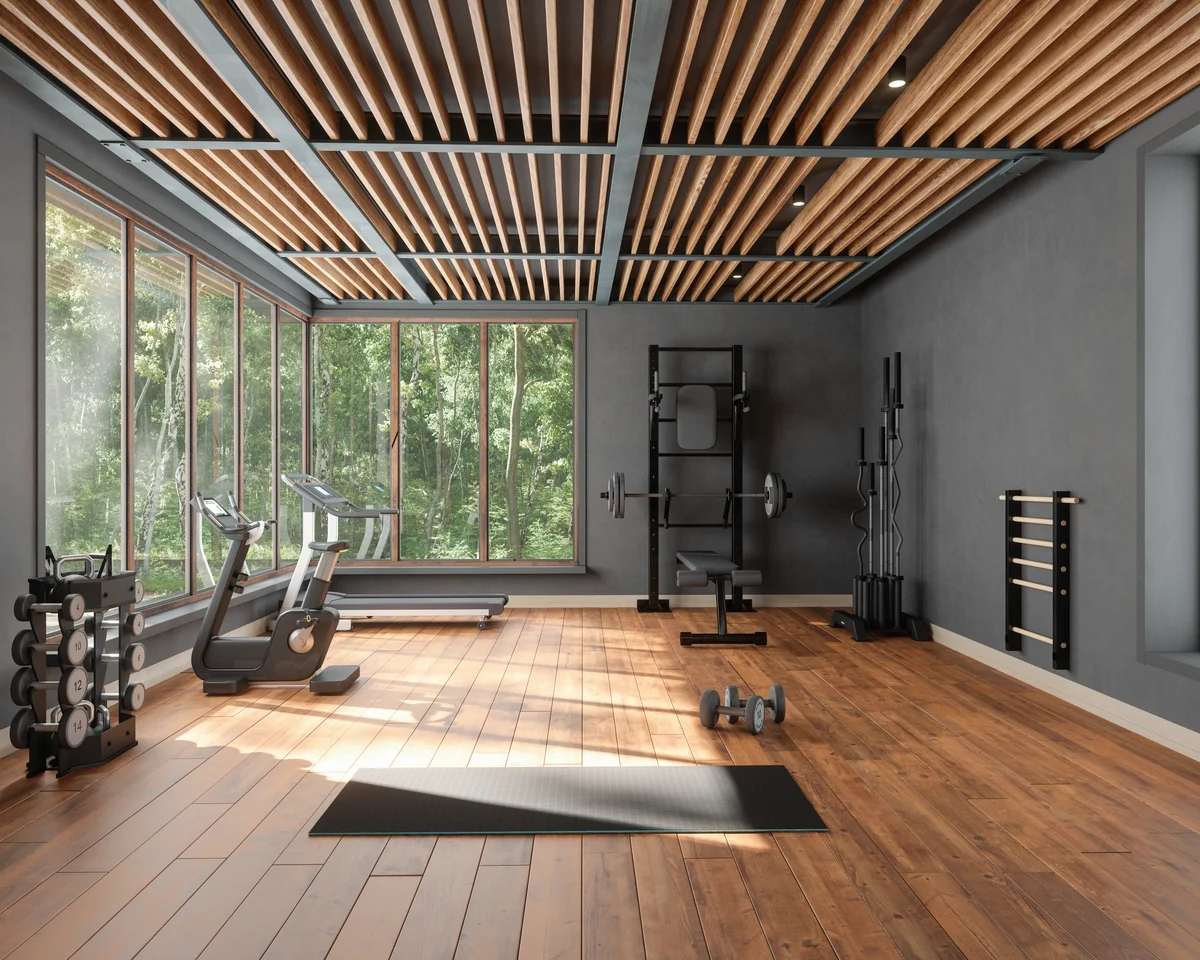
See CO2 and humidity rise during a workout, so you can ventilate before the room feels stale or damp.

Track VOC, NOx Index, and particle changes from solvents, sanding, and vehicle exhaust. Terrestream does not measure regulatory NO2 or carbon monoxide; keep a dedicated CO alarm.
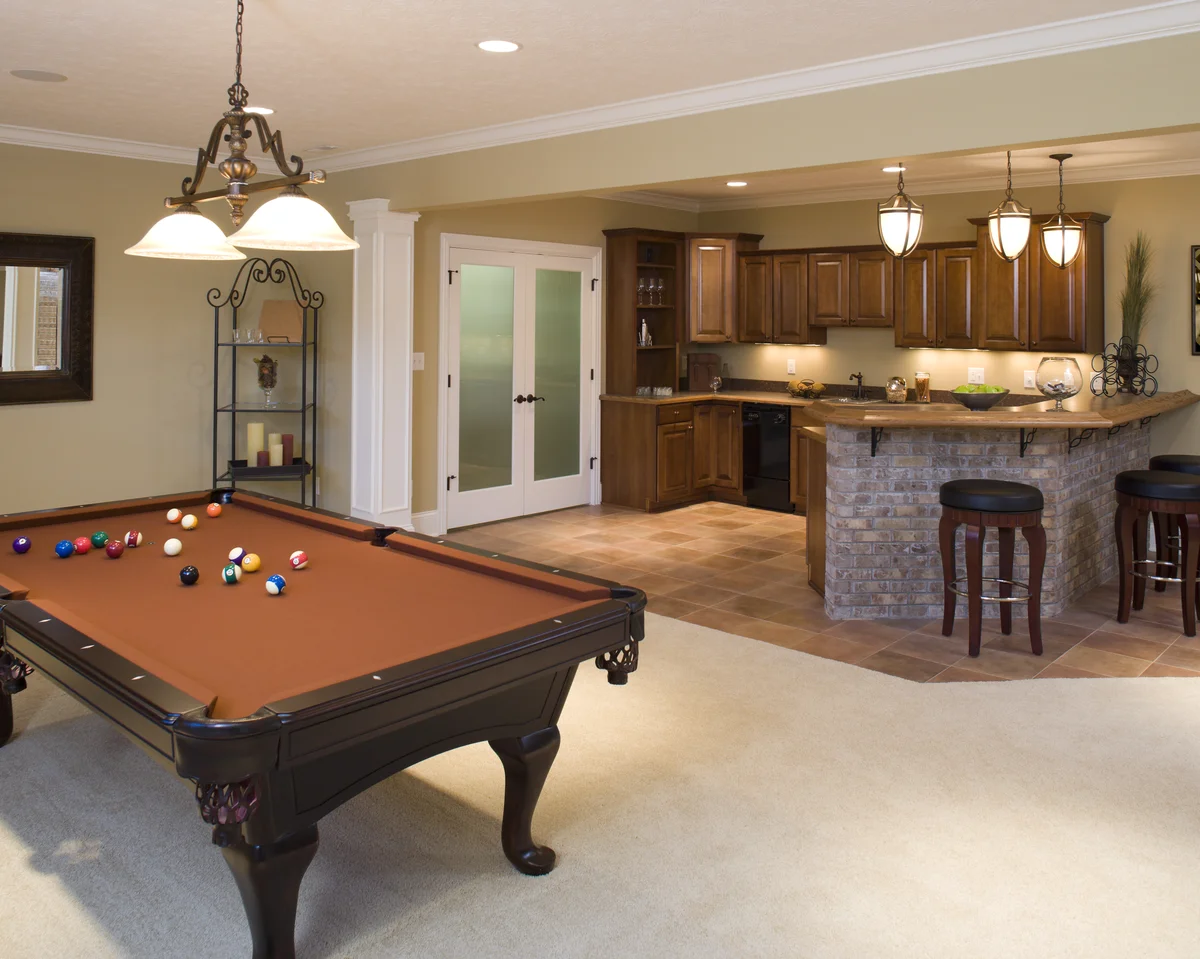
See slow humidity and VOC changes from damp conditions, stored paint, fuel, and cleaners.

Continuous IAQ monitoring for productivity, employee well-being, and the standards your facilities team already cares about.
ASHRAE 62.1 (Ventilation for Acceptable Indoor Air Quality) calls out CO2, particulates, VOCs, temperature, and humidity. We measure all of them, continuously.
WELL v2's IAQ feature sets specific absolute limits: PM2.5 below 12 μg/m³, CO2 staged at 600 / 750 / 900 ppm depending on space type. The SEN66 senses across all those ranges with published accuracy.
Native Home Assistant integration + MQTT publishing means existing dashboards see Terrestream data without per-platform code.
Terrestream datasheet (PDF) · Sensirion SEN66 datasheet (PDF) · the published accuracy and parameter specs behind every claim above.
Terrestream is not WELL- or LEED-certified. The above describes the sensor's measurement capabilities aligned with these standards' parameter lists and threshold ranges.
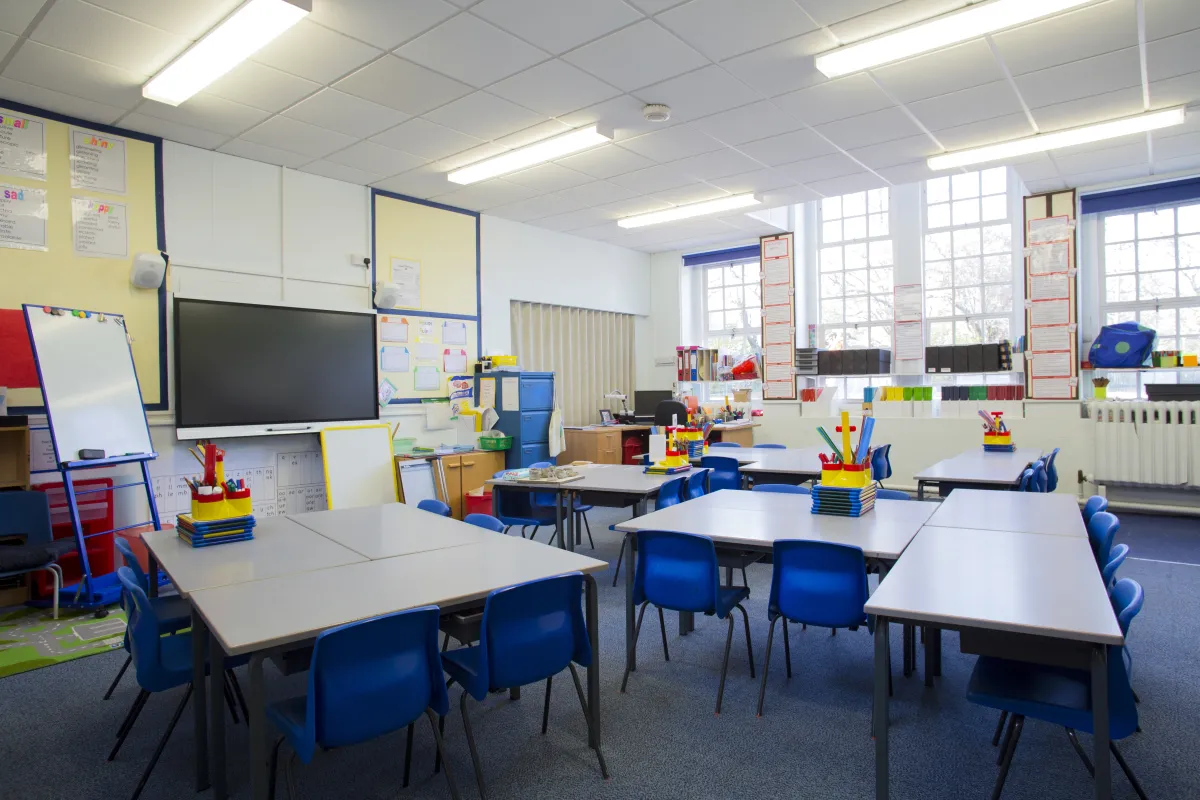
What every facilities director knows but few classrooms measure: CO2 above 1,000 ppm correlates with measurable drops in cognitive function.
The EPA's Indoor Air Quality Tools for Schools program identifies CO2, particulates, and VOCs as the priority indicators. We measure all three, with the same sensor in every room.
Studies from Harvard COGfx and LBNL link CO2 above ~1,000 ppm to measurable drops in cognitive function. Real-time CO2 flags when ventilation lapses, before students lose focus.
Which classrooms drift after lunch. Which east-facing rooms heat up by 1pm. Which need door cracks. Administrators see the whole school in one view.
Terrestream datasheet (PDF) · Sensirion SEN66 datasheet (PDF) · the published accuracy and parameter specs behind every claim above.
Terrestream holds no specific educational-facility accreditation. The parameters measured align with the priority indicators identified by US EPA IAQ guidance for schools.
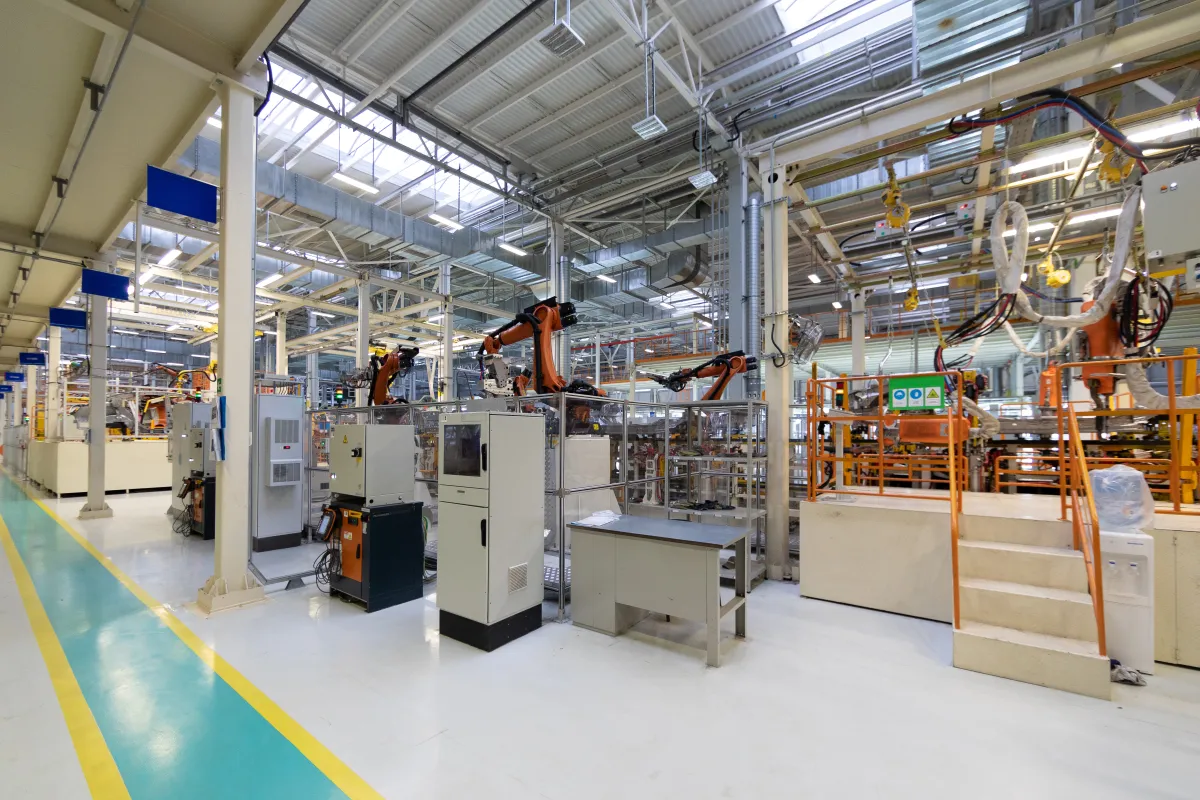
Speaks the language of OSHA and occupational hygiene at a fraction of the cost of a calibrated reference instrument.
CO2, PM size bins, VOC Index, and NOx Index are logged continuously for process-control alerts and follow-up. Regulatory OSHA determinations still require the appropriate reference instruments and professional workflow.
Sensirion calibrates PM measurement against the TSI DustTrak™ DRX 8533, a photometric reference instrument used in occupational-hygiene studies, and tests each SEN66 individually after calibration.
Readings are logged in the cloud with timestamps while the device is connected, for trend monitoring and notifications.
Terrestream datasheet (PDF) · Sensirion SEN66 datasheet (PDF) · the published accuracy and parameter specs behind every claim above.
Terrestream is not a substitute for OSHA reference instruments where regulatory compliance requires them. It is a continuous indicator suitable for trend monitoring and process-control alerts.
Intelligence
Dozens of live data streams feed specific analyses that turn into things you can actually do to change your indoor environment. Take control of your indoor space.
Weather, air quality, pollen, and smoke data come from Open-Meteo, Google, NOAA, and NASA.
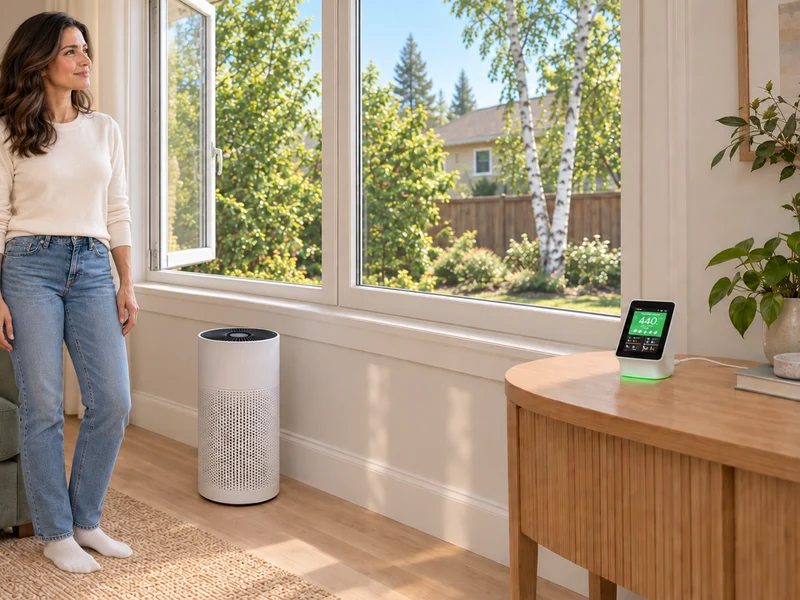
Clear outdoor conditions can support a ventilation recommendation.
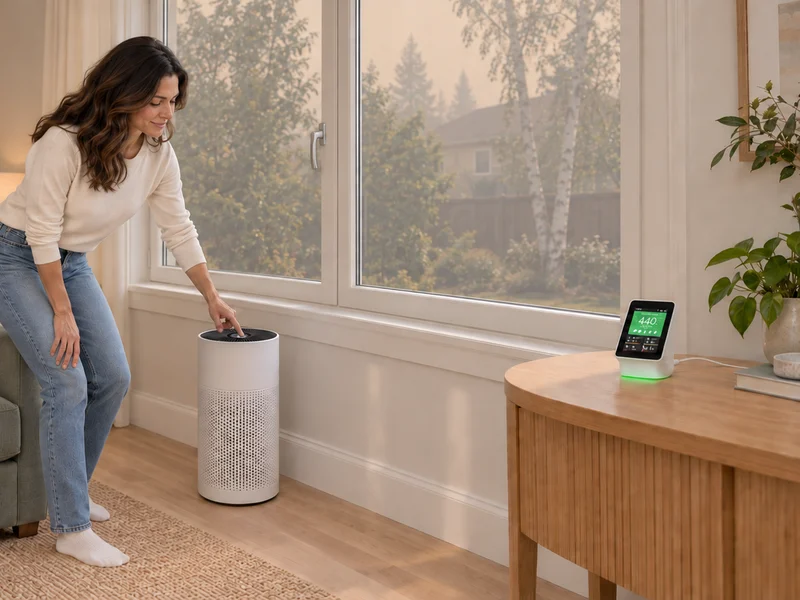
Outdoor smoke context can change the recommendation even when the room needs attention.
01 · Measure
Read CO2, particles, gas indexes, and comfort conditions on the device. Each channel answers a different question.
02 · Compare
Compare indoor changes with outdoor conditions and room history. This dashboard preview uses example data; matching patterns suggest possibilities, not proof of a source.
03 · Follow up
Review a suggestion alongside its readings, then check the trend after you act. The sensor can show whether a measured condition changed; it cannot prove why.
Architecture
Two custom-tooled circuit boards do the work behind everything you just saw. Here's what's on them. Drag to rotate.
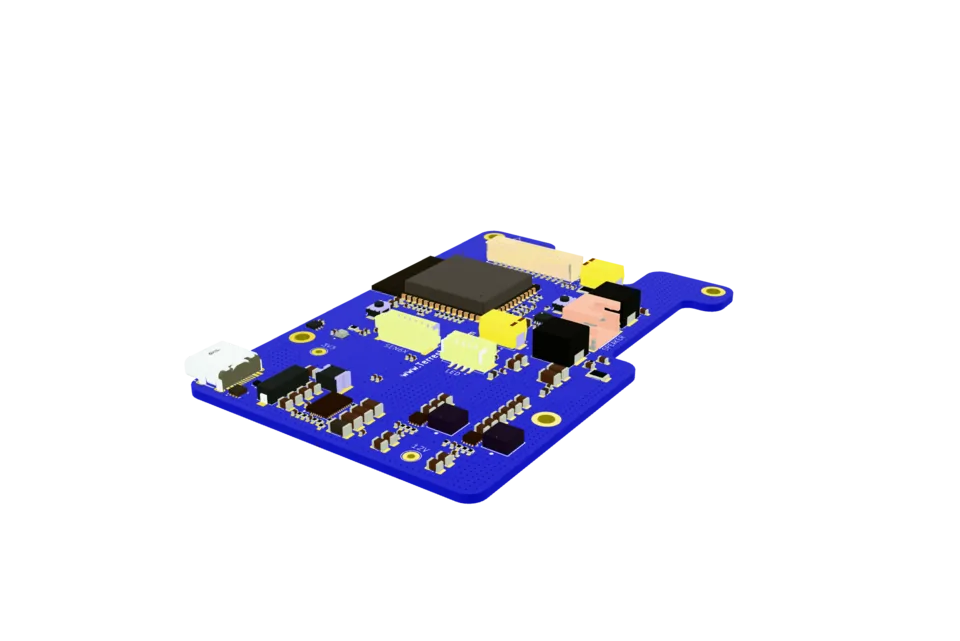
Drag to rotate · labels track the components as you turn the board
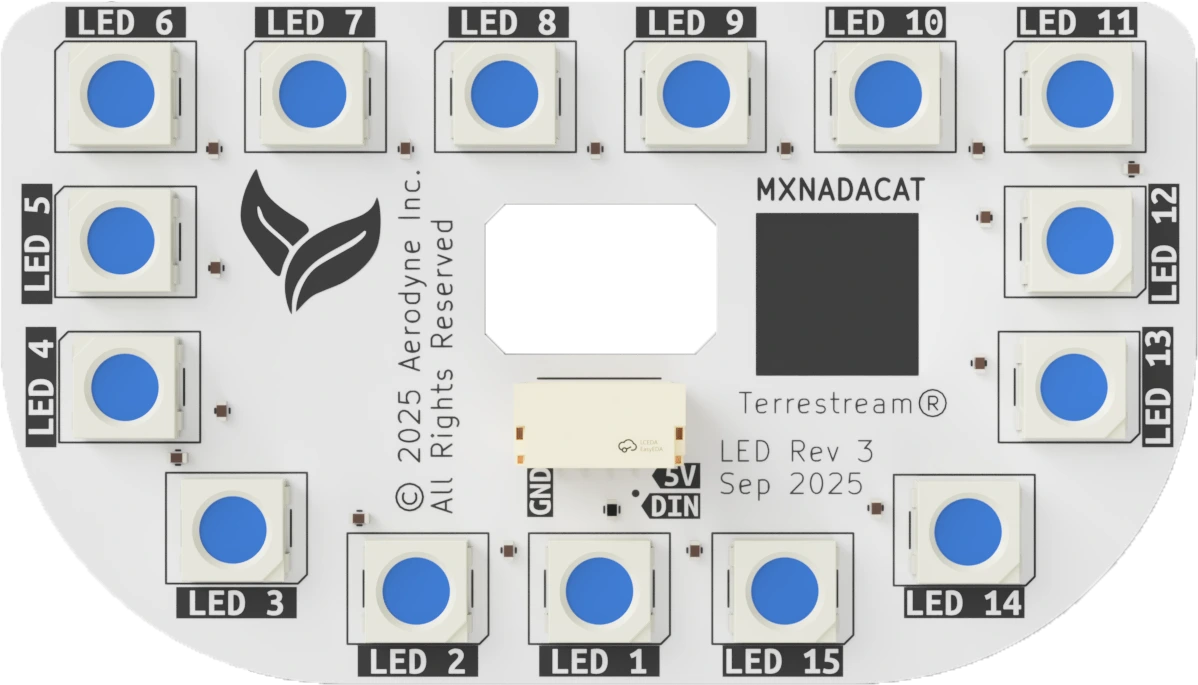
A second custom PCB, uncommon in this category as of May 2026, with fifteen individually addressable RGB LEDs arranged around the device's perimeter to cast the colored underglow you see from across the room: the "answer at a glance" your eyes catch before you read the screen.
Driven directly by the main board's SK6812-protocol controller, the ring inherits the firmware's full six-band color language. Green for fresh, deepening through Yellow, Orange, Red, Purple, and Maroon as readings shift. No off-the-shelf module here; this one was designed and tooled in-house specifically for the device.


Comparison
| Terrestream | AirGradient ONE | Ruuvi Air | Awair Element | Airthings View Plus | Apollo AIR-1 | Aranet4 HOME | |
|---|---|---|---|---|---|---|---|
| CO2 | ✓ Sensirion SEN66 | ✓ Senseair S8/S88 | ✓ Sensirion SEN66 | ✓ not publicly disclosed | ✓ NDIR | ✓ Sensirion SCD40 (optional) | ✓ NDIR |
| Particulate matter | PM1.0 · PM2.5 · PM4.0 · PM10 | PM1.0 · PM2.5 · PM10 | PM1.0 · PM2.5 · PM4.0 · PM10 | PM2.5 | PM2.5 | PM1.0 · PM2.5 · PM4.0 · PM10 | ✗ |
| VOC and NOx | VOC: ✓ Sensirion algorithm NOx: ✓ Sensirion algorithm |
VOC: ✓ Sensirion algorithm NOx: ✓ Sensirion algorithm |
VOC: ✓ Sensirion algorithm NOx: ✓ Sensirion algorithm |
VOC: ✓ not publicly disclosed NOx: ✗ |
VOC: ✓ not publicly disclosed NOx: ✗ |
VOC: ✓ Sensirion algorithm NOx: ✓ Sensirion algorithm |
VOC: ✗ NOx: ✗ |
| Display | 3.5″ color LCD, touchscreen | small OLED | light indicator only | LED display with on-device readings | E-ink, small | ✗ | E-ink |
| Underglow color ring | 15-LED custom board | 11 RGB LEDs | color-coded light indicator | ✗ | ✗ | RGB pixels; no 15-LED ring | ✗ |
| Indoor + outdoor data fusion | weather, AQI, pollen blended | ✗ | ✗ | ✗ | outdoor pollen context | ✗ | ✗ |
| Mobile app | ✓ included | web dashboard | ✓ Ruuvi Station | ✓ Free app (no documented paid tier) | ✓ | via Home Assistant | ✓ |
| Home Assistant | ✓ Native | ✓ Built-in HA integration (local polling) | ✓ Built-in HA Bluetooth (local push) | ✓ HA integration (local API preferred) | ✓ HA integration (cloud polling) | ✓ Native (ESPHome) | ✓ Built-in HA Bluetooth (local push) |
| MQTT | ✓ Native | ✓ (stock firmware) | via optional Ruuvi Gateway | not documented for the consumer device | Airthings for Business only | Custom ESPHome YAML (not native) | not documented for the HOME model |
| Apple Home / Google Home / Alexa | Compatible with Alexa1 | via HA Matter bridge | via HA bridge | Google + Alexa + IFTTT (no HomeKit) | Google + Alexa + IFTTT + Homey (no HomeKit) | via HA Matter bridge | via HA bridge |
| Matter | via HA bridge1 | via HA bridge | via HA bridge | ✗ | ✗ | via HA bridge | via HA bridge |
| Subscription required | None | No local lock-in; 12 mo hosted dashboard/API included | Free app; Gateway/Cloud for remote monitoring | Free app; cloud-history terms not verified | None; trends + history in the free app | None | None |
| Price (MSRP) | $249 USD | $230 USD assembled / $138 USD kit | 149€ excluding tax | $299 USD | $329.99 USD | $109.99 USD base | $189 USD |
1 Alexa compatibility: The Terrestream skill supports US English in the United States and requires internet, cloud sync and a linked Terrestream account. No Terrestream subscription is required. The sensor is not a native Matter device. Alexa setup guide.
Current manufacturer product pages and Home Assistant documentation were checked on 2026-09-12. Prices exclude shipping and tax where applicable and can vary by region or promotion. Competitor information is subject to change. AirGradient, Ruuvi, Awair, Airthings, Apollo, and Aranet are trademarks of their respective owners; no affiliation or endorsement implied. Terrestream and Ruuvi Air both use Sensirion's SEN66 multi-gas platform; the comparison focuses on the surrounding product, connectivity, dashboard, and interpretation system. If you spot an inaccuracy, let us know and we'll correct it.
Current primary sources: AirGradient ONE · Ruuvi Air · Awair Element · Airthings View Plus · Apollo AIR-1 · Aranet4 HOME. Home Assistant behavior: AirGradient · Ruuvi · Awair · Airthings · Aranet.
Review the Terrestream measurement evidence for the SEN66, BMP390L, and OPT3001 evidence behind the device architecture.
Included
Everything the device does on your own network is free, forever. The apps, web dashboard and account are free, and core recommendations are included.
On the device & your local network — always free
Through Terrestream's cloud
FAQ
Quick answers. The full support hub at terrestream.com/support covers the rest.
Yes. Check room readings and ventilation guidance on a compatible Apple Watch paired with an iPhone. The companion does not work on non-Apple watches. Your Terrestream sensor measures the air; the Watch displays its readings. Apple Watch and iPhone are sold separately.
About a minute. Plug in via USB-C, pair to Wi-Fi through the on-device touchscreen or the mobile app, and the first reading appears within 60 seconds. The screen walks you through it.
No. The apps, web dashboard and account are free, and core recommendations are included.
Yes. Plug it in and the device measures and shows readings on its own screen, with no Wi-Fi or account. Connected features need 2.4 GHz Wi-Fi, internet and a free account: history, recommendations, outdoor context (weather, AQI, pollen), and push notifications. The sensors keep reading whether or not the cloud is reachable.
Per the published Sensirion SEN66 specification: CO2 at ±(50 ppm + 2.5% of reading) in the 400–1,000 ppm range, after 2 days of operation that include fresh air and with fresh air at least once a week; Sensirion VOC and NOx indices per their published algorithms; and Sensirion-calibrated PM (calibrated against TSI DustTrak™ DRX 8533). Bosch BMP390L delivers ±0.5 hPa pressure accuracy. Full details in Specifications.
Sensirion publishes a continuous-IAQ mission profile of more than ten years for the SEN66, with measurable drift typically appearing after about five years of continuous use. CO2, VOC, and NOx baselines auto-calibrate during normal operation; PM is laser-based and factory-calibrated. For ongoing accuracy verification, recalibration, or replacement past the warranty period, see Terms §6.
1-year limited device warranty from Aerodyne against defects in materials or workmanship. Accuracy follows Sensirion's published datasheet under the conditions it states; for CO2, that means after 2 days of operation that include fresh air, with fresh air at least once a week. Gradual sensor drift over time is normal and is not a defect.
Yes. Compatible with Alexa through the Terrestream skill. Link your account to ask for supported readings and create routines. Requires internet, cloud sync and a verified Terrestream account that owns the sensor. Available in the United States with Alexa set to English (US). No Terrestream subscription required. See the Alexa setup guide. Open the Terrestream skill.
Use the Terrestream Alexa skill for supported readings and routines in US English. For local workflows, use the Terrestream Local Home Assistant integration or publish to your own MQTT broker. Alexa does not require Home Assistant or Matterbridge. The sensor is not a native Matter device.
Choose a monitor that directly measures the problems you care about, explains likely sources, and fits your home workflow. Terrestream is strongest when you want CO2, multiple PM size bins, VOC and NOx event context, outdoor air context, Home Assistant or MQTT support, and plain-English recommendations.
Terrestream measures PM1.0, PM2.5, PM4.0, and PM10, then compares indoor particle changes with outdoor smoke, weather, pollen, and room history. It is an IAQ monitor, not an emergency smoke alarm.
No. Terrestream does not measure radon. If radon is your primary concern, use a dedicated radon monitor or professional radon test alongside Terrestream.
Breathe Better. Live Smarter.
One device. Six sensors. Twelve signals. Indoor readings connected to outdoor context and plain-English recommendations. Start with one room, then expand wherever air quality matters most.
$249 USD one-time
Order yoursSix sensors. Twelve signals.
Built on genuine Sensirion, Bosch, and Texas Instruments sensors.
Included
Compatible with Home Assistant via MQTT
Search the knowledge base.