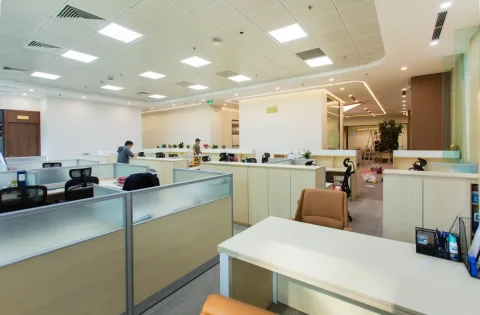


El problema de IAQ de oficina más preguntado es la sala de juntas que todos odian. La forma es consistente: cuarto cerrado, ocupación densa, sistema HVAC diseñado para uso ocasional, y una junta de una hora que termina con todos bostezando. La matemática del CO2 es implacable: ocho adultos emiten unos 130 litros de CO2 por hora colectivamente, lo que una sala de juntas típica de 50 m³ absorbe en una envolvente sellada como unos 1,500 ppm de acumulación por hora.
ASHRAE 62.1 apunta a una tasa de aire fresco por ocupante que mantenga incluso un cuarto lleno bajo 1,100 ppm. La mayoría de los sistemas HVAC comerciales están dimensionados a ese piso, pero la entrega real depende si el sistema funciona (los horarios de ocupación, compuertas y economizadores interactúan), si el control de ventilación del edificio considera la ocupación real, y si los difusores están limpios.
El costo cognitivo está documentado. Allen et al. en el programa Healthy Buildings de Harvard ejecutaron exposiciones controladas y encontraron que el desempeño de toma de decisiones cayó 15% a 1,400 ppm vs 600 ppm, con los mayores decrementos en pensamiento estratégico y utilización de información. Satish et al. en LBNL corrieron una cohorte separada y vieron efectos similares. Implicación: las decisiones de alto riesgo tomadas al final de una larga junta en un cuarto cerrado son demostrablemente peores.
Para gerentes de instalaciones, la respuesta es ventilación controlada por demanda impulsada por sensores de CO2 en cada cuarto. Para individuos, la respuesta es entreabrir la puerta (la mayor intervención sola), tomar pausas de 5 minutos cada 45 minutos (deja al cuarto recuperarse parcialmente), o reservar cuartos más grandes que el número estricto. El panel, desplegado en una sala de juntas, te dirá cuáles de tus salas se quedan sin aire rutinariamente; usualmente son las que todos evitan.
Referencias
- Norma ASHRAE 62.1 - Ventilación para una calidad del aire interior aceptable www.ashrae.org
- Harvard T.H. Chan - CO₂ y función cognitiva healthybuildings.hsph.harvard.edu
- Satish et al., LBNL - ¿Es el CO₂ un contaminante interior? doi.org
- Allen et al. - Ciencia de edificios y salud humana doi.org