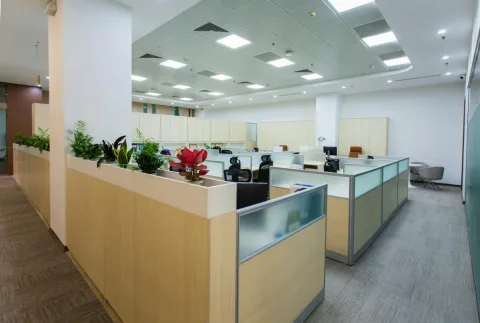


The term "sick building syndrome" entered public-health vocabulary in the early 1980s. EPA's fact sheet describes it as occupants having acute health and comfort effects that seem linked to time spent in a building, when no specific illness or cause can be identified. Typical symptoms are headaches, eye, nose, or throat irritation, fatigue, and difficulty concentrating; the telltale feature is that most people feel better soon after they leave the building.
The label has fallen out of fashion partly because it suggests a mysterious disease, when the underlying problems are usually concrete. EPA lists inadequate ventilation, chemical contaminants from indoor and outdoor sources, and biological contaminants such as mold as the usual causes, and Mendell et al. tied occupant symptoms in U.S. office buildings to how HVAC systems are designed and maintained. In other words, SBS is mostly the combined effect of measurable indoor-air problems.
Three terms get used interchangeably, and they shouldn't be. SBS is a diagnosis of exclusion: nonspecific symptoms in a meaningful share of occupants, relieved by leaving, with no specific cause found. Once a cause is found, the case becomes BRI, building-related illness: Legionnaires' disease traced to a cooling tower, hypersensitivity pneumonitis from a contaminated humidifier, or asthma flares in a building with documented mold. BRI is worked medically and environmentally in parallel: a clinician identifies the illness and an industrial hygienist identifies the exposure. See when to call a pro, mold spores, and formaldehyde.
MCS, multiple chemical sensitivity, is an individual-level construct, not a building-level one: a person reports symptoms from low-level chemical exposures (fragrances, cleaning products, new finishes) that don't affect most people. MCS is contested in clinical medicine, and no environmental measurement can confirm or rule it out. What the IAQ side can say is that a space with a low VOC index, low particles, and good ventilation will bother a sensitive person less than one with a high VOC baseline, whatever the biology.
Monitoring turns a vague "people complain about this floor" into a list of things to check. High CO2 points to ventilation; a sustained high VOC index points to materials or cleaning; humidity spikes point to plumbing or HVAC condensate. Room-by-room and time-of-day patterns narrow it further: symptoms that track HVAC startup point at the system, symptoms that track cleaning crews point at products. EPA's guidance for health professionals and facility managers follows the same walkthrough. When nothing stands out, improve ventilation to ASHRAE 62.1 rates, lower VOC sources (see reducing VOCs), and re-check; SBS complaints often ease with better ventilation even when no single cause is named.
This is environmental information, not medical advice. Terrestream's readings help you make decisions about the air in your space. They do not diagnose conditions, interpret symptoms, or replace conversations with your physician. If symptoms persist, worsen, or coincide with a known exposure, talk to a healthcare professional. See what Terrestream's advice covers.
References
- EPA - Sick building syndrome www.epa.gov
- EPA - Indoor air quality basics www.epa.gov
- Mendell et al. - Causes of SBS symptoms (Indoor Air) doi.org
- Fisk - The ventilation problem in schools (literature review) doi.org
- WHO - Housing and health guidelines www.who.int
- ASHRAE - Indoor Air Quality Guide www.ashrae.org