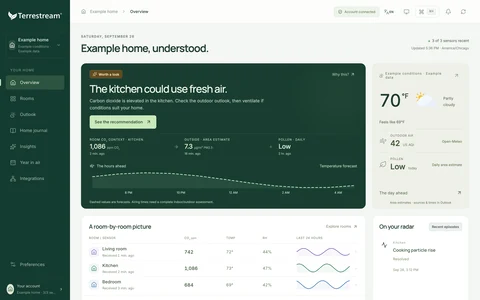


A naive read of the dashboard treats each parameter as independent. The chemistry and the sensors disagree. Several well-documented interactions affect both the readings and the physiology. Terrestream accounts for one of them automatically, high humidity inflating particle readings; the rest are worth keeping in mind when you read the numbers.
Sensor-side interactions: humidity above 80% nudges the VOC index up by 10 to 30 even with no actual VOC change; very humid air also scatters infrared light, inflating optical PM readings until the droplets evaporate. NOx index responds to ozone in addition to nitrogen oxides; outdoor-ozone infiltration on a sunny afternoon can produce a small NOx rise with no combustion source. Sensor cross-sensitivities covers the detail.
Indoor chemistry interactions are the more interesting case. Weschler reviewed the field: ozone reacts with terpenes (limonene from citrus cleaners, alpha-pinene from pine products) to produce formaldehyde and small ultrafine particles. The reaction is fast; opening a window on a high-outdoor-ozone day right after you cleaned with a citrus product can produce a measurable formaldehyde signature indoors that neither the ozone nor the cleaner produced alone.
Physiological interactions follow similar logic. Cold-dry winter air potentiates particle and pollen irritation (dry mucous membranes have less buffering capacity). High humidity at high temperature impairs heat-stress recovery (see apparent temperature). Combined cognitive impact studies (CO2 + temperature + noise) show additive rather than independent effects. Terrestream does not weight its alerts by symptom risk, so these interactions are yours to factor in: a moderate VOC spike on a cold, dry winter morning may bother you more than the same spike on a mild day.