
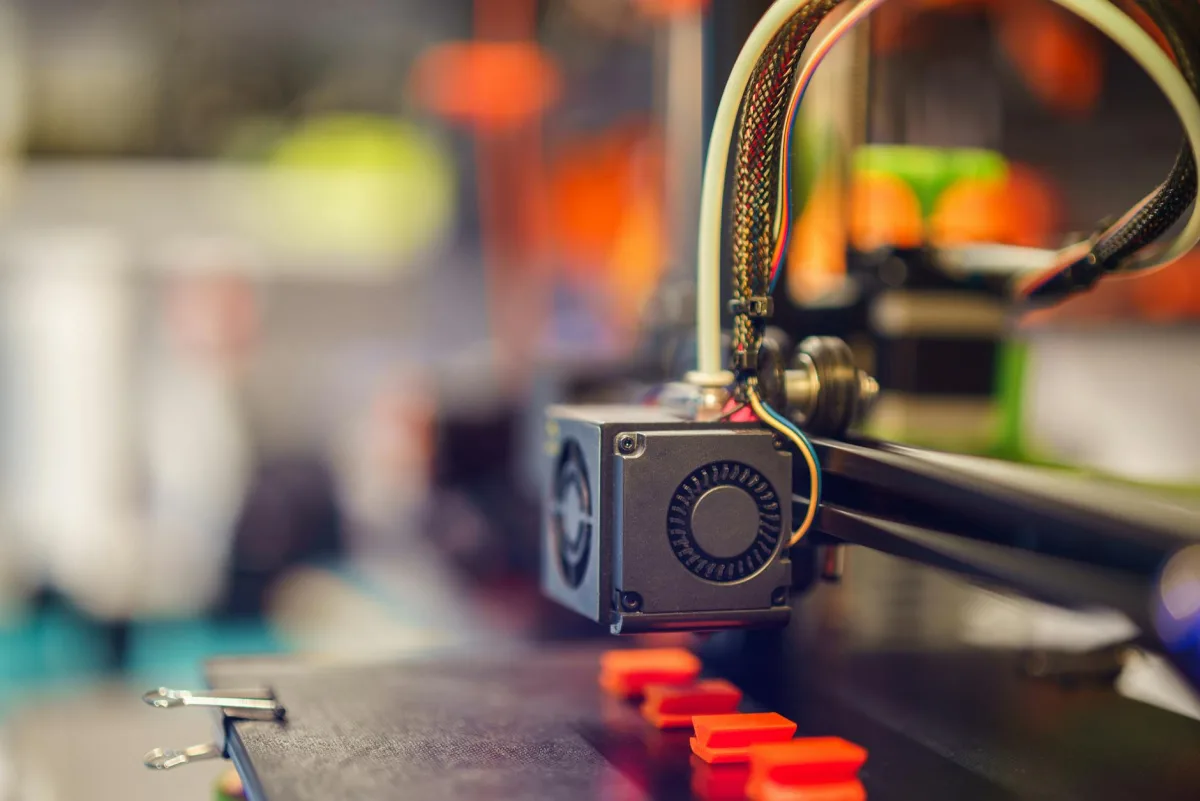
Fused-deposition (FDM) 3D printing melts a polymer filament and extrudes it through a heated nozzle, and every chemistry of filament emits something different when it gets hot enough to flow. PLA (polylactic acid, derived from corn) is the cleanest of the common materials: it prints at 190 to 220 °C with a mild caramelized-corn odor and the lowest measurable VOC contribution, and the Sensirion gas-index on the dashboard typically lifts modestly during a print and clears within an hour after the print ends. ABS (acrylonitrile-butadiene-styrene) is the dirtiest of the mainstream materials: it prints at 230 to 250 °C, emits styrene with a sharp chemical odor, and the VOC index climbs noticeably and stays elevated long after the print finishes. PETG sits between the two. Nylon, polycarbonate, and carbon-fiber-loaded blends emit higher-temperature chemistry including formaldehyde traces from some specialty formulations.
Ultrafine particles (UFP) are the bigger story and the one the dashboard partially captures. Independent measurements (see the UL 2904 research and the atmospheric environment literature) show desktop FDM printers emit roughly 108 to 1011 ultrafine particles per minute, mostly below 100 nm, with ABS at the high end and PLA lower. The SEN66 sizes particles from about 0.3 µm (300 nm) up, so the dashboard sees only the fraction that has grown into that range, not the total ultrafine count. Ultrafine particles explains why this matters: UFP deposit deep in the lungs, cross into the bloodstream, and the available evidence ties them to cardiovascular and neurological endpoints. Quantitatively the printer is doing more than the PM channel shows.
Resin printing (stereolithography, SLA, and masked-LCD) is a different chemistry. The vat holds an acrylate-based liquid resin cured by UV light, and the resin off-gasses both during printing and during the post-print isopropyl-alcohol wash and the UV cure cycle. The VOC profile is more like a paint or a wood finish than like FDM, with sharper short-duration peaks tied to vat-open events. The NIOSH additive-manufacturing program has documented respiratory and skin sensitization in resin operators, which is why the wash-and-cure step always belongs in a ventilated enclosure with gloves and not on a kitchen counter.
Mitigation, in priority order: enclose the printer in a vented chamber (any acrylic or wood enclosure with a small fan ducted to outdoors through a HEPA-plus-activated-carbon filter cuts UFP and VOC by an order of magnitude); locate the printer in a room that is not normally occupied during printing (a garage, a basement workshop, a spare room with the door closed); switch to PLA for any print that will run in a shared room; run a HEPA purifier at high speed in the print room during and after every print; and never sleep in the room where the printer is running. The dashboard will tell you whether the mitigation is working: a printer with adequate enclosure and ventilation should not move the room's VOC index more than 20 units during a print and should clear back to baseline within an hour after.
This is environmental information, not medical advice. The dashboard's readings help you make decisions about the air in your space. They do not diagnose conditions, interpret symptoms, or replace conversations with your physician. If symptoms persist, worsen, or coincide with a known exposure, talk to a healthcare professional. See what Terrestream's advice covers.
References
- UL - 3D-printer emissions insights www.ul.com
- CDC NIOSH - Topics (3D printing) www.cdc.gov
- EPA - Indoor air quality (3D printing) www.epa.gov
- Azimi et al. - 3D-printer ultrafine particle emissions doi.org