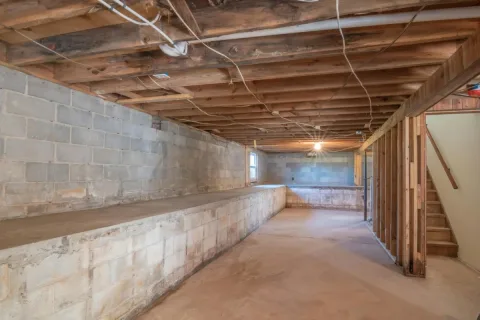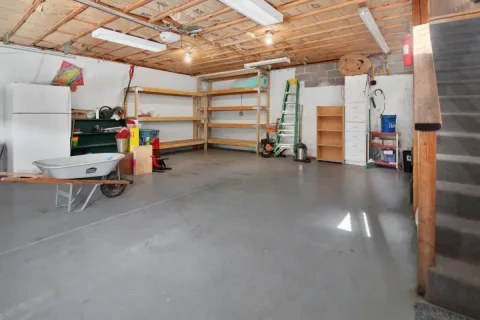

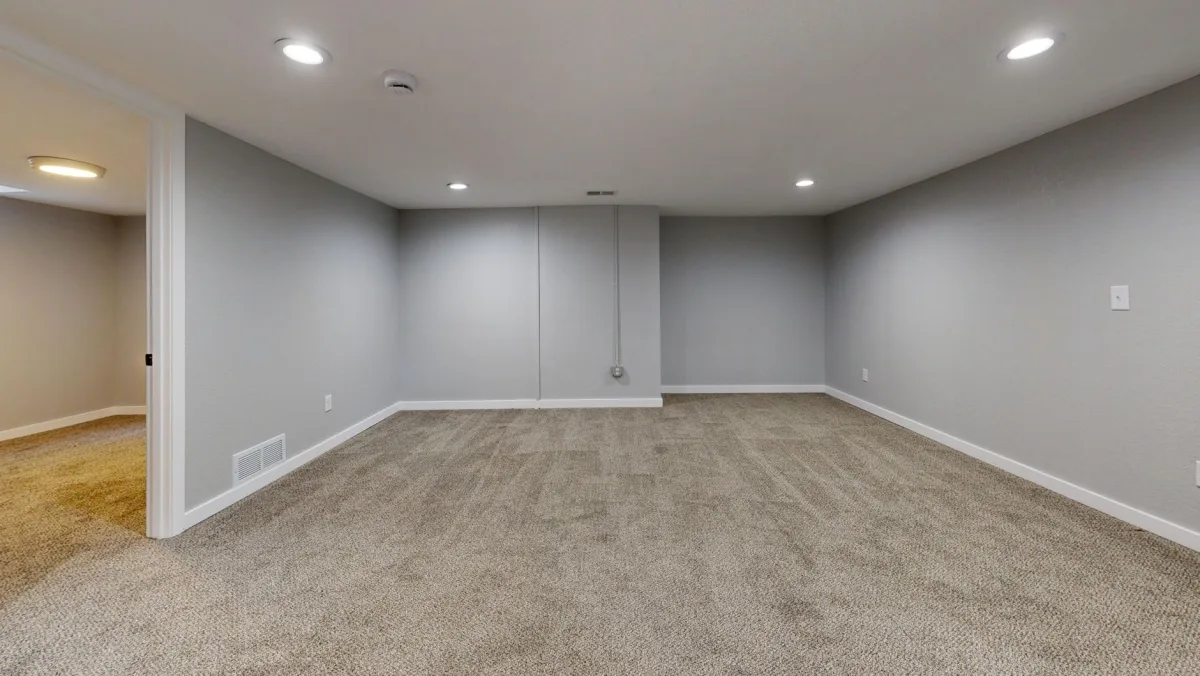
A basement is a different IAQ environment from the floors above it, and most homes treat it as if it were not. It is cooler (typically 5-15°F lower in summer, 3-8°F lower in winter, so RH at the same absolute moisture content is much higher). It is less ventilated (fewer exterior openings, less stack-driven flow because it is at the bottom of the column). It is where the HVAC equipment, water heater, and laundry usually live, which means combustion appliances, hot-water pipes, and dryer exhaust all share its air. And it is often where the paint cans, pesticides, and "I will deal with it later" boxes get stored. A basement sensor will routinely differ from the main floor by 10-15% RH and several VOC-index points. Radon, which Terrestream does not measure, is usually highest at the lowest level too, so test for it separately.
Humidity is the first thing to fix. EPA's mold guide recommends keeping indoor humidity below 60%, ideally between 30 and 50%, and the WHO dampness guidelines call for preventing persistent dampness; basements routinely sit at 60-75% RH in summer in any humid climate. A standalone dehumidifier sized for the basement is the right answer; running the upstairs AC harder is not (the basement is already cool, the AC undershoots and short-cycles). Capacity is rated in pints of water removed per day, and since 2019 the DOE test runs portable units at 65°F instead of 80°F to reflect a basement, so newer ratings look smaller for the same machine. See reducing indoor humidity.
Radon and combustion appliances are the safety stack. Basements are where radon enters the home in most radon-prone regions (uranium-bearing soils, see EPA radon resources and radon detection considerations). A short-term test kit costs $15-30 and is the right starting point. Combustion appliances (furnace, water heater) should be sealed-combustion units that draw outside air directly and exhaust through a dedicated flue; older atmospheric-vent units back-draft into the basement when the house goes negative, and that is a CO risk in addition to a moisture and combustion-byproduct issue. Have a tech verify combustion-safety with a draft test and CO sniff every couple of years.
Stored chemicals are the easy win. Paint cans, varnishes, solvents, pesticides, fertilizer, and gasoline all off-gas; storing them in the basement means their VOCs end up in the air the basement HVAC then circulates upstairs. Move solvents and fuels to a detached shed or garage; consolidate paints to a sealed bin; throw out anything you have not used in five years. The basement is also where the whole-house stack effect plays out: warm air rises through the building, cooler air pulls in from below, so anything in the basement gets sampled by every breath upstairs. See sealing and air tightness for the building-envelope side and spot ventilation for the question of whether the basement itself needs a dedicated exhaust.
References
- EPA - Radon www.epa.gov
- EPA - Mold and health (humidity) www.epa.gov
- EPA - A brief guide to mold, moisture and your home www.epa.gov
- ENERGY STAR - Basement and crawlspace air sealing and insulation www.energystar.gov
- ENERGY STAR - Dehumidifier testing and capacity www.energystar.gov
- ASHRAE Standard 62.2 - Residential ventilation www.ashrae.org