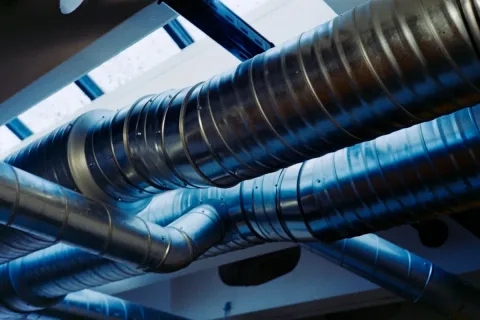

Spot ventilation is exhaust at the source: a range hood over the cooktop, a bath fan in the shower room, a laundry vent at the dryer. The principle is simple and the math is unforgiving. Capturing a pollutant at the point of emission (where its concentration is highest) is 5-10× more efficient than diluting it across an entire house with whole-house ventilation. Spot exhaust is not optional in homes with gas cooking, gas drying, or showers; it is the most cost-effective IAQ intervention most homes ever make.
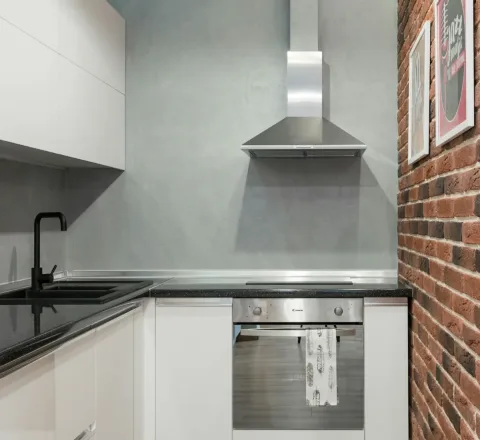
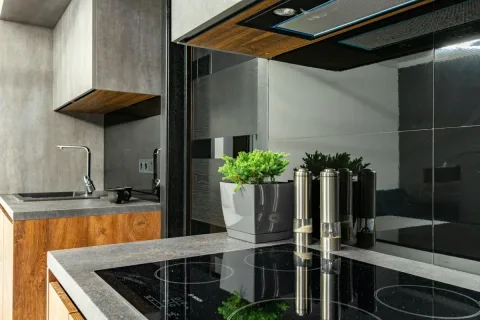
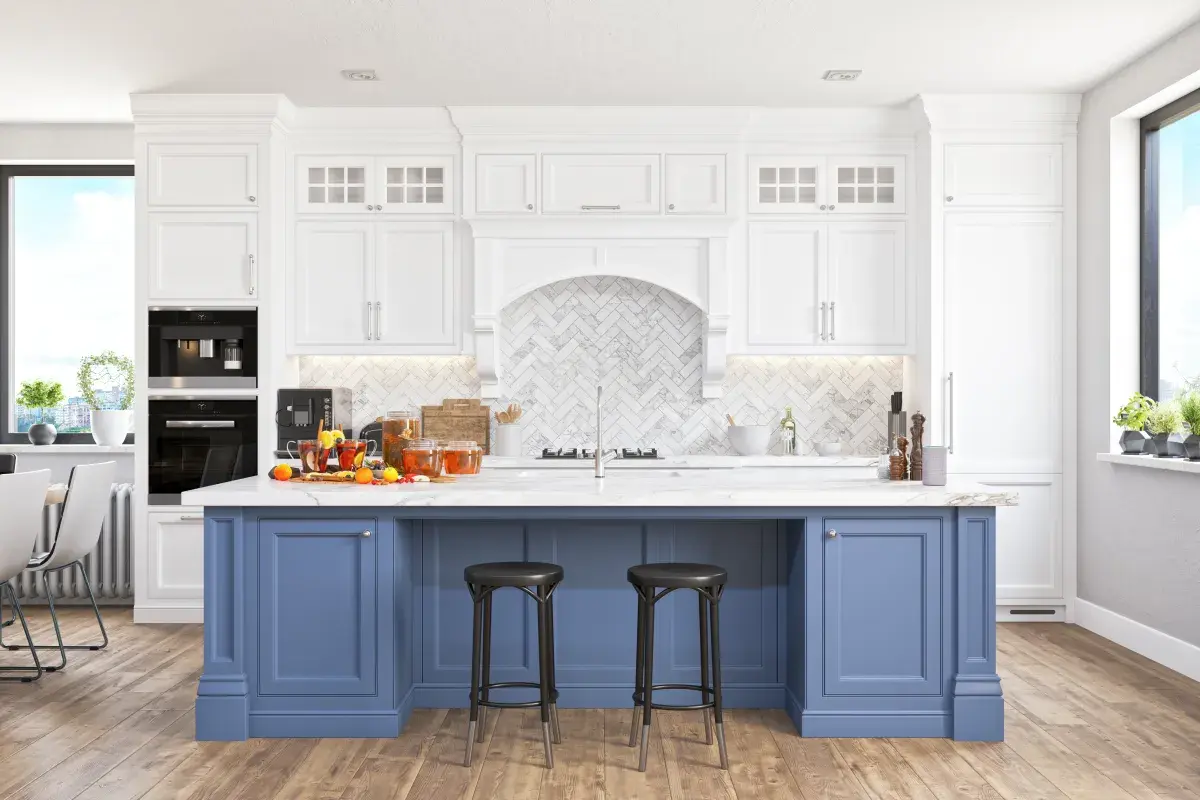
Kitchen exhaust. Size a range hood by cooktop CFM rule of thumb: 100 CFM per linear foot of cooktop for electric and induction, 150 CFM per foot for standard gas, ≥300 CFM total for any gas range, and 600-1,200 CFM for high-BTU professional ranges. The hood must (a) exhaust to outdoors (not recirculating, which strains the food smell through a charcoal filter and puts NO2 and PM2.5 right back into the kitchen), (b) cover the entire cooktop footprint (overhang 3 inches on each side), and (c) run from before ignition until 10 minutes after the last burner is off. Capture velocity falls off at the cube of distance, so a hood mounted 30 inches above the cooktop instead of 24 inches loses about half its effective capture. See range hood venting and gas stove cooking.
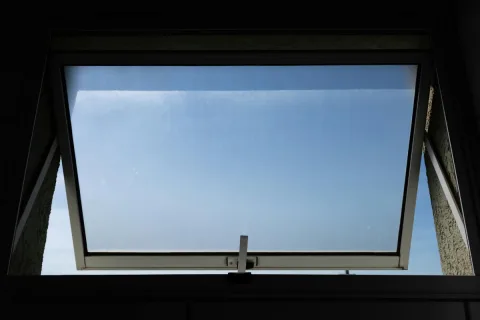
Bathroom exhaust. Sized to ASHRAE 62.2: ≥50 CFM intermittent or 20 CFM continuous; for bathrooms larger than 100 ft² use 1 CFM per ft² of floor area. Run during the shower and for 20-30 minutes after to clear the residual moisture from the wall cavities, not just the air. The single most common code-violating failure mode in North American housing: bath fans ducted into the attic instead of through the roof or sidewall to outdoors. The attic gets the moisture, the attic grows mold, the attic insulates badly because wet insulation does not insulate. IRC M1505 requires bath fans to exhaust to outdoors; verify with a flashlight in the attic before hiring anyone for related work.
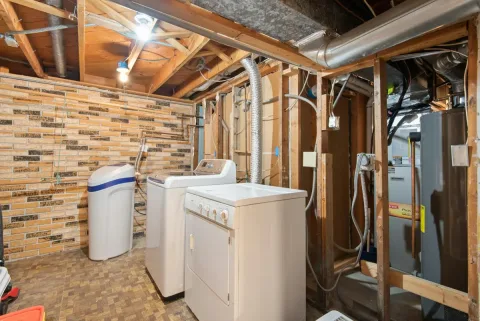
Laundry and other spots. Vented electric and gas dryers exhaust outdoors through a dedicated duct; lint buildup is a fire hazard and a flow restriction (clean annually). Heat-pump dryers and condensing dryers do not need exhaust and add humidity to the laundry room instead (worth knowing if your laundry sits in conditioned space). Sub-floor crawlspaces and basements sometimes need dedicated spot exhaust for radon, foundation moisture, or sump pumps; talk to a pro. Compared to whole-house systems, spot exhaust is cheap ($150-400 installed per fan), fast to retrofit, and pays back in IAQ measured at the source rather than averaged over the home. See reducing CO2 and reducing NO2 for where spot exhaust fits the broader mitigation ladder.
This is general guidance, not a substitute for professional assessment of your specific home. Major interventions (HVAC redesign, sealing a leaky envelope, mold remediation, electrical work for fans or venting) should be done with a certified professional. For chronic problems that don't respond to the steps here, see when to call a pro.
References
- ASHRAE Standard 62.2 - Residential ventilation www.ashrae.org
- ENERGY STAR - Ventilating fans www.energystar.gov
- DOE Building America - Whole-house ventilation strategies basc.pnnl.gov
- ICC - International Residential Code (2021) codes.iccsafe.org