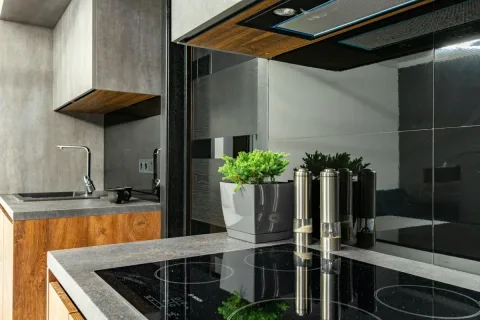

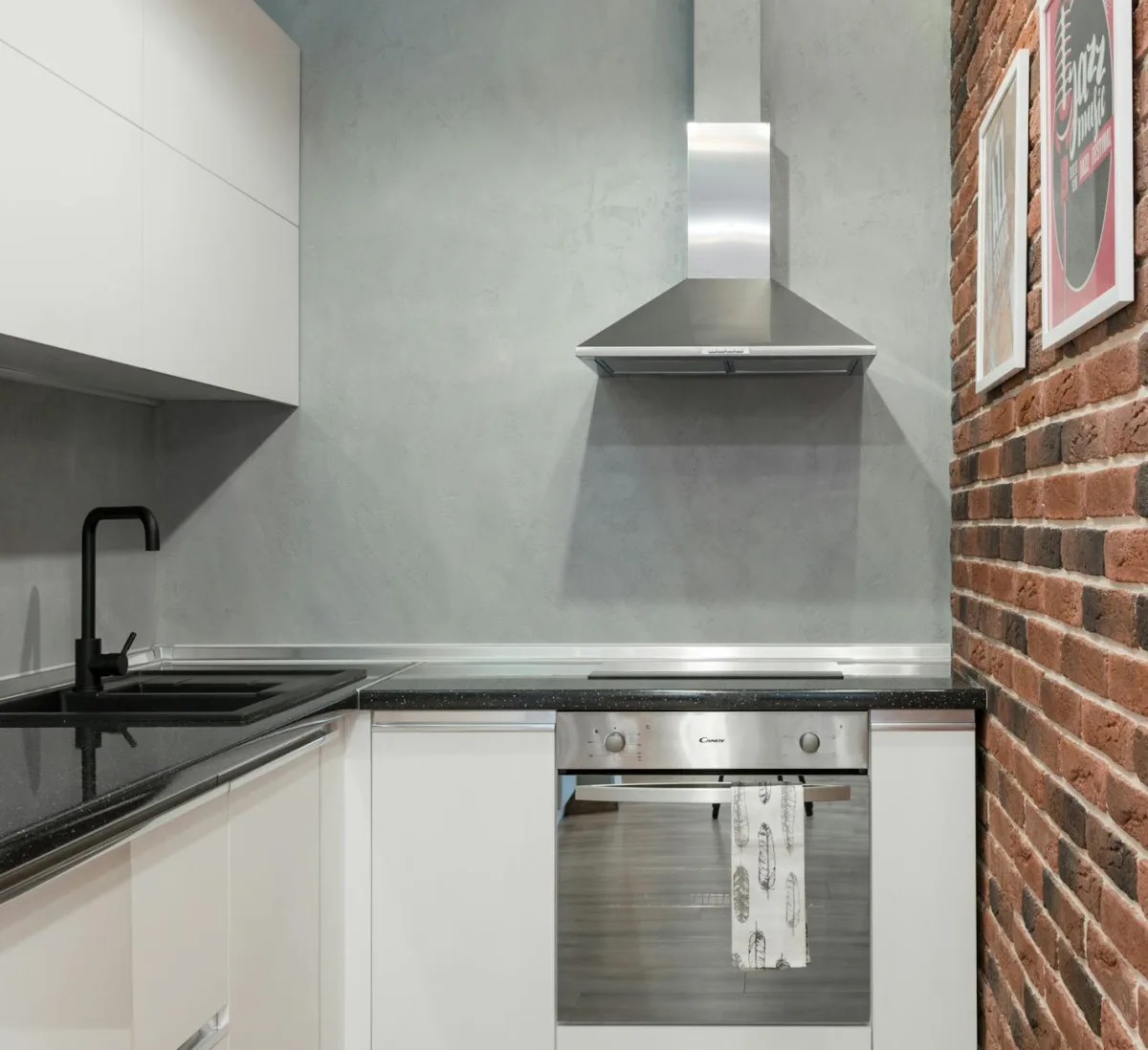
Of every intervention in the entire indoor-air-quality stack, a properly used range hood is the single highest-yield. LBNL's measurements of installed hoods show how much depends on use: capturing more than 75% of the pollution from front burners took at least 200 cfm of airflow, and often more; capture was much higher over the back burners; and under many ordinary conditions, less than half of the burner emissions were removed. Used well, on high over the back burners, a hood vented outdoors is the difference between "we know your kitchen is being used" and "the dashboard barely notices."
The critical distinction is outdoor-vented versus recirculating. An outdoor-vented hood ducts the captured air through a wall or roof penetration, outside the building. A recirculating hood passes air through an activated-charcoal filter and dumps it back into the kitchen, capturing some grease and a fraction of the PM, but essentially zero of the NOx, CO, or fine VOCs. A large majority of installed apartment and condo "range hoods" in North America are recirculating; many homeowners don't know which they have.
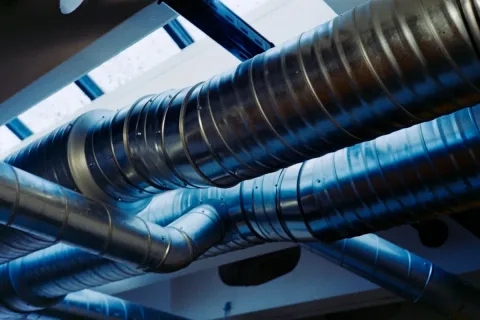
How to tell: trace the duct above the hood. If it exits through a wall or roof, vented. If it loops back through the cabinet above, recirculating. If the unit doesn't exit the kitchen at all, recirculating. Switching from recirculating to vented is a significant renovation, but the air-quality payoff is enormous, especially in homes with gas cooking.
Best-practice usage even for vented hoods: turn the hood on before ignition, run it at the highest speed your noise tolerance allows, leave it running for 5–10 minutes after cooking ends, and use the back burners when possible (better capture geometry). The dashboard sees the contrast directly: a cooking event with hood-vented vs hood-off produces dramatically different NOx and PM peaks for the same meal.
This is general guidance, not a substitute for professional assessment of your specific home. Major interventions (HVAC redesign, sealing a leaky envelope, mold remediation, electrical work for fans or venting) should be done with a certified professional. For chronic problems that don't respond to the steps here, see when to call a pro.