
CO2 is the cleanest indoor-air problem: indoors, the main source is people and pets breathing, and there is one durable answer, more outside air. No household filter removes CO2, and plants do not remove enough to matter (see plants as air purifiers). Reducing indoor CO2 means moving it out and replacing it with outdoor air, which sits around 420 ppm.
First, find out why it stays high. Sustained CO2 above 1,000 ppm (the level Health Canada uses as its residential 24-hour guideline), or an occupied room that stays well above outdoor levels, usually has one of four causes. Occupancy is high: six people in a room sized for two will pass 1,500 ppm in almost any building; CO2 tracks the headcount. Ventilation is undersized: CO2 climbs steadily at normal occupancy and never fully recovers. The envelope is unusually tight (new construction or recent sealing): same symptom, same fix. The HVAC isn't bringing in outside air: many systems recirculate by default, and a fresh-air damper can be stuck or closed; CO2 climbs even while the system runs.
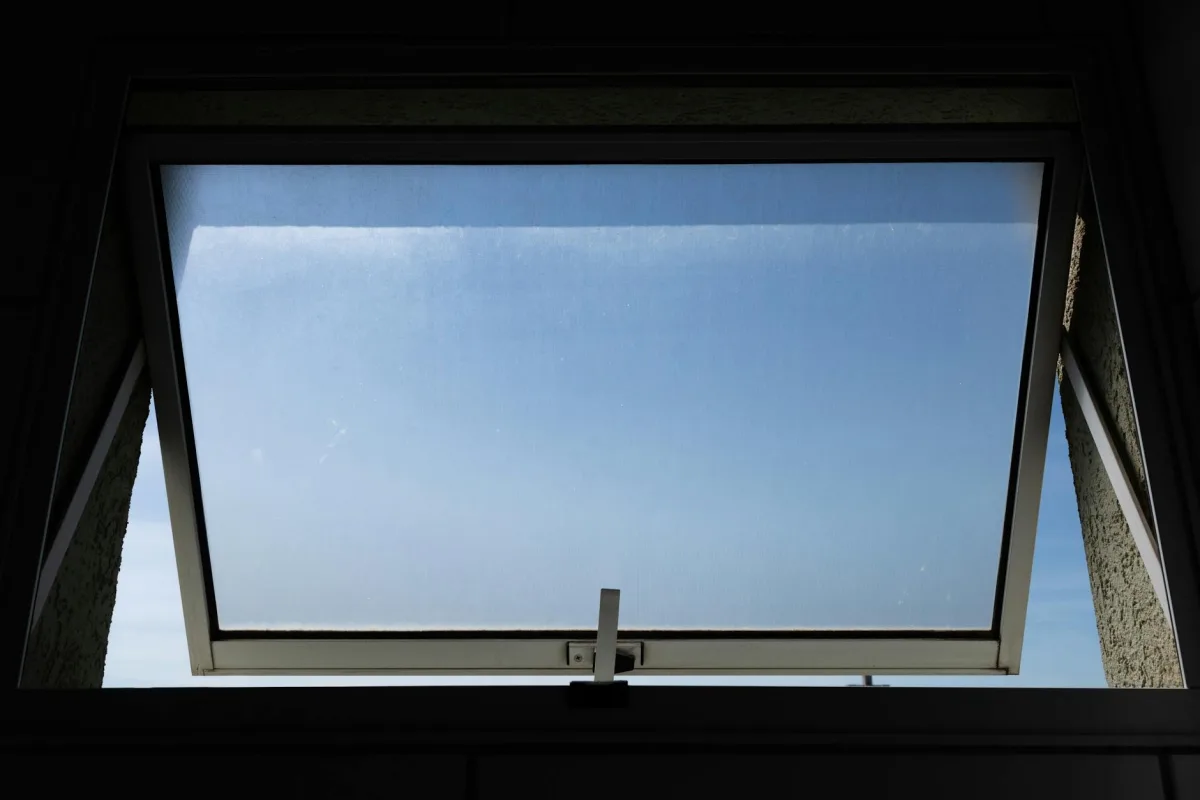
Tier 1: free. Open a window; even a small opening often lowers CO2 in a stuffy room noticeably within 15 to 30 minutes, and two windows on opposite sides (cross-ventilation) work far better than one. Open interior doors so bedroom CO2 can mix with the rest of the house. Run the HVAC fan continuously instead of on auto so air mixes between rooms. When outdoor air is poor, check open vs closed windows first.
Tier 2: cheap. Run kitchen and bathroom exhaust fans for 15 to 20 minutes longer than usual; they create slight negative pressure, and outside air leaks in to replace what they remove. Keep occupied rooms from getting crowded, and check bedroom CO2 if sleep quality is a concern. Watch the CO2 trend in the app so you can act when a room climbs past 1,000 ppm, rather than after the room already feels stuffy.
Tiers 3 and 4: moderate to capital. An energy-recovery ventilator (ERV) or heat-recovery ventilator (HRV) provides balanced whole-house ventilation: an ERV transfers heat and moisture (good in most climates), an HRV heat only (good in cold, dry climates). Sized to the ASHRAE 62.2 ventilation rate, it typically fixes a chronically stuffy house. Demand-controlled ventilation, which adjusts the ventilation rate to actual occupancy using CO2 sensing, is the gold standard for new construction or major remodels; see ventilation on demand and tradeoffs with energy.
This is general guidance, not a substitute for professional assessment of your specific home. Major interventions (HVAC redesign, sealing a leaky envelope, mold remediation, electrical work for fans or venting) should be done with a certified professional. For chronic problems that don't respond to the steps here, see when to call a pro.
References
- ASHRAE 62.1/62.2 - Ventilation for acceptable IAQ www.ashrae.org
- Health Canada - Residential CO₂ guideline www.canada.ca
- Persily - Indoor CO₂ and ventilation doi.org
- EPA - Indoor air quality basics www.epa.gov
- Allen et al. - COGfx ventilation and cognition study doi.org