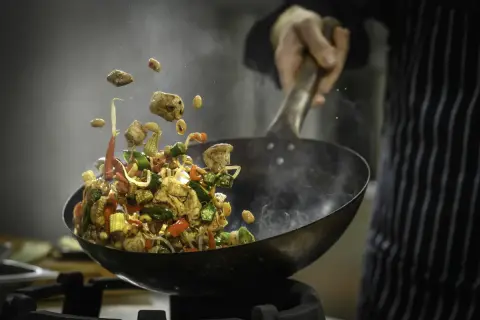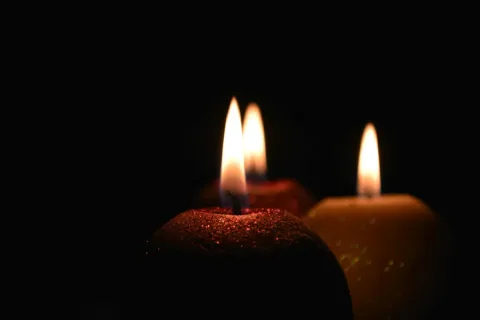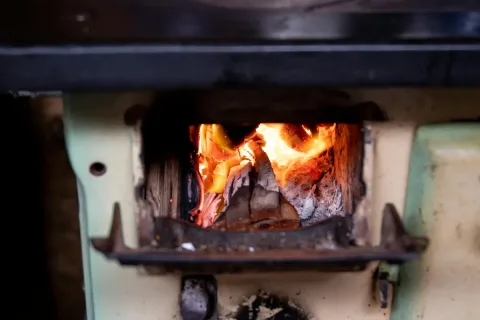

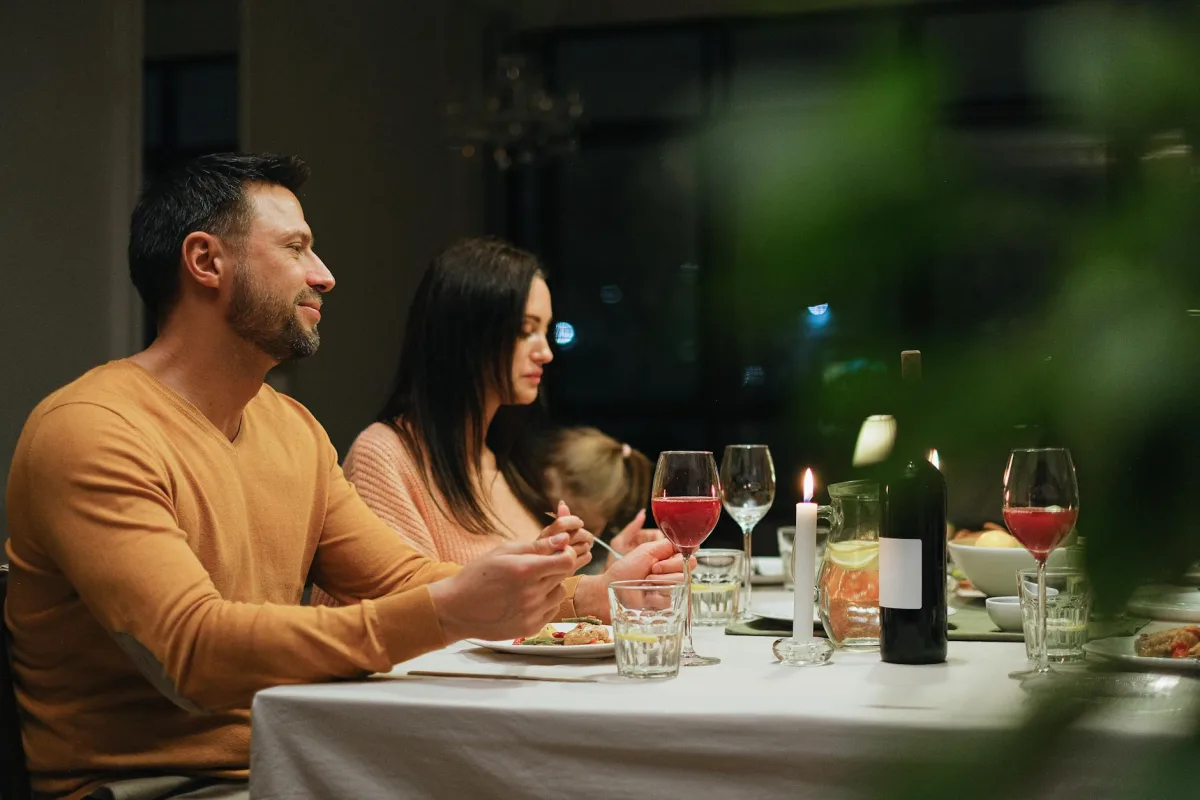
Holidays and gatherings produce multi-source events that look different from any single-source pattern. Thanksgiving cooking is hours of gas-stove or oven use plus a roasting turkey (significant fat aerosol, sustained PM2.5 elevation) plus often several lit candles or a fireplace, plus 8 to 20 additional people, plus pre-meal cleaning. Expect several readings to move at once: particles and VOCs from the cooking and candles, and CO2 from the extra people.
CO2 tracks guest count almost linearly. A typical kitchen+living area that holds 600 ppm with the resident family at dinner climbs to 1,200 to 1,800 ppm with twelve people for several hours. The interpretation does not flag this as a ventilation crisis (it is the largest single-day deviation in a typical year); it tracks the recovery time after guests leave.
PM2.5 and VOC interact during gatherings. Multiple candles plus a few hours of cooking plus fragrance from guests can sustain VOC index 200+ and PM2.5 30-80 µg/m³ for the duration of the event. Wood-burning fireplaces add another order of magnitude. These are short-duration exposures; the cumulative-exposure regime is unchanged. Terrestream does not keep health profiles, so plan ahead for sensitive household members (asthma, cardiovascular): run a HEPA purifier in the room they retreat to, and air the house out after the event.
Recovery is the diagnostic phase. A well-ventilated home returns to baseline within 1-3 hours of guests leaving. A sealed home takes 6-12 hours. If recovery is meaningfully slower than that, the structural ventilation is worth checking before the next gathering. Terrestream flags a room whose particle levels took much longer than usual to clear after an event, and the app and web dashboard show the recovery in each room's history.