
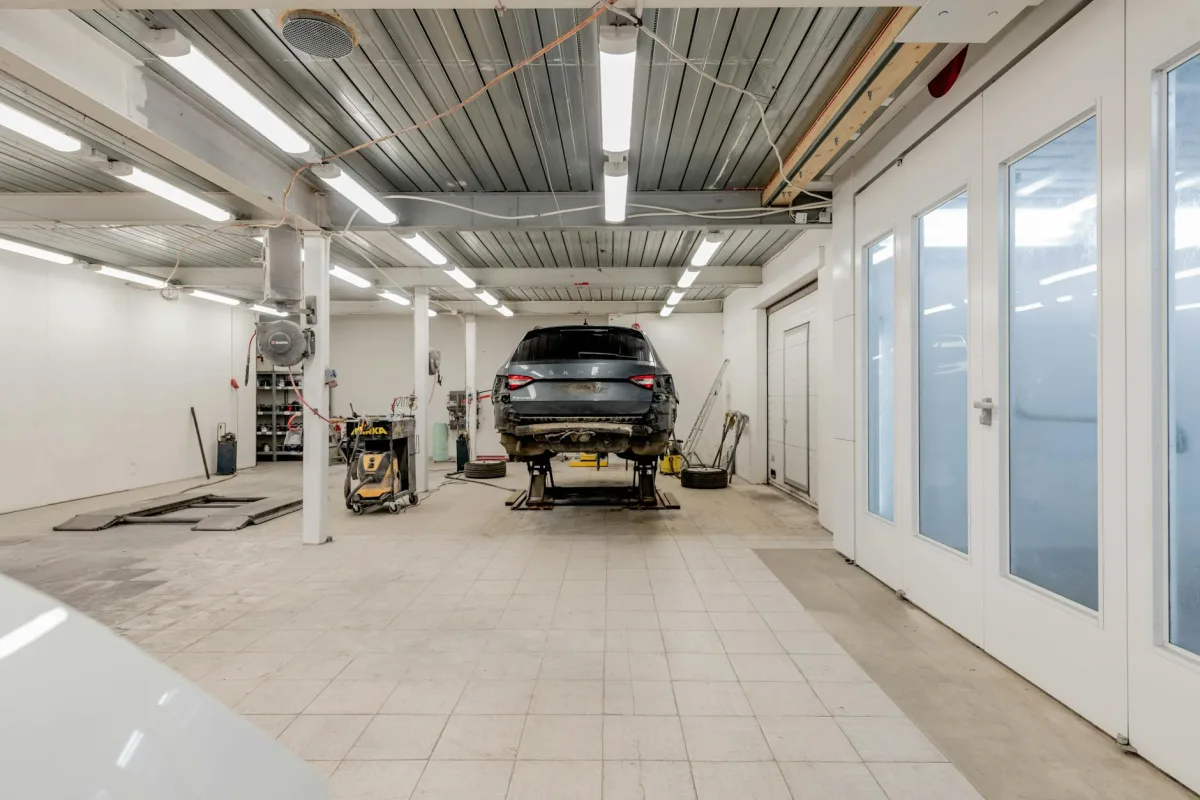
In homes that have one, an attached garage is a major source of indoor air pollution. Vehicle exhaust, lawn-equipment fumes, paint, solvents, and stored fuel leak from the garage into the house. In Batterman et al.'s study of 15 Michigan homes, air from the garage made up only about 6.5% of each house's air exchange, yet nearly all the benzene and most of the other fuel-related aromatic compounds indoors came from the garage.
Cold-start vehicle emissions are the worst case. Until the catalytic converter warms up, a car emits far more than it does once warm: Drozd et al. found that in newer vehicles cold-start emissions come almost entirely in the first 30–60 seconds, and that for some compounds a single cold start equals the emissions of up to 200 miles of warmed-up driving. "Just letting the car warm up in the garage" is the highest-risk version of this pattern; idling at all in an attached garage is a non-trivial CO event.
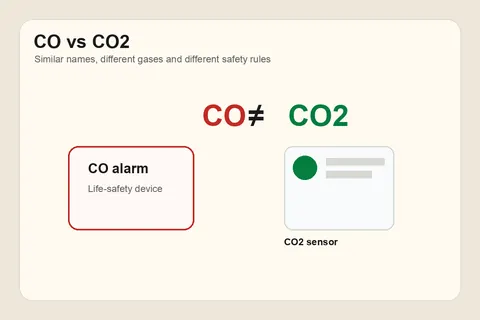
Terrestream will see the VOC and PM2.5 components of garage intrusion and flag the pattern, but it cannot detect the CO. This is exactly the case the CO disambiguation article warns about: an attached garage is one of the few residential situations where CO levels can climb fast enough to be dangerous. A UL 2034 / CSA 6.19 CO alarm in any room adjoining an attached garage is essential.
Mitigations: never idle in the garage, even briefly; back the car out quickly when starting cold; weather-seal the door between house and garage; install a passive vent or exhaust fan in the garage itself; store gasoline, paint, and solvents outside or in a detached structure if practical. Newer homes (post-2009 IRC compliance in many U.S. jurisdictions) require an air-sealed garage-to-house door, older homes often don't have one.
References
- EPA - Indoor air quality (attached garages) www.epa.gov
- CDC - Carbon monoxide poisoning FAQs www.cdc.gov
- Batterman et al. - VOC migration from attached garages into homes doi.org
- Drozd et al. - Time-resolved tailpipe emissions and cold-start effects pubmed.ncbi.nlm.nih.gov
- UL 2034 - Single and Multiple Station CO Alarms www.shopulstandards.com