
Infants are not small adults for air-quality purposes. Their respiratory rate per kilogram of body mass is two to three times an adult's, which means that for any given concentration in the air they inhale proportionally more pollutant per unit time. Lung development continues through roughly age eight, with the most rapid alveolar growth in the first two years. The immune system is immature, particularly the airway mucosal defenses, which is why respiratory infections in infants can progress faster. The American Academy of Pediatrics covers these risks for families on HealthyChildren.org; the WHO children's environmental health guidance reaches the same conclusions from international data.
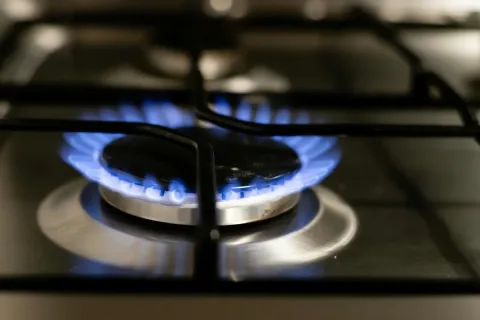
Specific sensitivities matter for nursery decisions. PM2.5 exposure early in life is associated with higher asthma incidence in cohort studies. Gas-stove combustion adds NO2, which is linked to respiratory symptoms in children; Terrestream's NOx index shows combustion events, not an NO2 concentration. Mold and dampness are linked to wheeze and respiratory infections in young children, with the NIEHS and IOM dampness-and-health reviews converging on the same conclusion. Secondhand smoke is one of the largest avoidable risks for young children; the rule is simple: no smoking or vaping anywhere in the home.
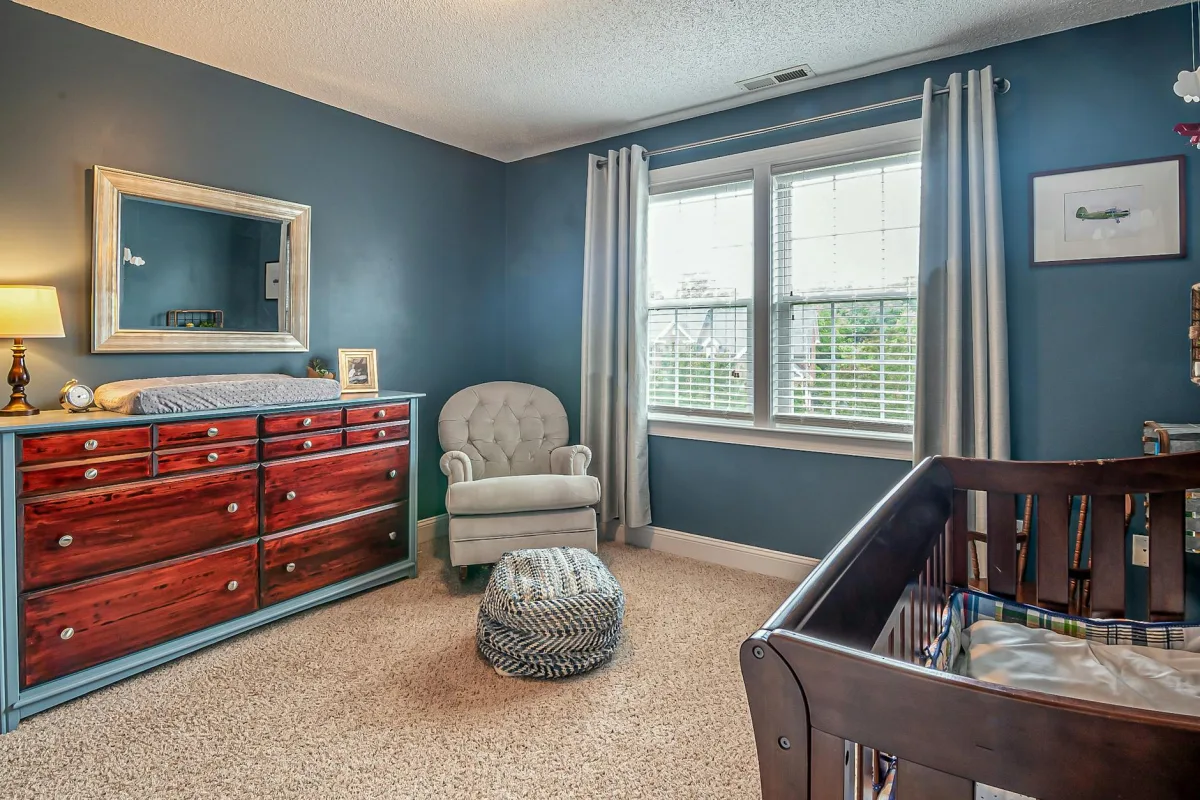
The nursery as an environment has its own design problems. Keep humidity in the range the U.S. EPA recommends for homes, 30–50%: very dry air irritates the airway, and above 60% mold and dust mites take hold. Keep particles low; a HEPA purifier sized for the room is the cleanest single intervention (see HEPA and CADR). Off-gassing furnishings deserve attention: cribs, mattresses, and changing-table finishes can shed VOCs for weeks (see mattress and bedroom off-gassing), so air out new purchases before they go into the room when you can.
Pediatric organizations do not publish separate numeric air-quality targets for nurseries, and Terrestream does not invent any: a nursery gets the same readings and color bands as any other room. For reference, the WHO's 2021 guidelines, which apply to everyone including children, set PM2.5 at 15 µg/m³ as a 24-hour mean and 5 µg/m³ as an annual mean. For advice specific to your baby, follow your pediatrician and the AAP's guidance for families on HealthyChildren.org. For the broader children's framing see children and air quality, and for overnight ventilation see bedroom overnight.
This is environmental information, not medical advice. The dashboard's readings help you make decisions about the air in your space. They do not diagnose conditions, interpret symptoms, or replace conversations with your physician. If symptoms persist, worsen, or coincide with a known exposure, talk to a healthcare professional. See what Terrestream's advice covers.
References
- AAP (HealthyChildren.org) - Indoor air pollution and children's health www.healthychildren.org
- CDC - Positive parenting: infants www.cdc.gov
- WHO - Air pollution and child health www.who.int
- NIH NIEHS - Children's environmental health www.niehs.nih.gov