
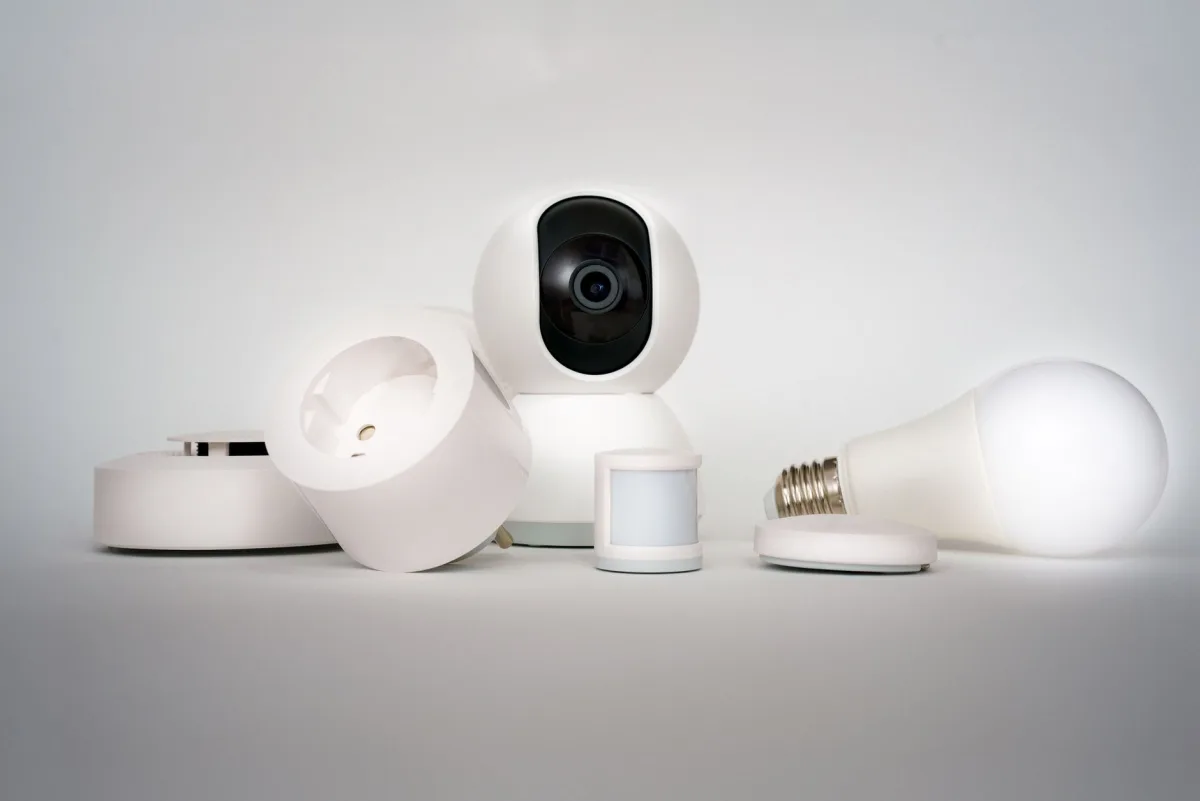
El Sensirion SEN66 de Terrestream mide la masa de partículas aerotransportadas (PM1, PM2.5, PM4, PM10) usando una celda de dispersión láser de 660 nm. Verá el humo. No lo salvará de un incendio. La latencia de detección está mal, la respuesta está mal y el umbral de alarma está mal. Cada unidad de vivienda necesita una alarma de humo listada UL 217, colocada apropiadamente según NFPA 72: una dentro de cada habitación para dormir, una afuera de cada área de dormir, una en cada nivel incluyendo el sótano, todas interconectadas de modo que una que se active despierte al resto.
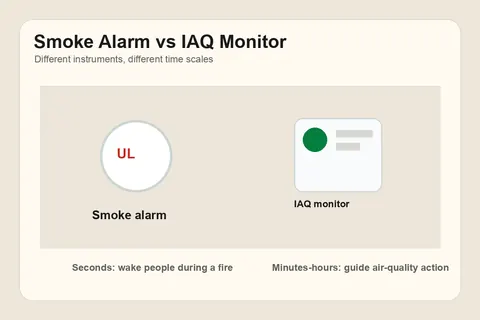
La brecha de tiempo es la parte que la mayoría de la gente subestima. Una alarma de humo UL 217 tiene que detectar un incendio en desarrollo dentro de decenas de segundos de humo visible y producir un patrón temporal-tres de 85 dBA. Un sensor de partículas reporta un promedio móvil de un minuto. En un incendio flamígero de grasa de cocina, el PM2.5 subirá a varios cientos de μg/m³ en un minuto, el panel lo mostrará, lo verá en su teléfono si por casualidad está mirando, y para entonces el detector de humo en el techo ha estado gritando durante cincuenta segundos. Para cuando el panel le diga algo, la alarma ya debería haberle dicho a todos en la casa.
También está la brecha de sonoridad. Una alarma de humo está diseñada para despertar a un adulto dormido; una notificación telefónica no. Los estudios de la National Fire Protection Association muestran que los niños en particular duermen a través de tonos de baja frecuencia y electrónica silenciosa. El panel es silencioso por diseño. La alerta de PM2.5 impulsada por CADR puede que ni siquiera llegue a su teléfono si tiene las notificaciones desactivadas, y la señal de audio (si la activó) es de volumen de consumidor, no de volumen de seguridad de vida. Nada de esto es un sustituto para una bocina T-3 de 85 dBA a dos metros de su almohada.
Use el panel para lo que es bueno: confirmar después del hecho que un pequeño incendio de cocina sí dejó PM elevado, o mostrar que una vela está produciendo más hollín del que parece, o cuantificar cuánto humo de incendio forestal está entrando por ventanas cerradas. Para «¿se está incendiando mi casa?» la respuesta viene del techo, no de la pantalla.
Inteligencia Terrestream · cerca de ti
Lo que un Terrestream señalaría hoy en Columbus, OH
Situación
Intrusión de humo exterior
Condiciones de aviso por humo · AQI 30 · PM2.5 5 µg/m³ · 70° · cerca de Columbus, OH
AQI exterior · Open-Meteo · hace 2 h
Es probable que humo de incendios forestales esté llegando a tu zona. En una casa como esta, un Terrestream señalaría el aumento de partículas finas en el interior y recomendaría cerrar y filtrar — y seguiría verificando que el aire interior se mantenga más limpio que el exterior.
- PM2.5 (interior) 12 µg/m³ Moderate
- CO₂ (interior) 640 ppm Moderate
Acción recomendada Ahora
Sellar y filtrar
- Cerrar las ventanas
- Encender un purificador
Mantén puertas y ventanas cerradas, enciende un purificador y evita generar partículas en el interior (freír, velas, aspirar). El objetivo: mantener las PM interiores por debajo de las exteriores.
Para orientación de salud y cualquier indicación de permanecer en interiores o evacuar, sigue los avisos oficiales de calidad del aire y a tus autoridades locales.
Ilustración: las condiciones exteriores son datos reales y aproximados de tu zona; los valores interiores son modelados, no medidos. Ningún dispositivo está reportando desde tu casa. No es consejo médico.
Referencias
- NFPA 72 - Código Nacional de Alarmas de Incendio y Señalización www.nfpa.org
- UL 217 - Alarmas de humo www.shopulstandards.com
- NFPA - Datos sobre alarmas de humo www.nfpa.org
- USFA - Seguridad contra incendios en el hogar www.usfa.fema.gov