

Indoor air quality is not climate-neutral.
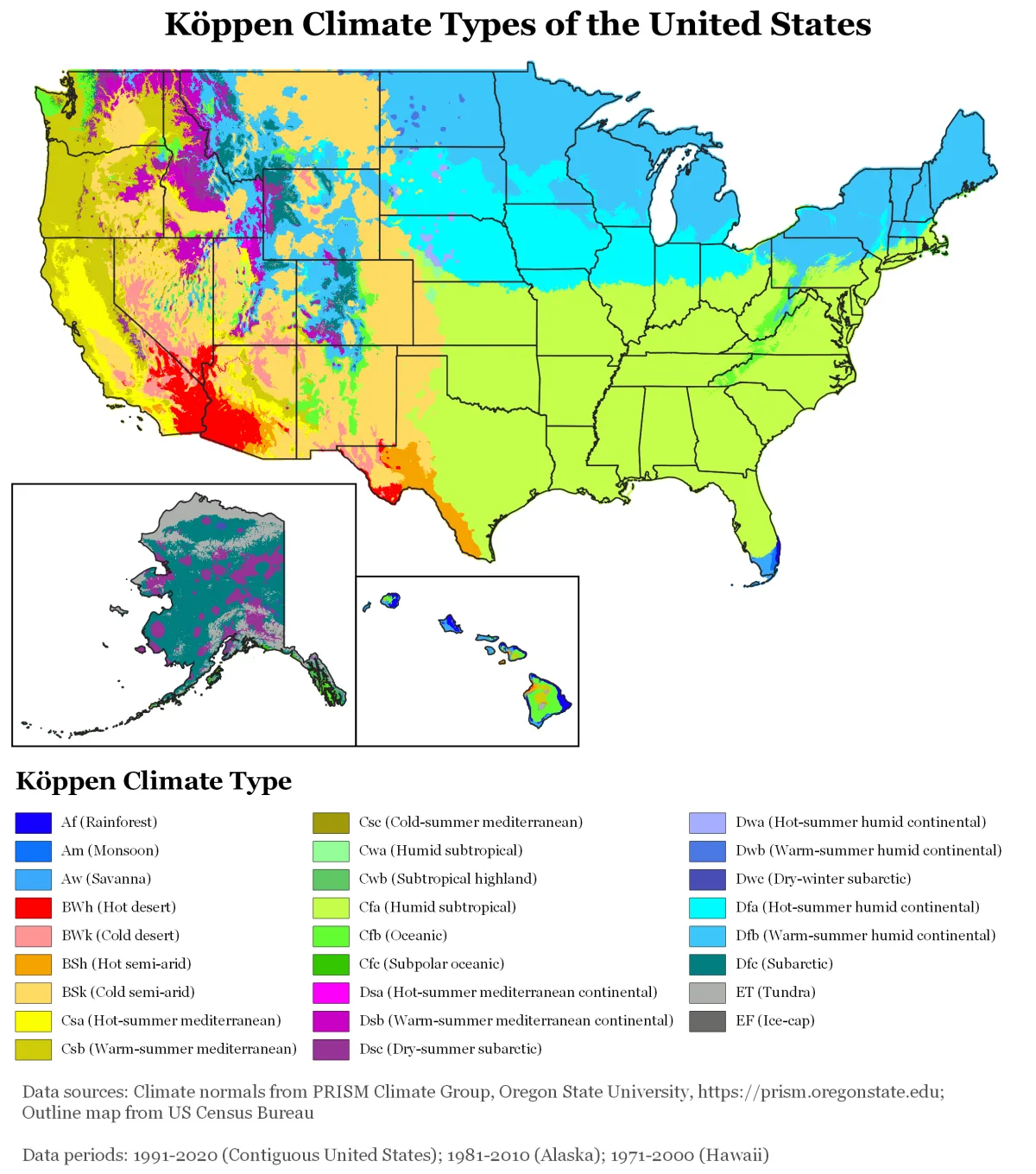
The ASHRAE 169 climate zones and the parallel IECC energy-code zones divide North America into 8 zones (1 hot-humid to 8 subarctic), each with characteristic indoor-air pressure points.
Cold and very cold zones (ASHRAE 5–8 / Köppen Dfa, Dfb, Dfc - New England, Upper Midwest, Prairies, Yukon): homes are tightly sealed for energy efficiency, indoor humidity drops dangerously low in winter (often under 25%), CO2 accumulates faster in sealed bedrooms, and HRV/ERV units are nearly mandatory. Terrestream does not change its thresholds by climate zone; it responds to your own readings and local weather, such as the dry indoor air of the heating season.
Hot-humid zones (ASHRAE 1–3 / Köppen Cfa, Csa - Gulf Coast, Southeast, southern California coast): mold risk dominates. Air conditioning is the primary humidity-control mechanism; when it is undersized or running in "fan only" mode, RH climbs above 60% on coastal nights and stays there. Dust mites and mold thrive year-round. Terrestream uses the same mold-risk criteria everywhere; in these zones, sustained high humidity simply meets them more often.
Hot-dry (ASHRAE 2B/3B / Köppen BWh, BSk - Southwest US): low ambient humidity makes infiltration of outdoor pollutants (dust, ozone, wildfire smoke during summer) more impactful because there is no humidity buffer for irritation. Temperate marine (ASHRAE 4C / Köppen Csb, Cfb - Pacific Northwest, BC coast): mild outdoor air most of the year but wildfire smoke season has expanded dramatically; mold pressure is moderate. Terrestream does not adjust for climate zone: the same indoor PM2.5 reading is treated the same way everywhere, and its advice follows your readings and the outdoor conditions at your home's location.
References
- ASHRAE Standard 169 - Climatic data for building design www.ashrae.org
- IECC - Climate zones for energy code codes.iccsafe.org
- WHO - Guidelines for indoor air quality: dampness and mould www.who.int
- EPA - Particulate matter basics www.epa.gov