
The envelope and HVAC of your building structurally constrain what your indoor air can look like. At setup, Terrestream asks for the setting (residential, commercial, educational and so on) and the room, and uses the room type to decide which situations apply, such as cooking in a kitchen or overnight CO2 in a bedroom. It does not ask whether you live in a detached house, a townhome, or an apartment, so the patterns below are yours to apply.
Detached single-family homes (most common in North American suburbs): largest envelope, most leakage (0.3 to 0.5 ACH passive), CO2 rises slowest, ventilation often natural or via a single bath/kitchen fan. Outdoor pollutants infiltrate freely on windy days. Wood-burning is more common; gas appliances are usually outdoor-vented. In a detached home, unusually high CO2 suggests something is unusually sealed, while sustained PM2.5 that tracks outdoor levels usually means infiltration.
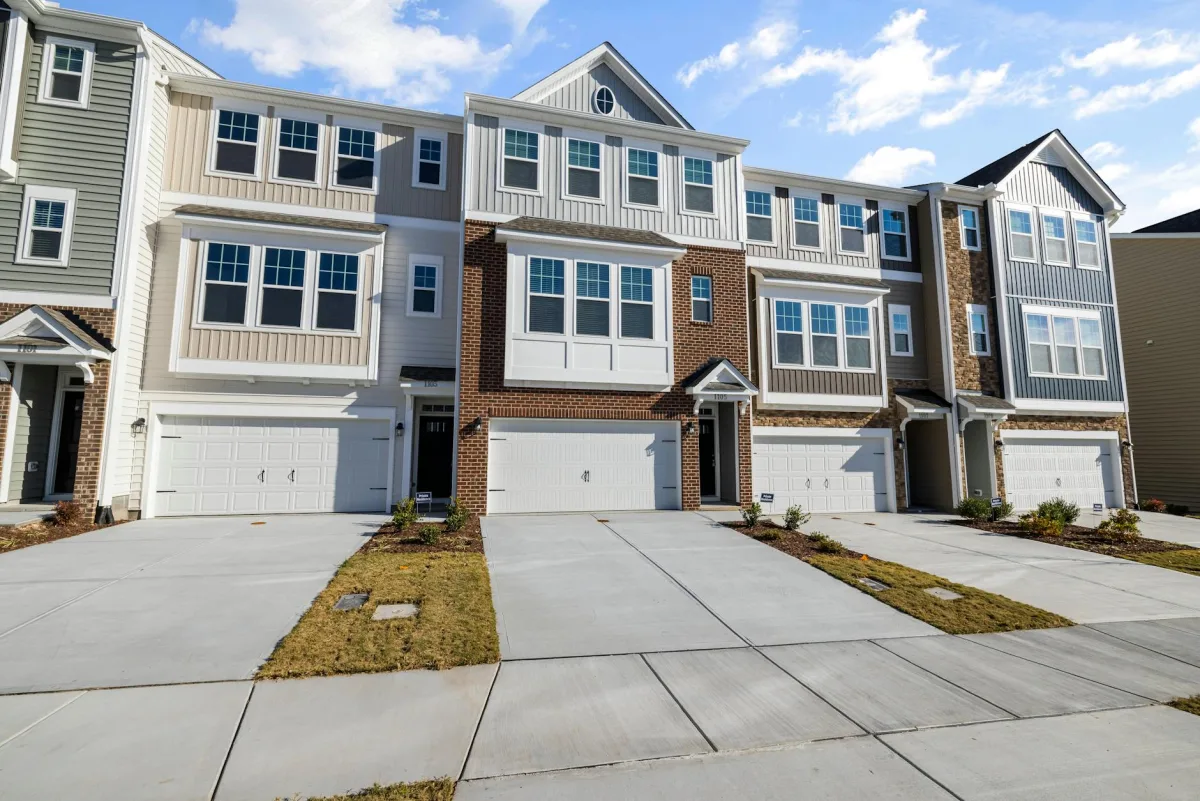
Townhomes and rowhouses: shared walls reduce envelope leakage, neighbor activity introduces cross-unit signals (smoke from a neighbor's gas range, dryer-vent backflow, fragrance from shared HVAC). Tight envelopes can produce surprisingly high CO2 in bedrooms. Apartments: smallest air volume per person, highest occupancy density, often shared HVAC with neighbors (Building Air Loss patterns), high probability of cross-unit infiltration including cigarette smoke and cooking odors. LBNL infiltration measurements document the patterns.
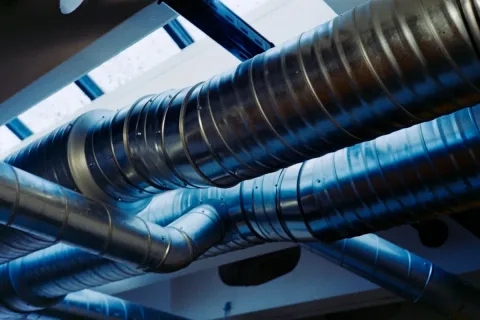
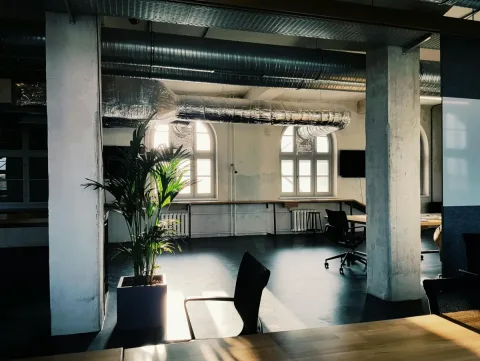
Commercial buildings (offices, schools, retail): large HVAC systems with demand-controlled ventilation (see DCV), substantial outdoor-air dilution, but per-occupant rates vary widely. Cooking is concentrated in cafeterias rather than distributed. Cleaning happens on a fixed schedule (visible as nightly VOC pulses). Each building type has its own typical signatures: a 1,500-ppm CO2 reading in a detached home is unusual, in an apartment bedroom is common, in a packed conference room is expected.
References
- LBNL - Building air infiltration doi.org
- ASHRAE Standard 62.2 - Residential ventilation www.ashrae.org
- LBNL Indoor Air Quality science portal iaqscience.lbl.gov
- IECC - Climate zones for energy code codes.iccsafe.org