
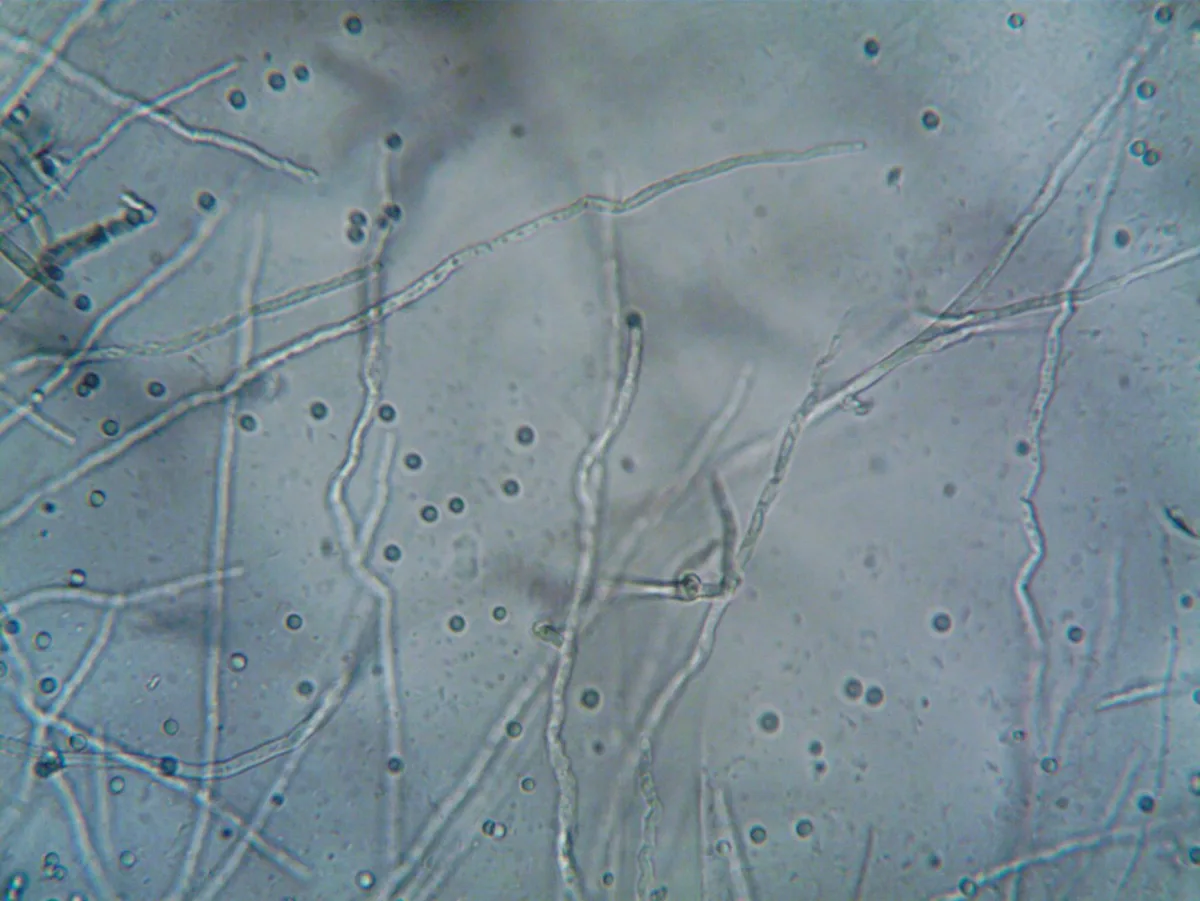
When allergy services publish "pollen and mold counts" for an area, the mold portion refers to outdoor airborne mold spores: microscopic fungal reproductive units that produce allergic responses similar to pollen but with different timing and biology. The AAAAI mold allergy reference is the standard introduction.
Four genera dominate North American outdoor mold spore counts. Cladosporium is the most common globally, peaking summer through fall, often the largest fraction by count. Alternaria is a strong allergen, particularly associated with severe asthma, peaking late summer; ragweed allergic patients often co-react to Alternaria. Aspergillus and Penicillium are present year-round but generally lower in count than the outdoor types.
Mold spore counts and pollen counts are not equivalent metrics. Spore counts often peak when pollen counts are dropping (late summer for ragweed-correlated Alternaria), and they continue through the first frost when pollen has long ended. A common pattern: an allergic person who attributes symptoms to ragweed in August may be co-reacting to Alternaria spores at the same time. The dashboard's pollen data comes from the Google Pollen API, which covers tree, grass and weed pollen only; it does not include mold spores, so outdoor mold forecasts are not part of the outdoor feed. For mold counts, consult a dedicated allergy service.
Important distinction: outdoor mold spores are unrelated to indoor mold problems (see mold spores). Outdoor mold counts spike whether or not your home has any indoor mold issue; conversely, an indoor mold problem will affect symptoms regardless of what outdoor counts are doing. They share the genus but are separate exposure pathways. Either way, Terrestream does not detect mold and does not carry an outdoor mold-spore forecast: the outdoor pollen feed (Google Pollen) covers tree, grass and weed pollen only, and the product is not intended for the detection of mold.
References
- AAAAI - Mold allergy reference www.aaaai.org
- Pollen.com - National allergy forecast pollen.com
- WHO - Guidelines for indoor air quality: dampness and mould www.who.int
- NOAA / NWS - Air quality and pollen www.weather.gov