

The Terrestream sensor reads what is in the room. But the right action (open a window, or seal up) depends on what is outside the window. Two outdoor signals the dashboard cross-references heavily are ozone and pollen.
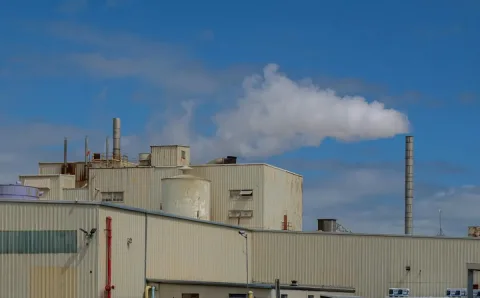
Ground-level ozone is not emitted directly; it forms when sunlight catalyzes a reaction between NOx and VOCs in the air. That means it peaks on sunny afternoons in summer, and it can be high outdoors when the air looks clean. EPA health-effects data show measurable lung-function impacts at 70 ppb, and asthma exacerbations well below that. On a high-ozone afternoon, opening a window brings the ozone inside.
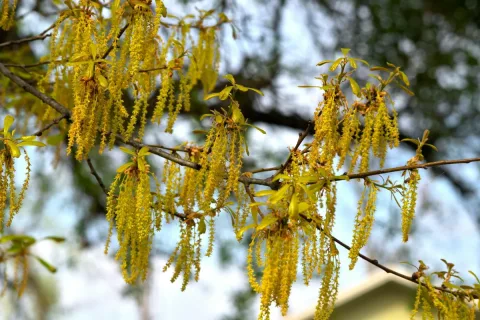
Pollen behaves seasonally and diurnally. AAAAI notes tree pollen dominates spring, grass pollen early summer, ragweed late summer to first frost. Diurnally, dry-air pollen counts peak in early morning (4 a.m. to 10 a.m.) and again in late afternoon. The sensor sees the resulting PM10 spike whenever pollen drifts indoors.
Terrestream gets outdoor pollen from Google's Pollen API and outdoor ozone from Open-Meteo's modeled air-quality data, falling back to Google's Air Quality API for the current reading (see outdoor air feeds). It will not suggest opening windows while outdoor ozone is high; high pollen adds a caution instead of blocking the suggestion. When pollen is high and your indoor PM10 climbs in lockstep, closing windows and running a HEPA filter is usually the better move.
References
- EPA - Ground-level ozone basics www.epa.gov
- NOAA / NWS - Air quality and pollen www.weather.gov
- AAAAI - Pollen allergy guide www.aaaai.org
- EPA - Health effects of ozone www.epa.gov