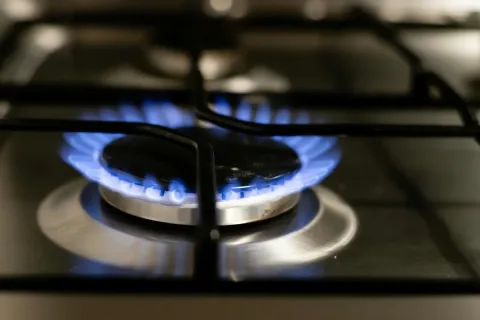

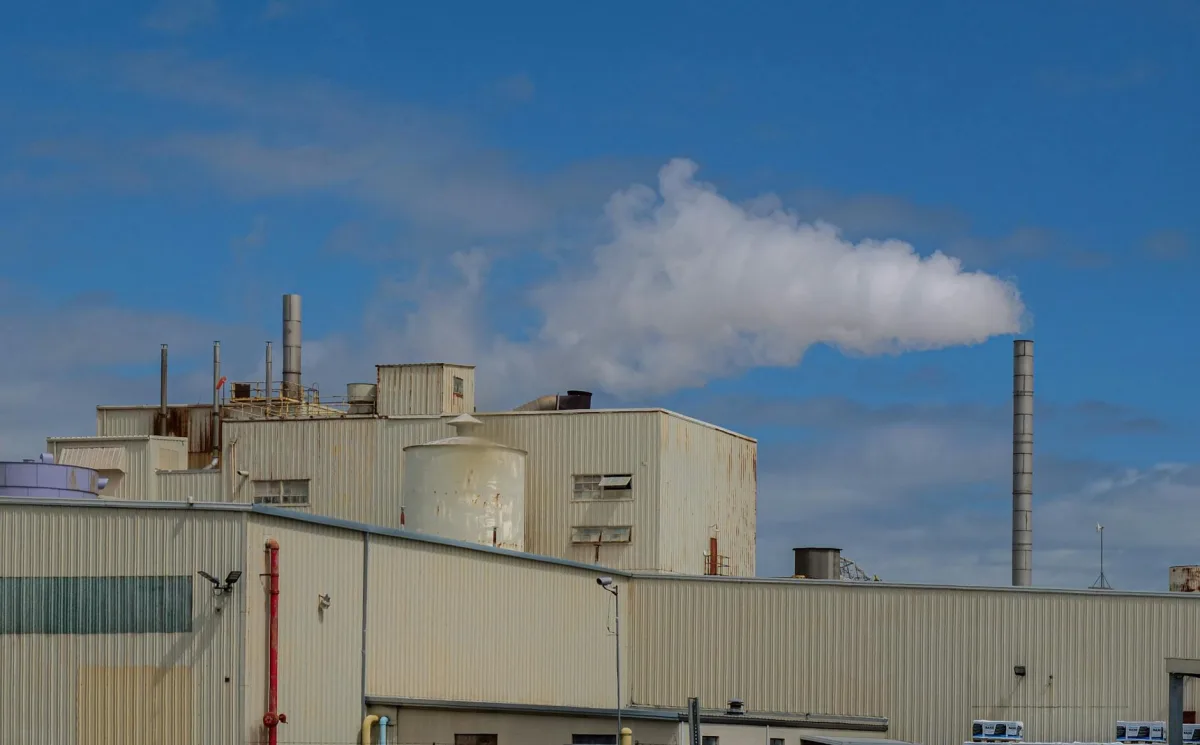
Sulfur dioxide (SO2) is the gas you smell faintly when a match strikes. Industrially, it forms whenever you burn fuel that contains sulfur, historically coal, today still some heavy oil, diesel, and the unrefined "bunker" fuel used by ocean shipping. It is also a major component of volcanic emissions and a minor component of wildfire smoke.
Acute health effects are concentrated in the airways. EPA's primary NAAQS is 75 ppb over a 1-hour average, set to protect asthmatics, who can experience bronchoconstriction at exposures below the limit. WHO's 2021 guideline is tighter: 40 µg/m³ as a 24-hour average.
Terrestream does not measure SO2 directly: the SEN66's MOX gas array doesn't differentiate sulfur compounds from other reducing gases. Instead, the app pulls an outdoor SO2 forecast from Open-Meteo's air-quality model. The number is a regional estimate, not a hyperlocal reading.
For most people in residential areas, outdoor SO2 is now low: EPA's national trend data show average concentrations falling substantially over the decades as coal plants closed and fuel sulfur limits tightened. Spikes typically come from nearby industry, port operations (cruise and container ships at idle), or volcanic events (Hawaii, Iceland, Indonesia). When the forecast for your area shows elevated SO2, Terrestream's window guidance in the app switches to keeping windows closed and names sulfur dioxide as the reason. EPA notes that people with asthma, particularly children, are the most sensitive to SO2.
References
- EPA - Sulfur dioxide basics www.epa.gov
- EPA - Sulfur dioxide trends www.epa.gov
- WHO Global Air Quality Guidelines (2021) www.who.int
- Open-Meteo - Air Quality API documentation open-meteo.com
- Copernicus CAMS - Global atmosphere monitoring atmosphere.copernicus.eu