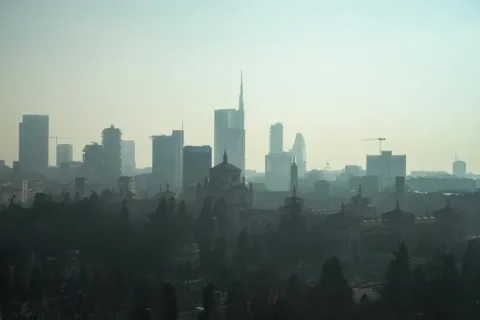


Sulfur dioxide (SO2) is overwhelmingly outdoor-driven. The major sources globally are coal-fired electricity generation (declining in North America and Europe, still significant in much of Asia), maritime shipping near major ports (heavy fuel-oil bunker combustion), oil refining, and volcanic emissions during eruptions. Indoor sources are essentially nil except for kerosene heaters and a few specialty industrial processes; residents in homes near these sources see indoor SO2 tracking outdoor SO2 with a damping factor similar to ozone (0.3-0.5 in closed homes).
The playbook overlaps PM2.5. SO2 chemistry in the atmosphere converts much of it to ammonium sulfate aerosols (PM2.5) within hours to days. For health-effects purposes, the SO2-driven exposure is often dominated by the secondary PM2.5, not the SO2 itself. The interventions for reducing PM2.5 apply directly: MERV-13 HVAC filtration, portable HEPA per CADR, and envelope sealing during alerts.
SO2-specific notes. Activated-carbon filtration removes SO2 reasonably well, faster than ozone, slower than VOCs; whole-house carbon filters at HVAC return are worth considering for residents within several miles of a coal plant, port, or refinery. For volcanic-emission events (Hawaii, Iceland, parts of Italy and Indonesia), close windows during the highest VOG ("volcanic smog") levels and run HVAC on recirculate with a fresh carbon filter; these events can last days to weeks.
Long-term remediation. The most impactful intervention is usually political rather than technical: support local air-quality regulation, industrial emission standards, and port-electrification efforts. From a household perspective, knowing your exposure profile is the first step; the app's outdoor SO2 forecast, from Open-Meteo's air-quality model, is a regional estimate that helps you time ventilation, not a reading at your address. See outdoor air feeds for the data source and sulfur dioxide for health-effects background.
This is general guidance, not a substitute for professional assessment of your specific home. Major interventions (HVAC redesign, sealing a leaky envelope, mold remediation, electrical work for fans or venting) should be done with a certified professional. For chronic problems that don't respond to the steps here, see when to call a pro.
References
- EPA - Sulfur dioxide basics www.epa.gov
- WHO - Global air quality guidelines (SO₂) www.who.int
- USGS - Volcanic smog (vog) FAQ www.usgs.gov
- Copernicus CAMS - Global atmosphere monitoring atmosphere.copernicus.eu