
PM2.5 lives in two regimes indoors: a chronic baseline (a few µg/m³ from infiltration, cooking residue, and dust) and acute events (wildfire smoke, cooking spikes, candles). The strategy is the same shape for both: filter what is already there and prevent what you can. For context, the WHO 2021 PM2.5 guidelines are 15 µg/m³ for 24 hours and 5 µg/m³ as an annual average.
When PM is rising, check outdoors first. Compare with the outdoor reading in the app. If outdoor PM is high, it is infiltration: close windows, run HEPA filtration, and set the HVAC to recirculate; at wildfire levels, see wildfire smoke. If outdoor air is clean, the source is inside, and the other readings help name it. PM2.5 with an NOx rise points to gas cooking (see cooking fingerprints); PM2.5 with a VOC rise points to candles or incense; a PM10 rise with little PM2.5 points to dust, pollen, or dander; sustained PM2.5 with broad VOC points to wood burning (see wood stoves).
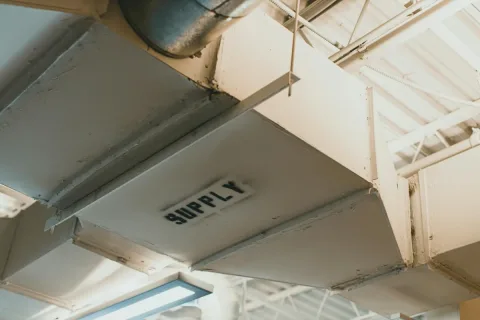
Filtration: HVAC plus portable HEPA. Upgrade the HVAC filter to MERV-13, the cheapest broad win in most homes. Add a portable HEPA purifier in the rooms people use most, sized by CADR: CADR in cfm ≈ room volume in cubic feet × the air changes per hour you want ÷ 60. At five air changes per hour, most living rooms need 200–300 CADR and bedrooms 100–150. AHAM Verifide lists independently tested CADR values; don't trust unverified claims.
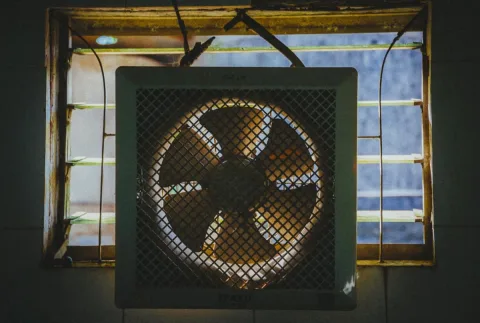
Budget option: Corsi-Rosenthal box. A box fan and four MERV-13 furnace filters taped into a cube delivers high clean-air delivery for well under the cost of most commercial purifiers; see DIY Corsi-Rosenthal. For wildfire-smoke events, one per occupied room is a strong, cheap setup.
Source control. Run a range hood vented outdoors during all cooking, especially high-temperature frying, the biggest household PM2.5 source for most people (see range hood venting). Avoid candles, incense, and oil burners, or ventilate while they burn. Damp-dust rather than dry-dust, which just re-suspends what you're trying to remove, and run HEPA filtration where dust or pets are the issue. For wood heat, improve burn quality and venting. Use recovery curves to estimate when the air will clear, and see the renter's guide if you can't remove the source.
This is general guidance, not a substitute for professional assessment of your specific home. Major interventions (HVAC redesign, sealing a leaky envelope, mold remediation, electrical work for fans or venting) should be done with a certified professional. For chronic problems that don't respond to the steps here, see when to call a pro.
References
- WHO Global Air Quality Guidelines (2021) www.who.int
- AHAM Verifide - Directory of air cleaners ahamverifide.org
- EPA - Guide to air cleaners in the home www.epa.gov
- EPA - Wildfire smoke course www.epa.gov
- ASHRAE - Standards and guidelines (MERV) www.ashrae.org
- EPA - Particulate matter (PM) pollution www.epa.gov