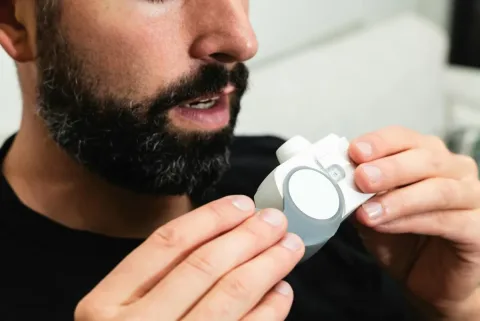


Terrestream is not a mold detector. It does not detect or report mold, and it does not count mold spores; spore counting requires lab methods (spore-trap microscopy or culture). All Terrestream can do is report temperature, pressure, and relative humidity, and inform you about conditions that are sometimes associated with mold formation. Mold can still grow in other conditions, the sensor may not detect all conditions in which mold forms, and mold can grow in places the sensor cannot detect. Terrestream is not intended for the detection of mold.
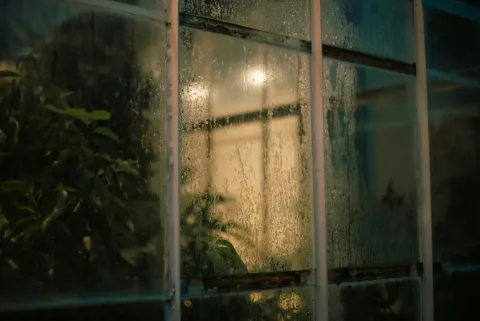
EPA mold guidance is consistent: indoor mold growth requires (1) a moisture source, (2) a nutrient source (drywall, wood, dust), and (3) time. The key environmental threshold is sustained relative humidity above 60% at the substrate surface. Because cool surfaces have lower temperature, the dew point matters: cold corners of exterior walls can be at 100% RH while the room reads 50%.
When room RH stays above about 60% for an extended period, especially overnight, that is one condition sometimes associated with mold growth - Terrestream can surface it as a humidity observation, not a mold finding. It cannot tell you whether mold is actually present. Confirming mold requires a visual inspection or professional testing; common suspect surfaces are bathroom walls, basement corners, behind kitchen sinks, and window frames.
What to do: lower indoor humidity, fix the moisture source (this matters more than killing the visible mold), improve ventilation in chronically damp rooms. WHO dampness and mould guidelines are the international consensus reference. For health-symptomatic occupants, a professional remediation assessment is worth the cost.
This is environmental information, not medical advice. The dashboard's readings help you make decisions about the air in your space. They do not diagnose conditions, interpret symptoms, or replace conversations with your physician. If symptoms persist, worsen, or coincide with a known exposure, talk to a healthcare professional. See what Terrestream's advice covers.
References
- EPA - Mold course: water & moisture www.epa.gov
- CDC - Mold facts www.cdc.gov
- WHO - Guidelines for indoor air quality: dampness and mould www.who.int
- NAS Institute of Medicine - Damp indoor spaces and health nap.nationalacademies.org