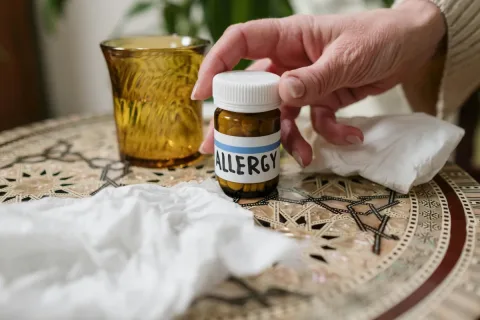


Pet "dander" is not the hair itself. It is the dried skin flakes and saliva proteins that cling to hair and fall off as the animal moves. The main allergens are Fel d 1 (cat, in skin secretions and saliva) and Can f 1 (dog). Cat allergen is famously persistent: it can remain in a home's dust for months after the cat leaves. Dog allergen drops faster. No breed is truly hypoallergenic; "hypoallergenic" dogs and cats make the same proteins, sometimes in smaller amounts.
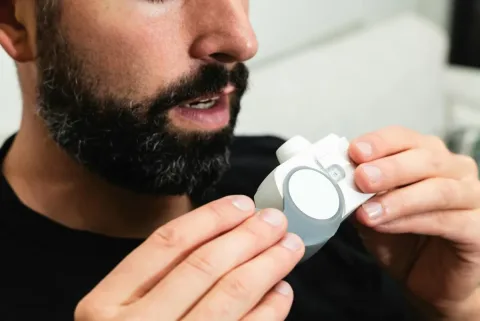
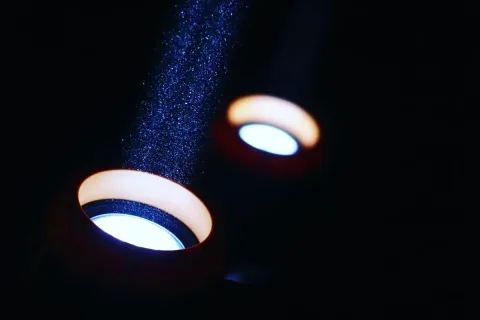
The sensor cannot tell dander from dust or pollen. Cat allergen travels on particles of many sizes, some small enough to stay airborne for hours, and they stick to walls, fabrics, and filters and re-enter the air when surfaces are disturbed. The SEN66 sizes particles from 0.3 µm up and calculates PM10 from the size distribution, so coarse particles are only estimated. What the readings can show is the pattern: when PM10 rises with household activity while PM2.5 stays moderate and the VOC and NOx indexes stay flat, stirred-up dust, dander, or pollen is more likely than combustion.
The goal is exposure reduction, not elimination. In rough order of effectiveness: a HEPA purifier sized for the room (AHAM's rule of thumb is a smoke CADR of at least two-thirds of the floor area in square feet), a MERV-13 HVAC filter with the fan running continuously, keeping pets out of bedrooms, allergen-impermeable bedding covers, and washing bedding weekly in hot water. Use a HEPA vacuum with a sealed filter housing, and swap wall-to-wall carpet in heavy pet areas for washable rugs. Bathing a dog weekly lowers airborne allergen for a few days; cats tolerate brushing, outdoors if possible, better than baths. AAAAI and AAFA review the evidence.
Litter boxes. Bacteria convert the urea in cat urine to ammonia over hours to days. The sensor does not measure ammonia; a box that needs attention may show only as a small VOC-index rise, or not at all, so your nose is the better detector. Scoop at least daily, change the litter fully every week, and put the box somewhere with some ventilation.
Pets are sensitive occupants too. Smaller bodies and faster breathing mean a higher dose per kilogram. Birds are the most sensitive by far: fumes from overheated nonstick (PTFE) cookware can kill a pet bird quickly, and aerosol sprays, scented candles, and smoke are all higher-stakes for birds than for people. Cats can develop asthma, and they groom deposited particles off their fur, so smoke is especially hard on them. Small mammals react to ammonia from soiled bedding, and fish tanks add humidity. Never use aerosol pesticides in a room with pets. See wildfire smoke for smoke days.
This is environmental information, not medical or veterinary advice. Terrestream's readings help you make decisions about the air in your space. They do not diagnose conditions, interpret symptoms, or replace conversations with your physician or veterinarian. If symptoms persist, worsen, or coincide with a known exposure, talk to a professional. See what Terrestream's advice covers.
References
- AAAAI - Pet allergy guide www.aaaai.org
- AAFA - Pet (dog & cat) allergies aafa.org
- NIH NIEHS - Pet allergens www.niehs.nih.gov
- EPA - Asthma triggers: gain control www.epa.gov
- Platts-Mills - Allergic disease (NEJM) pubmed.ncbi.nlm.nih.gov
- AVMA - Wildfire smoke and animals www.avma.org
- AHAM Verifide - Air filtration standards (CADR) ahamverifide.org