PM2.5: the fine stuff
Particles smaller than 2.5 micrometers slip past your nose, lodge deep in the lungs, and cross into the bloodstream. They are the single most-studied air pollutant.

Guides & support
Set up your sensor, connect your home, and make sense of your air.
Tagged: ParticlesBrowse all guides
1–12 of 18 guides
Particles smaller than 2.5 micrometers slip past your nose, lodge deep in the lungs, and cross into the bloodstream. They are the single most-studied air pollutant.
Larger particles that mostly get filtered in the upper airway, but they still matter for allergies, asthma, and visibility.
Below 100 nanometers, particles get small enough to cross from lungs into bloodstream. The SEN66 sees PM₁ but stops there.
A complex aerosol dominated by PM₂.₅, with VOCs, NOx, and dozens of trace species. Indoors, the right response is to seal up and filter, not ventilate.
Dander is an allergen, not a reading the sensor can identify. Here is what the particle readings can and can't tell you, how to cut exposure at home, and why birds and other pets are more sensitive to indoor air than people.
PM10, PM2.5, PM1.0, ultrafines. Same physics, different particle-size buckets. The size determines where particles lodge in the body and what produced them.
What satellites see when they look at our atmosphere. Aerosol Optical Depth quantifies how much sunlight gets scattered or absorbed by particles, and it lines up with ground-level PM in useful ways.
Saharan dust to the Caribbean and Texas, Asian dust to the Pacific Northwest. Distinct from wildfire smoke chemically, sometimes visually similar.
How far you can see is a rough but useful gauge of how much fine particulate is in the air, as long as the air is dry.
Homes built before 1978 (US) and before 1992 (Canada) are likely to contain lead paint. Renovating without containment releases lead-laden dust that no air-quality sensor can identify.
Asbestos was used in insulation, popcorn ceilings, vinyl flooring, and roofing through the 1980s. Disturbing it releases microscopic fibers we cannot detect; mesothelioma latency is decades.
Two levers: stop making fine particles, and remove them when they appear. Start by asking whether the particles come from outside or from a source in the room.
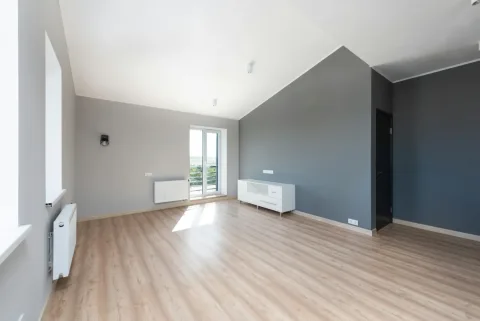
The first thirty days after renovation are the highest-emission window the building will ever see. The right protocol cuts months off the off-gas tail.
Your clothes shed plastic. So does your carpet, your bedding, and your packaging. The dashboard's PM channels see the bigger fragments as a subset of total particles; the science on health impact is still arriving.
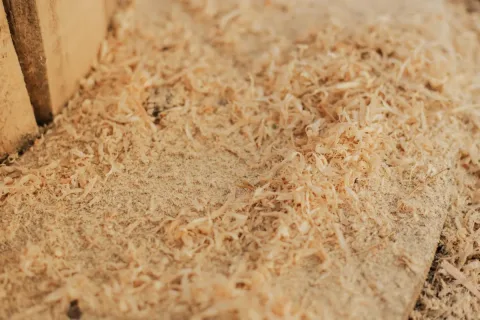
Sawdust from oak and walnut is an IARC Group 1 carcinogen for occupational woodworkers. The hobby shop in your garage deserves the same controls; the dashboard will tell you whether they are working.
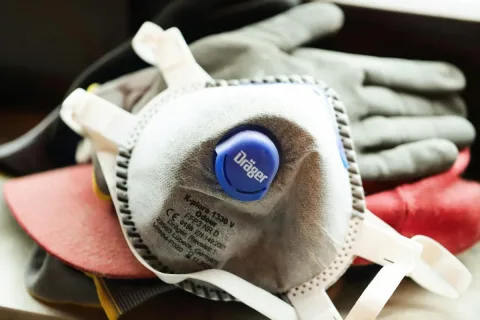
A particle-filtering respirator is the one piece of protection a HEPA at home cannot give you. Here is what each rating means and when each one is the right tool.
Optical PM sensors estimate mass from scattered light. They are powerful for building telemetry, but aerosol chemistry and particle shape still matter.
PurpleAir is strongest as a particle and outdoor-map ecosystem; Terrestream is built for indoor room decisions across particles, gases, comfort, context, and recommendations.
Search the knowledge base.