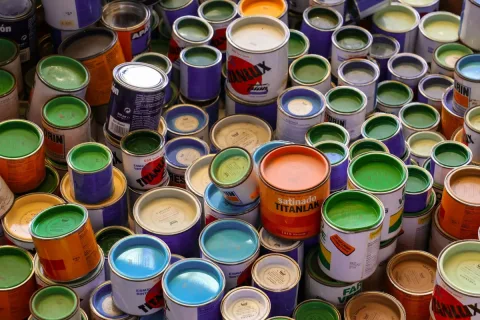

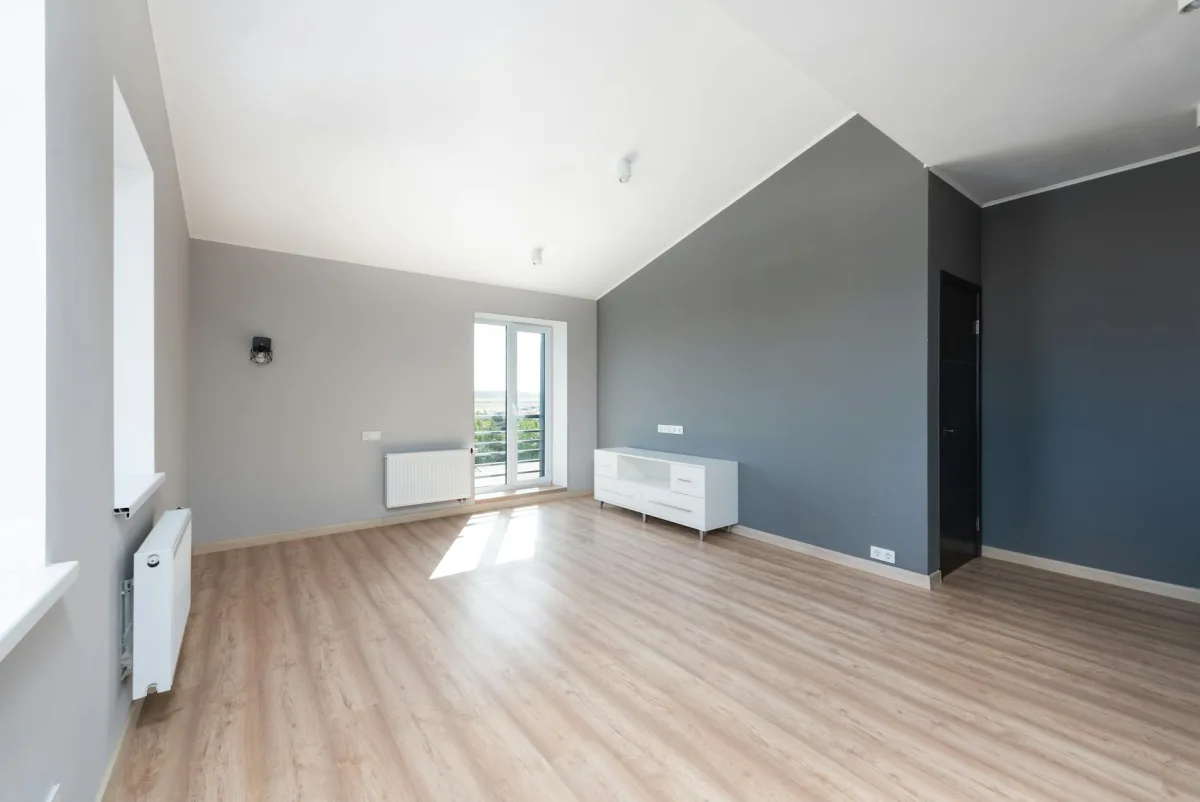
Renovation is the largest single IAQ event most homes ever experience. The pollutant cascade is predictable in shape: on day one and day two, demolition releases fine and coarse particulates (drywall dust, sawdust, plaster, possibly lead and asbestos in older homes). Through days one to thirty, newly installed materials off-gas VOCs at their peak rate: paint solvents, adhesive carriers, formaldehyde from composite wood (see formaldehyde detail), plasticizers from vinyl and laminate. Through months one to twelve, residual off-gassing decays slowly along a long tail. The "new home smell" people romanticize is mostly that VOC tail.
The bake-out protocol. VOC release from polymer matrices is rate-limited by diffusion, and diffusion accelerates with temperature. Warming the space to 80-90°F and ventilating aggressively for 24-72 hours after the work finishes trades one bad day for many later mediocre days. The mechanics: close interior doors to seal off the renovated rooms, raise the thermostat or use portable heaters, run window fans on exhaust (pulling renovated-room air to outside), keep one window cracked elsewhere for makeup air. Run continuously. Measure with the dashboard; the VOC index typically spikes hard during bake-out, then falls below pre-bake levels within a week. See reducing VOCs indoors for the VOC-specific side.
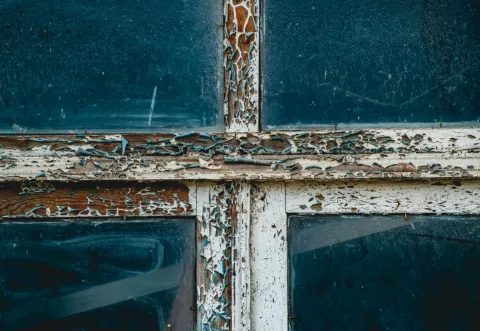
HEPA-vacuum everything before normal use. Renovation dust contains drywall gypsum, sawdust, possibly silica (from concrete cutting), and in pre-1978 homes possibly lead (see lead paint and renovation dust) and pre-1980 possibly asbestos (see asbestos in older homes). Surface dust looks settled but resuspends with every footstep and HVAC cycle. The protocol: HEPA-vacuum all hard surfaces (floors, walls, ceilings, baseboards, window sills, top of trim), then damp-wipe everything, then HEPA-vacuum again. Replace HVAC filters immediately after work, then again after the first month of occupancy. For pre-1978 homes, EPA RRP rule requires certified contractors to follow lead-safe practices; verify before hiring.
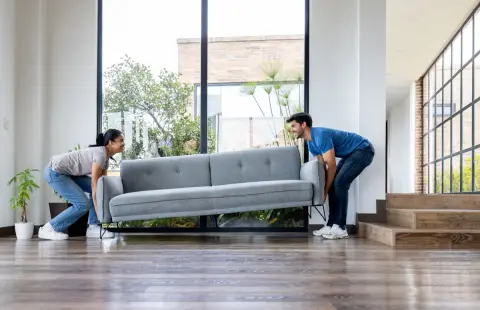
Test before re-entry, especially with children or pregnancy in the household. The CDC and AAP recommend lead-dust wipe testing in pre-1978 homes after any work that disturbed painted surfaces; commercial kits run $15-25 per wipe. Asbestos testing should precede any work in pre-1980 homes (cheaper to confirm absence before disturbing than to remediate after); $30-50 per sample at a NIOSH-accredited lab. For VOC sensitivity, give the bake-out at least a week before a pregnant person or infant returns to the renovated space; the residual VOC index drops fastest in the first 168 hours. The dashboard's history view is useful for confirming the decay curve actually happened before you commit to re-occupancy. See moving into a new home for the related case of inheriting someone else's post-renovation residue.
This is general guidance, not a substitute for professional assessment of your specific home. Major interventions (HVAC redesign, sealing a leaky envelope, mold remediation, electrical work for fans or venting) should be done with a certified professional. For chronic problems that don't respond to the steps here, see when to call a pro.
References
- EPA - Volatile organic compounds and indoor air www.epa.gov
- WHO - Formaldehyde indoor air guideline www.who.int
- California ARB - Composite Wood Products ATCM ww2.arb.ca.gov
- CDC NIOSH - Construction safety www.cdc.gov
- EPA - Renovation, Repair and Painting Program www.epa.gov