
L'humidité intérieure hors de la plage 30 à 50 % produit de vraies conséquences : sous 30 % signifie muqueuses sèches, survie virale plus longue et irritation ; au-dessus de 60 % signifie risque de moisissure et habitat d'acariens (voir humidité). Quand le tableau de bord rapporte l'humidité coincée hors de la plage de confort, quatre chemins diagnostiques couvrent presque tous les cas.
Travaillez les chemins dans l'ordre ; chacun indique comment le reconnaître et quoi faire.
- Dominance de l'air extérieur. Dans les climats humides d'été, le point de rosée extérieur peut dépasser l'intérieur de 5 à 15 °C ; ouvrir les fenêtres ou faire fonctionner le mode air frais importe l'humidité. Diagnostic : l'humidité intérieure suit le point de rosée extérieur ; l'humidité baisse quand le CVCA fonctionne en mode refroidissement seul. Action : faire fonctionner la climatisation (qui déshumidifie comme effet secondaire) ou un déshumidificateur autonome. Dans les climats secs d'hiver, l'inverse s'applique : l'air extérieur dessèche et l'humidité intérieure baisse avec la ventilation ; alors humidifiez et ne ventilez pas trop.
- Source d'eau interne. Une lente fuite de plomberie, une toilette défectueuse, une intrusion d'eau au sous-sol ou une panne chronique de ventilateur de douche. Diagnostic : humidité élevée continuellement, souvent localisée à un endroit, peut correspondre à une élévation COV de moisissure. Action : inspection visuelle, puis plombier.
- Panne CVCA. Drain de condensat de climatisation bloqué, déshumidificateur en panne, cœur de VRC encrassé. Diagnostic : l'humidité corrèle avec le fonctionnement du CVCA dans une direction inattendue. Action : service CVCA.
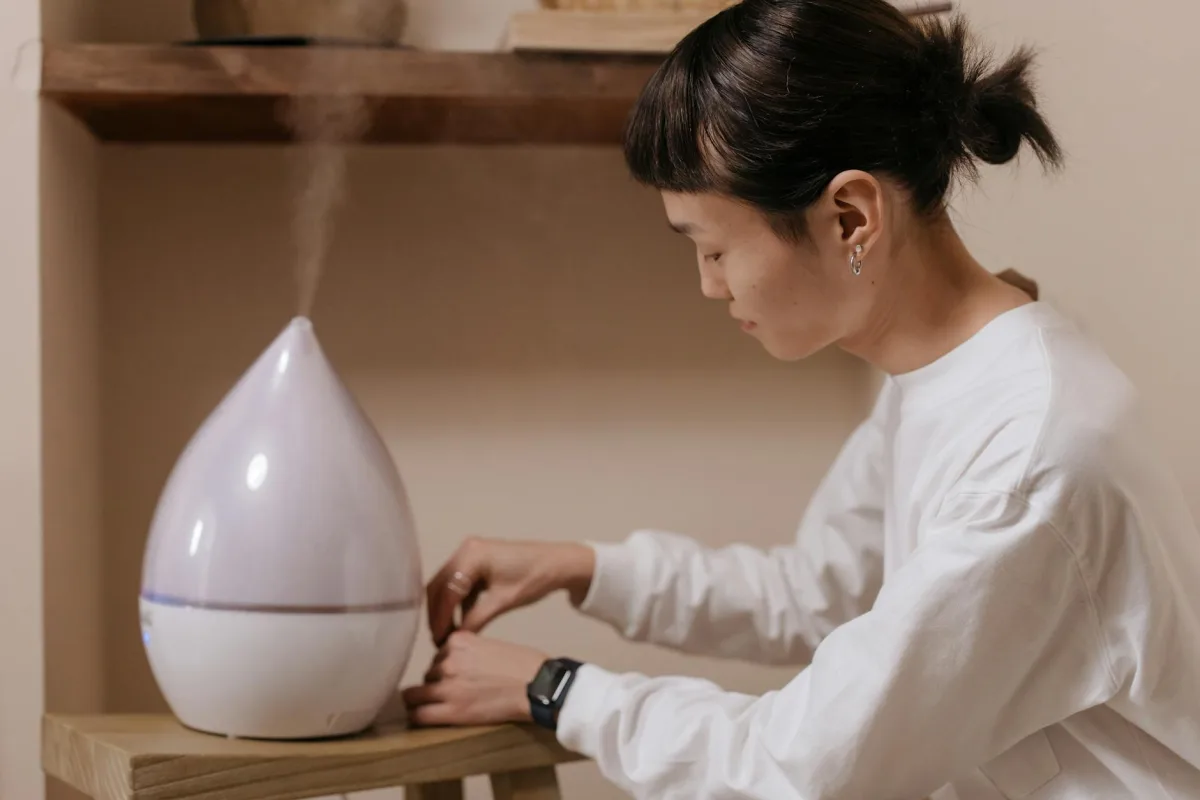
- Décalage saisonnier. Les maisons en zone froide en hiver tombent régulièrement sous 25 % HR parce que l'air froid extérieur tient moins d'eau et que le chauffage intérieur évapore l'humidité des matériaux. Diagnostic : l'humidité tombe fortement chaque hiver et récupère au printemps ; voir changements saisonniers de la QAI et effets de zone climatique. Action : humidificateur portable ou de toute la maison ; viser 35-40 % en hiver, plus bas dans les zones où une humidité plus élevée condenserait sur les murs froids (risque de moisissure).
La cible adaptée à la zone climatique du tableau de bord abaisse la limite supérieure en hiver de climat froid pour balancer l'humidité contre la condensation.
Références
- EPA - Cours sur la moisissure : eau et humidité www.epa.gov
- ASHRAE norme 55 - Conditions environnementales thermiques www.ashrae.org
- OMS - Lignes directrices sur la qualité de l'air intérieur : humidité et moisissures www.who.int
- Sterling et coll. (1986) - Zones de confort hygrométrique www.aivc.org