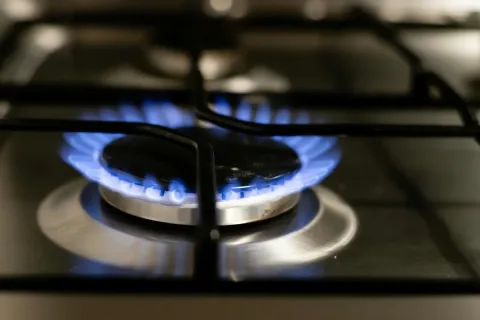


After a cooking event, a fire, or a wildfire-smoke infiltration, the question is how long until the air is back to acceptable. The math is first-order decay: concentration drops exponentially with time, governed by air changes per hour (ACH). Each ACH is the volume of the room replaced once.
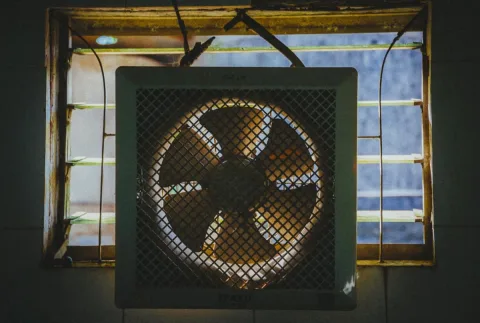
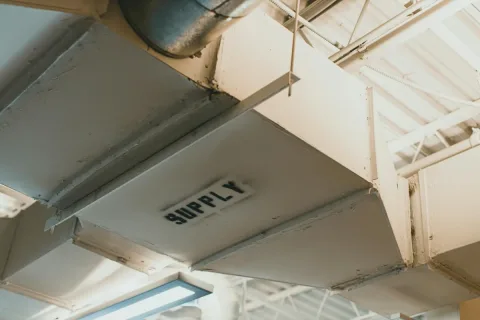
Two contributions add together: passive air exchange (typically 0.2-0.5 ACH in a well-sealed home, higher with windows open) plus filtration ACH from any HEPA unit. A purifier's CADR (in CFM) divided by the room volume (in ft³, then divided by 60 to convert to per-hour) gives its contribution. A 300-CADR purifier in a 1,500 ft³ room delivers about 12 ACH from filtration alone.
The half-life of a contaminant is roughly 0.693 / total-ACH hours. At 4 ACH (typical HEPA running in a moderately sized room), half-life is about 10 minutes, 95% reduction in about 45 minutes. At 8-10 ACH (a properly sized HEPA in a small bedroom), half-life drops to 4-5 minutes. The dashboard fits actual decay curves to recent events and tells you the empirical half-life for your room and pollutant.
Three caveats. First, the math assumes well-mixed air; closed doors, low ceilings, and dead zones violate this and slow real-world clearance. Second, settled particles (PM10, dander) get re-aerosolized by movement; the room may "clear" then spike again when someone walks in. Third, sources can be ongoing (a still-warm pan, off-gassing furniture); decay only starts when the source stops. The AHAM CADR program documents the test conditions; field performance is generally 60-80% of nameplate.
References
- AHAM - CADR program for room air cleaners aham.org
- EPA - Guide to air cleaners in the home www.epa.gov
- ASHRAE Standard 62.2 - Residential ventilation www.ashrae.org
- EPA - DIY air cleaners for wildfire smoke www.epa.gov