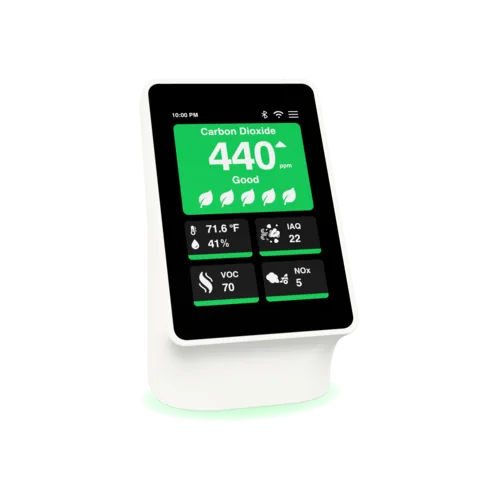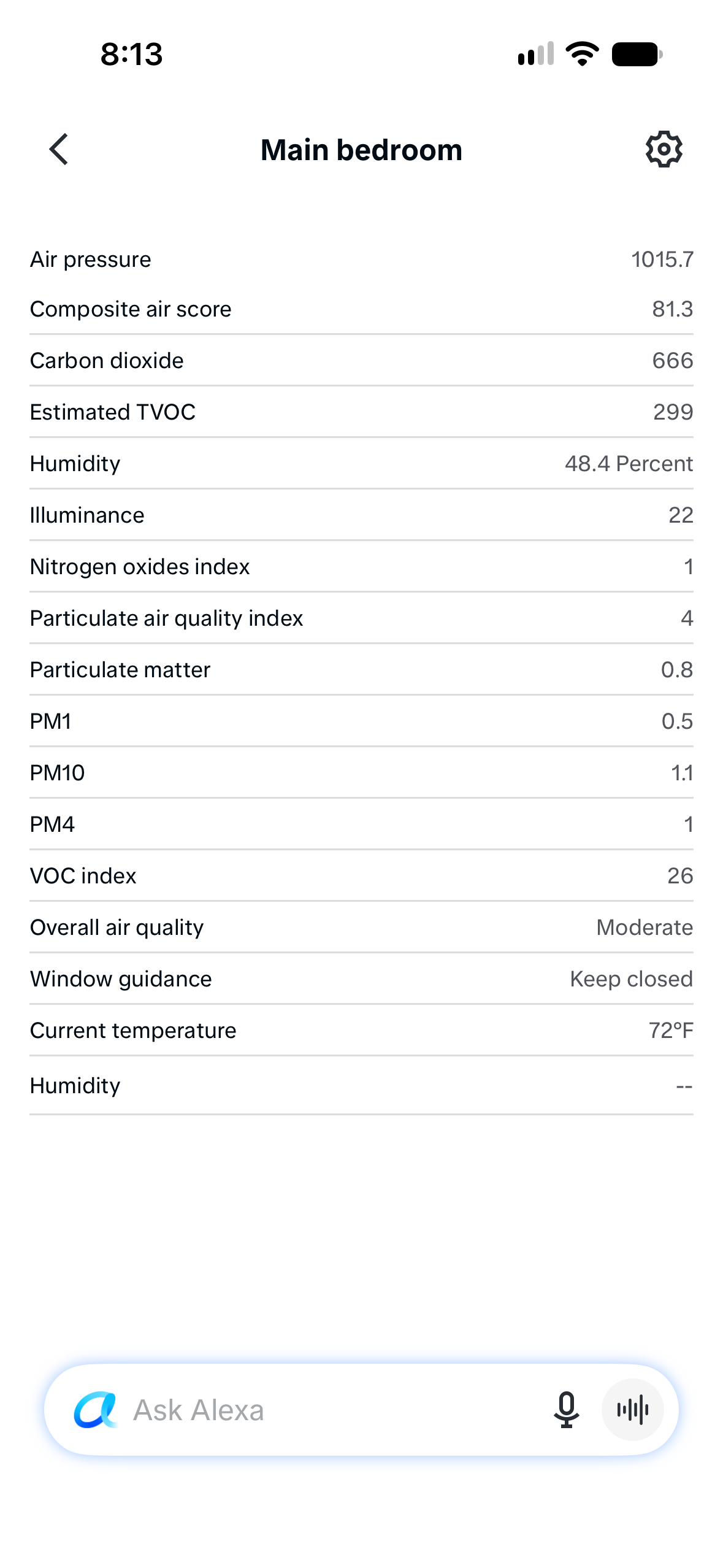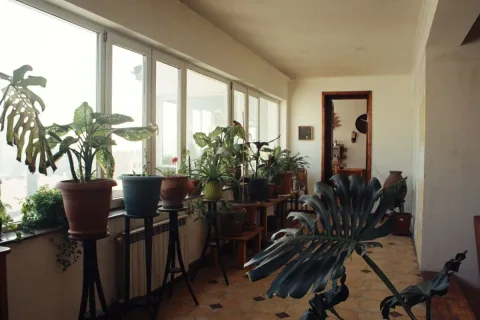

The sensor reads what it can sample. A few placement choices change what it can read by a lot. The first rule: put it in the room you actually use, not the corner of the basement or the spare bedroom no one enters. The breathing zone (about 1.0 to 1.8 m off the floor) is the air your body interacts with; readings from floor or ceiling level can differ meaningfully because some pollutants stratify with temperature.
Avoid four spots specifically. Within 1 m of an HVAC supply vent: the sensor reads the conditioned air, not the room air. Against a sunny window: direct sunlight heats the sensor body and skews temperature readings by several degrees. Directly above a kitchen stove or in the cooking splash zone: the optical PM sensor reads inflated values from cooking aerosols and the gas channels saturate quickly. In a hallway with no occupants: you measure transient air, not the air in any space you use.
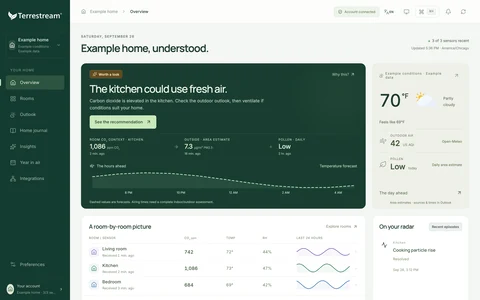
For homes with multiple Terrestream units, the canonical layout is: one in the main living space (kitchen-adjacent if open-plan), one in the primary bedroom, optionally one in a child's bedroom or home office. The dashboard's multi-room comparison only works once at least two units are reporting from different spaces.
For a single-unit household, the living room beats the bedroom because waking hours dominate exposure totals; the bedroom takes priority only if someone in the household has asthma, COPD, or a sleep-quality concern. Check the first couple of days of readings yourself: temperature swings that follow the sun, or particle spikes every time you cook, mean the sensor needs a better spot. Those first two days also matter for CO2: the sensor's self-calibration needs about two days of operation that include fresh air.
References
- Sensirion - SEN66 environmental sensor sensirion.com
- ASHRAE Standard 62.2 - Residential ventilation www.ashrae.org
- EPA - Improving indoor air quality www.epa.gov
- WHO Global Air Quality Guidelines (2021) www.who.int