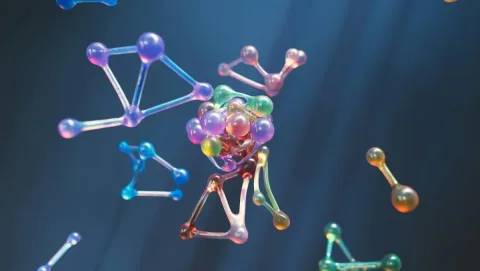
VOCs: the invisible smell
Volatile organic compounds are the carbon-based gases evaporating off everything: cooking, candles, paint, new furniture. Some are merely annoying. Some are not.

Guides & support
Set up your sensor, connect your home, and make sense of your air.
Tagged: ChemistryBrowse all guides
1–2 of 2 guides
Volatile organic compounds are the carbon-based gases evaporating off everything: cooking, candles, paint, new furniture. Some are merely annoying. Some are not.
Pine, citrus, ammonia, bleach. Most cleaning products produce sharp VOC spikes; some combinations are acutely toxic.
Particleboard, foam, finishes, and many paints off-gas formaldehyde and other VOCs for weeks to months. A new sofa changes the room's baseline.
A hot shower is a daily humidity event with a side of cleaning-product VOCs. Recognizable, mostly harmless, occasionally a mold-risk signal.
Air-quality parameters do not change in isolation. Humidity pushes the VOC index. Ozone reacts with limonene to make formaldehyde. Knowing the interactions helps you avoid false alarms.
VOC Index is a relative signal from a MOX gas sensor. TVOC is a concentration-style lab concept. They measure different things.
Search the knowledge base.