
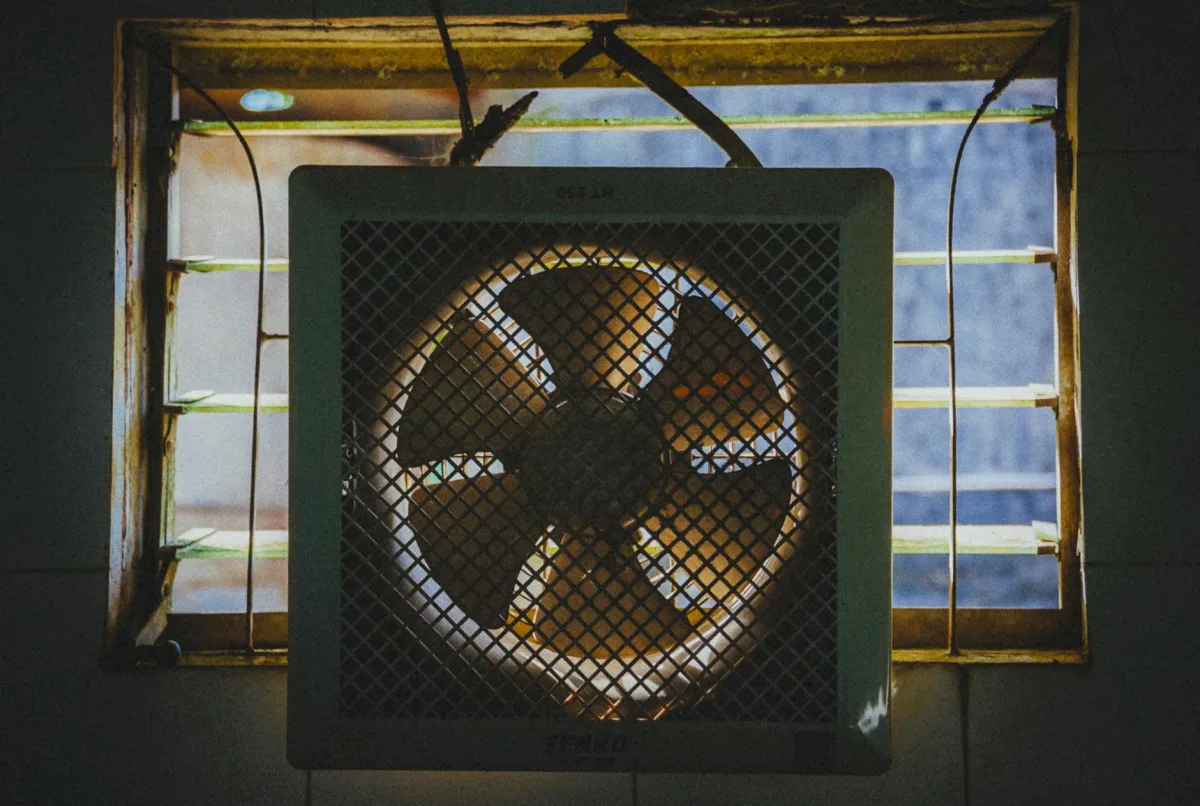
During the COVID-19 pandemic, two atmospheric scientists, Dick Corsi and Jim Rosenthal, popularized a DIY air filter built from a 20-inch box fan and four MERV-13 furnace filters arranged as a cube. The design produces airflow comparable to a $400 commercial HEPA unit at roughly an eighth the cost. Clean Air Crew hosts canonical build instructions.
The physics is straightforward: four large filters in parallel give roughly 4× the filter area of a typical commercial unit's single filter, so airflow drops less and the fan doesn't have to work as hard. MERV-13 catches roughly 85% of 0.3-1.0 µm particles (compared to HEPA's 99.97%), but because the unit moves so much more air, the cumulative cleaning rate often exceeds the HEPA box for the same room.
EPA chamber measurements found that four MERV-13 filters in a Corsi-Rosenthal box raised the clean air delivery rate of a single-filter box fan (about 111 CFM) by 261%, to roughly 400 CFM, and a study by Dal Porto, Corsi and colleagues measured about 600 to 850 CFM for a five-panel build, depending on fan speed. EPA's research on DIY air cleaners calls box-fan builds with MERV-13 filters a cost-effective way to reduce smoke indoors and advises using newer, certified box fans (2012 models or newer).
Limitations: louder than commercial units at comparable airflow (a $50 fan is not acoustically engineered), uglier (it's a literal cardboard cube), and the filters need replacement every 3-6 months in heavy use. For wildfire-season multi-room deployment or classroom use, the cost ratio makes it the right answer almost regardless of aesthetics. Pair with a commercial HEPA unit in the bedroom; keep the CR box wherever the people gather during the day.
This is general guidance, not a substitute for professional assessment of your specific home. Major interventions (HVAC redesign, sealing a leaky envelope, mold remediation, electrical work for fans or venting) should be done with a certified professional. For chronic problems that don't respond to the steps here, see when to call a pro.
References
- Clean Air Crew - Box-fan filter (Corsi-Rosenthal) plans www.cleanaircrew.org
- Holder et al. (EPA) - DIY air cleaner designs and wildfire smoke doi.org
- Dal Porto et al. - CR box-fan effectiveness doi.org
- EPA - DIY air cleaners for wildfire smoke www.epa.gov