
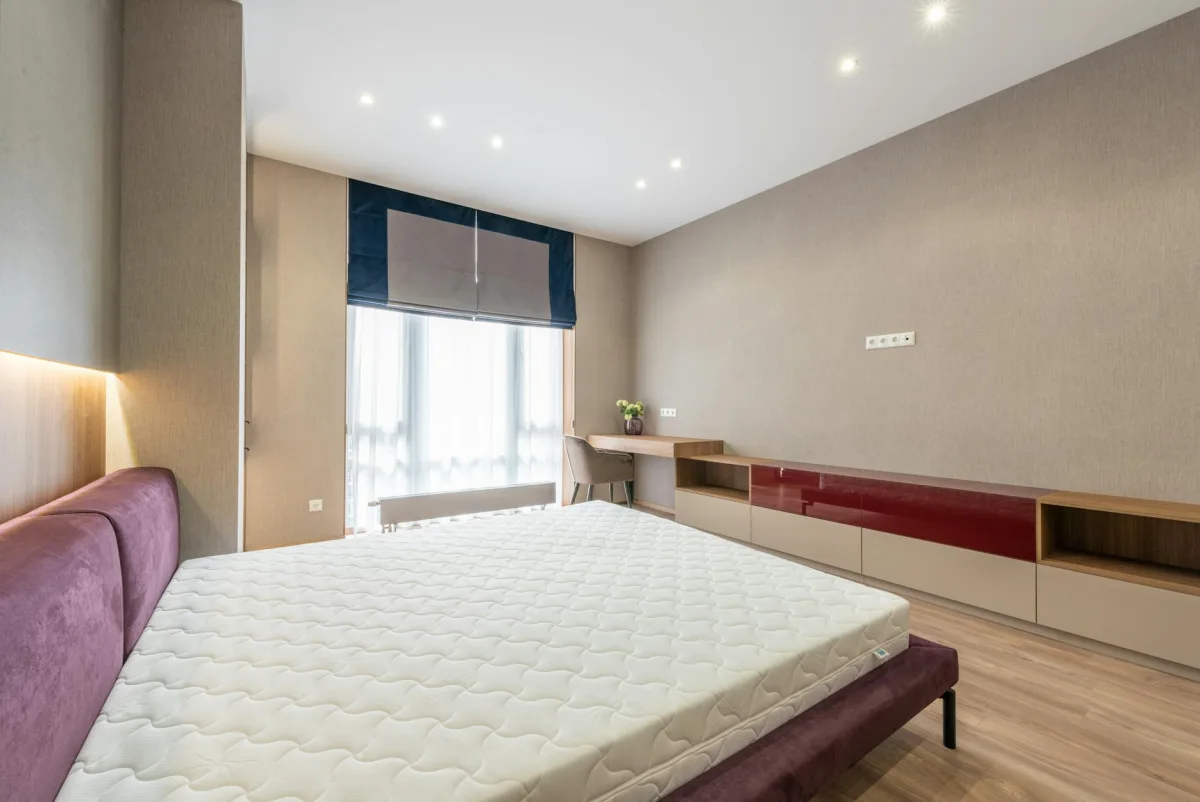
A new mattress emits volatile organic compounds, and the chemistry is well-characterized. Polyurethane foam (the core of every memory-foam and most spring mattresses with comfort layers) off-gases residual toluene diisocyanate and related amines from the foam-blowing process, formaldehyde from adhesives bonding multi-layer constructions, and a long tail of lower-volatility VOCs including styrene, methylene chloride, and various aldehydes. The mattress cover and ticking add their own profile: fire-retardant treatments required by CPSC 16 CFR 1633 may include brominated or chlorinated compounds in older or lower-cost mattresses, though many manufacturers have moved to inherently flame-resistant fibers (rayon, wool). Synthetic latex emits its own VOC profile distinct from natural latex. The SEN66's VOC index does not speciate, but it integrates the whole mixture into a single number that the dashboard can trend.
The emission timeline is longer than the marketing says. Peak emissions occur in the first 24-72 hours after unboxing (the "new mattress smell" is at its strongest here), drop sharply over the first 1-2 weeks as the highest-volatility compounds dissipate, then settle into a slow decay that remains measurable above baseline for 1-3 months in a typical bedroom and can produce a subtle residual emission for up to a year for foam-heavy constructions. The decay rate depends on three things: the chemistry of the specific product (compliant low-VOC formulations decay faster), the temperature of the room (warmer rooms accelerate both initial off-gas and subsequent decay), and the ventilation rate (the more air changes per hour, the faster the indoor concentration drops, see spot ventilation and ventilation rate generally). A bedroom with the door closed at night, an HRV off, and a fresh mattress will show an elevated VOC index for the longest period.
Why it matters more in the bedroom than anywhere else. A normal adult breathes 12-16 times per minute at rest, with a tidal volume of roughly 500 mL, for a total of about 6-8 liters per minute or roughly 7,000 liters over an 8-hour sleep. That is a high-exposure window because (a) the breathing rate is high, (b) the proximity to the source is close (your nose is 30 cm from the foam surface), (c) the room is typically smaller and less ventilated than living areas, and (d) you cannot leave. Eight hours next to an off-gassing mattress every night for the first month after purchase delivers more cumulative VOC exposure than most other indoor sources combined for that period. For the related "sleep environment matters" angle see the overnight bedroom profile and sleep apnea and IAQ.
Standards and practical mitigation. The certifications worth looking for: CertiPUR-US for polyurethane foam (limits on PBDEs, formaldehyde, heavy metals, ozone-depleters), GREENGUARD Gold for the finished product (whole-mattress emissions testing against a children-and-schools threshold), GOTS for organic cotton fabric layers, and CARB Phase 2 compliance if there are any composite-wood components (some hybrid mattresses include wood frames or foundations). Mitigation if you have already bought an uncertified mattress: unbox in a garage, sunroom, or spare bedroom and let it off-gas for 1-2 weeks before installing in the sleeping room (ambient temperature and airflow matter, warm and ventilated is best), run bedroom ventilation continuously through the first month (window crack, HRV boost, or a bedroom fan venting to a vented hallway), and consider a barrier cover with a tight enough weave to slow emission. See also reducing VOCs indoors, the formaldehyde detail page, new furniture and paint, post-renovation IAQ, and low-VOC finish selection.
This is environmental information, not medical advice. The dashboard's readings help you make decisions about the air in your space. They do not diagnose conditions, interpret symptoms, or replace conversations with your physician. If symptoms persist, worsen, or coincide with a known exposure, talk to a healthcare professional. See what Terrestream's advice covers.
References
- CertiPUR-US - Foam emissions certification certipur.us
- UL GREENGUARD Gold - Low-emission certification www.ul.com
- GOTS - Global Organic Textile Standard global-standard.org
- California ARB - Composite Wood Products ATCM ww2.arb.ca.gov