
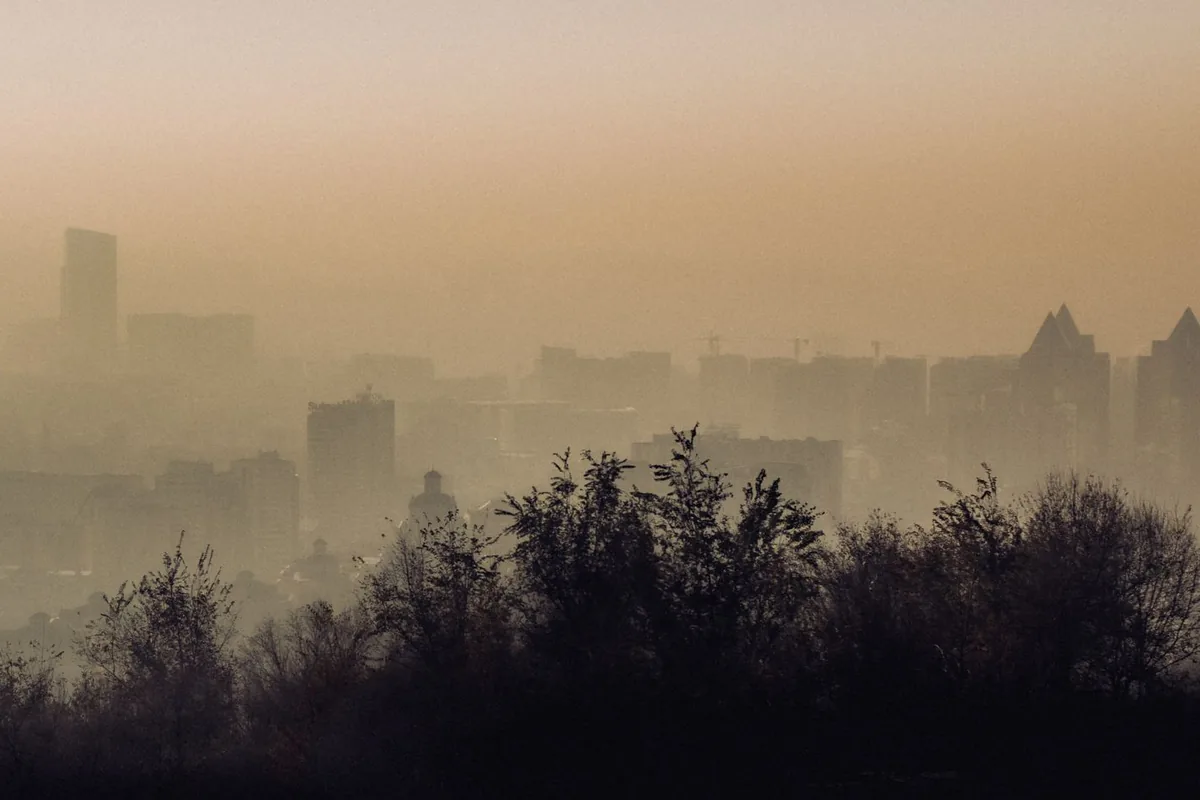
Ozone (O3) is a triatomic oxygen molecule that is good at one altitude and bad at another. The stratospheric ozone layer 15-35 km up blocks UV-B radiation and is a planetary asset. Ground-level ozone, formed in the lower troposphere on hot sunny days, is the single largest air-quality problem in much of North America during summer and a year-round problem in subtropical and tropical cities. The two ozones are the same molecule, doing very different jobs in very different places.
Ground-level ozone is not emitted directly by anything. It is a secondary pollutant: sunlight catalyzes a reaction between nitrogen oxides (NOx, mostly from vehicle exhaust and combustion) and volatile organic compounds (VOCs, from solvents, vegetation, gasoline vapor, and combustion). The reaction is fast on sunny low-wind afternoons and slow at night, so ozone follows a strong diurnal cycle: low in the morning, peaking 2-6 PM, falling overnight. Cloudy days knock it down. Wind disperses it. Stagnation events let it accumulate over multiple days. See solar radiation and air chemistry for the photochemistry mechanics.
Regulatory bands. The EPA NAAQS 8-hour ozone standard is 0.070 ppm (70 ppb), set in 2015. The WHO 2021 air-quality guideline is more aggressive: 100 µg/m³ (about 51 ppb) as an 8-hour average, and a peak season average of 60 µg/m³. Health effects appear well below these thresholds; EPA epidemiology shows measurable lung-function decrement at 60 ppb in healthy adults exercising outdoors, and asthma exacerbations lower still. Acute effects are airway inflammation, chest tightness, cough, throat irritation, and reduced exercise tolerance; chronic high exposure accelerates lung-function decline and increases COPD incidence.
Indoor versus outdoor. Ozone is highly reactive and consumes itself on surfaces (walls, carpet, furniture, skin oils) within minutes. In a typical closed home indoor ozone sits at 20-40% of outdoor; with windows open the ratio rises toward 75-90%. On a high-ozone day, opening a window makes the inside worse. The Sensirion SEN66 in the Terrestream device does not measure ozone directly (electrochemical and UV-photometric ozone instruments exist but are not in this sensor family). Terrestream takes outdoor ozone from Open-Meteo's modeled air-quality data, falling back to the Google Air Quality API for the current reading when that is missing; see outdoor air feeds. When outdoor ozone reaches 100 µg/m³ (about 50 ppb, the WHO 8-hour guideline level), Terrestream stops suggesting that you open windows; see reducing indoor ozone exposure.
References
- EPA - Ground-level ozone basics www.epa.gov
- EPA - Ozone (O₃) air quality standards www.epa.gov
- WHO Global Air Quality Guidelines (2021) www.who.int
- AirNow - AQI Basics (ozone) www.airnow.gov
- Open-Meteo - Air Quality API documentation open-meteo.com