
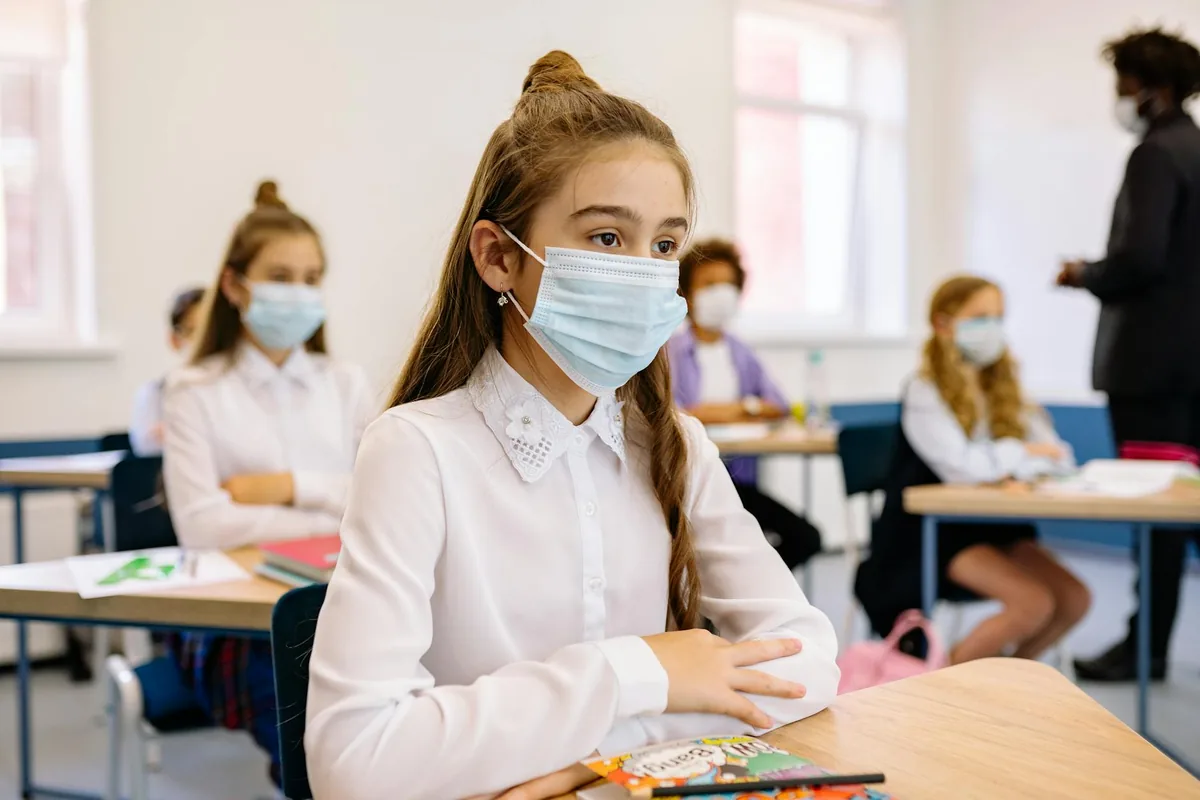
In wildfire-prone regions (now extending well beyond traditional fire zones), district administrators face recurring decisions during smoke events: continue normal operations, restrict outdoor activity, shelter-in-place with HVAC, or close the school. The decision is consequential for student health and for parents who depend on school as childcare; tools and frameworks have matured significantly since 2017.
The EPA wildfire smoke course and California OEHHA wildfire smoke guidance are the canonical references. Common AQI thresholds: under 100, normal operations; 100-150, limit outdoor PE and recess; 150-200, indoor recess and verify HVAC is running with high-efficiency filters; 200-300, cancel outdoor activities entirely; 300+, consider closure or shelter-in-place with portable HEPA.
Building-envelope and HVAC capacity matter as much as outdoor AQI. A newer school with MERV-13 filtration, sealed envelope, and demand-controlled ventilation can hold indoor PM2.5 at a fraction of outdoor levels even at AQI 300+. An older school with operable windows and worn weatherstripping may not. The decision is local; DIY Corsi-Rosenthal boxes, which EPA research calls a cost-effective way to reduce indoor smoke, are a common stopgap in classrooms with a poor envelope.
Continuous indoor monitoring is the bridge between outdoor AQI and operational decisions. A Terrestream sensor per classroom (or per HVAC zone) lets administrators see whether shelter-in-place is actually working; if indoor PM2.5 tracks outdoor PM2.5, the envelope and filtration aren't doing the job, and closure becomes the safer call. Documentation matters too: parents and boards want to see the data behind the decision.
Terrestream Intelligence · near you
Today's air conditions in Columbus
Situation
Smoke nearby · example home response
Smoke advisory conditions · AQI 62 · PM2.5 15 µg/m³ · 41° · near Columbus
Outdoor AQI · Open-Meteo · 13 min ago
Outdoor smoke information can prompt a closer look indoors. The sample readings below illustrate a possible particle increase; outdoor data alone cannot confirm smoke inside your home.
- PM2.5 (indoor) 12 µg/m³ Moderate
- CO₂ (indoor) 760 ppm Moderate
Suggested response Now
Closing up and filtration may help
- Consider closing windows
- Consider an air cleaner
Closing windows and doors, using an air cleaner, and limiting indoor particle sources may help reduce incoming and indoor-generated particles. Follow official local guidance.
For health guidance and any stay-indoors or evacuation instructions, follow AirNow and your local authorities.
Illustration: outdoor conditions are real, approximate-area data; indoor readings are modeled, not measured. No device is reporting from your home. Not medical advice.
References
- EPA - Wildfire smoke course www.epa.gov
- AirNow - Wildfires & smoke www.airnow.gov
- California OEHHA - Wildfire smoke fact sheet oehha.ca.gov
- EPA - DIY air cleaners for wildfire smoke www.epa.gov