
Terrestream is built for the chronic and gradual side of indoor air: CO2, particulate matter, the NOx and VOC indexes, humidity and temperature, plus outdoor data feeds. It is not a life-safety device, and there are many things it does not measure, report, or detect at all.
Some of what Terrestream does not measure, report, or detect - this list is not exhaustive: carbon monoxide, formaldehyde (HCHO), benzene, radon, ionizing radiation, lead, mold, asbestos, ozone, chlorine, methane and natural gas, propane, nitrogen, sulfur dioxide, and other airborne toxins, poisons, and toxic gases. Do not use Terrestream to detect any of these.
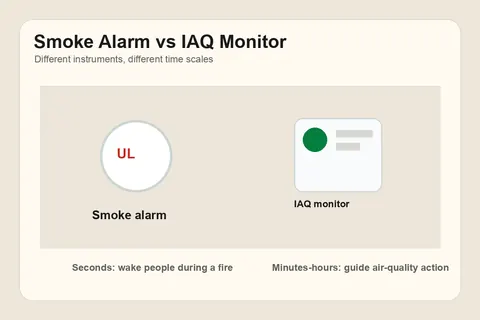
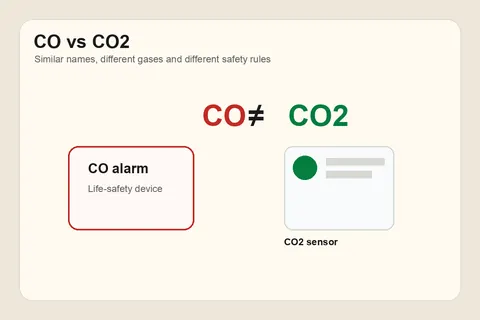
For these hazards, use the appropriate dedicated detector or a professional test: a UL 2034 / CSA 6.19 carbon-monoxide alarm (see CO vs CO2); a UL 217 smoke alarm (see smoke and fire detection); a certified combustible-gas detector for natural gas and propane; an alpha-particle test for radon; and laboratory testing for lead, asbestos, formaldehyde, and benzene.
Terrestream is intended to characterize everyday air quality for comfort and trend decisions. It is not intended to detect any of the hazards above, and it does not replace dedicated life-safety devices or professional testing. If you suspect any of these hazards, use the right detector or seek professional advice.
References
- UL 2034 - Single and Multiple Station CO Alarms www.shopulstandards.com
- UL 217 - Smoke alarms www.shopulstandards.com
- UL 1484 - Residential gas detectors www.shopulstandards.com
- EPA - Radon www.epa.gov
- EPA - Lead www.epa.gov
- EPA - Asbestos www.epa.gov