
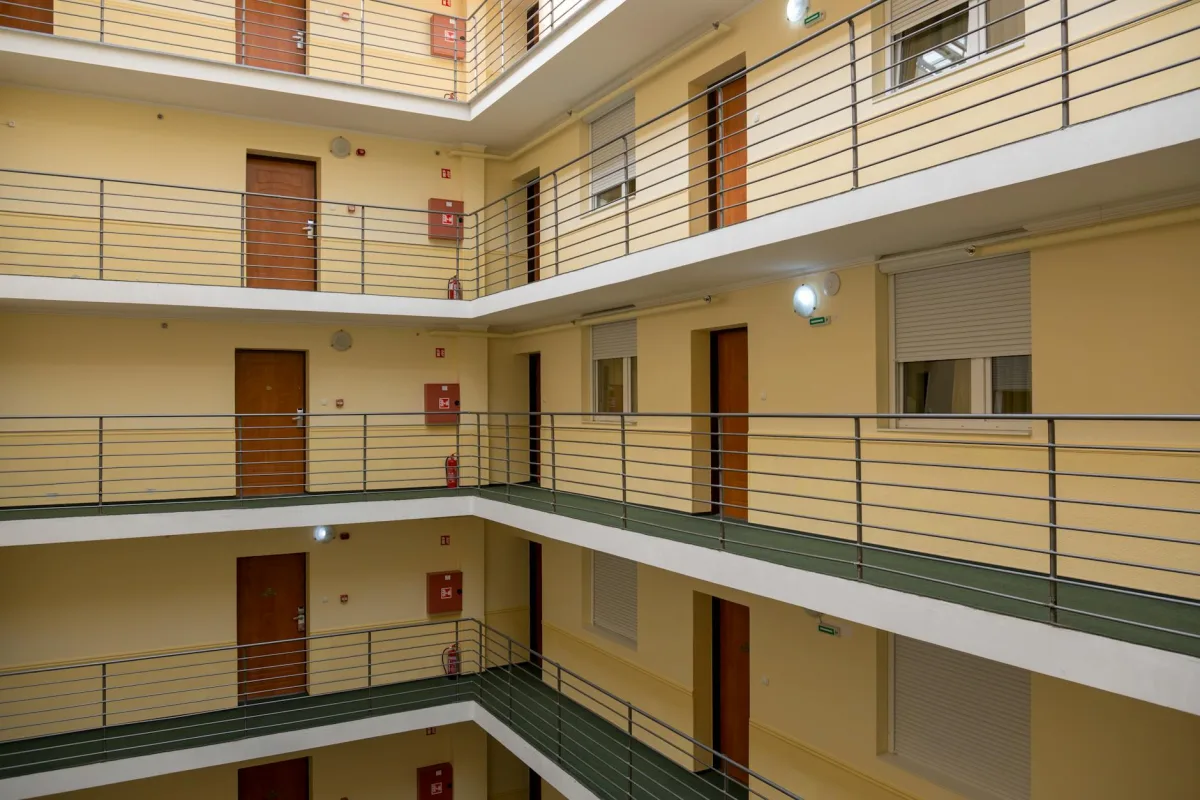
The single biggest IAQ asymmetry between a single-family home and a multi-unit building is that in the multi-unit case you do not own all the air. Garden-style and high-rise buildings share HVAC returns across units in many older designs; plumbing chases run floor-to-floor with field-cut gaps around pipes; electrical penetrations between units are rarely fully sealed; dryer-vent stacks vent through common shafts; and the balcony side of the envelope produces eddies that carry one balcony's smoke around the corner to the next. DOE multifamily research and the HUD Healthy Homes program both treat cross-unit air transfer as the dominant variable in multifamily IAQ, ahead of any single tenant's habits.
The detection patterns on the dashboard are distinctive. VOC index spikes at known cooking hours with no source in your unit (the 7 p.m. weeknight pattern, the Saturday-morning pattern) usually means a neighbor's kitchen exhaust is finding its way back into shared corridors and pulling under your door. PM2.5 events that follow a cigarette-smoke signature (sharp onset, slow decay over 30-90 minutes, repeated at the same time of day) almost always come from a smoker in an adjacent unit and not from any source inside yours. Brief cleaning-chemical VOC bursts on building cleaning days are the cleaning crew, not you. The diagnostic is the indoor-outdoor ratio: if outdoor is clean and your indoor is dirty in a stereotyped time pattern, the source is another indoor space, not the street.
What a tenant can actually do from inside one unit. Door sweeps and weatherstripping on the entry door close off the hallway pathway, which is often the largest single contributor. Sealing penetrations around plumbing under sinks, around the dryer vent, around electrical outlets on shared walls (foam gasket plates are a few dollars apiece) reduces unit-to-unit transfer measurably. A portable HEPA sized to your largest room per CADR handles the PM2.5 side; it cannot remove VOCs but it captures the smoke particle phase that carries most of the irritants. Closing the kitchen exhaust damper when not cooking prevents reverse flow from the shaft. Where a balcony is the source, an outdoor screen does nothing for smoke but moving sensitive activities away from the balcony door during evening hours helps.
What landlords and HOAs are responsible for, and where the limits are. Building-level fixes (rebalancing the HVAC so corridors are positively pressurized relative to units, sealing chase penetrations during a major renovation, prohibiting smoking on balconies via lease or bylaw amendment) are the only durable answers to chronic cross-unit transfer, and they require building cooperation. In rented units, document the pattern across multiple weeks with dated screenshots of the room's history in the app or web dashboard, write to building management with the data, and escalate to the local housing authority if the issue is health-affecting and unresolved (many jurisdictions treat secondhand smoke migration as a habitability issue). In owned condos, the HOA architectural committee is the right venue. The hard truth is that you cannot fix a building from inside one unit: tenant-side mitigations buy 30-60% improvement at best, and the rest requires building-level work. See the renters' guide for the documentation playbook and when to call a pro for cases that warrant a Certified Industrial Hygienist.
This is general guidance, not a substitute for professional assessment of your specific home. Major interventions (HVAC redesign, sealing a leaky envelope, mold remediation, electrical work for fans or venting) should be done with a certified professional. For chronic problems that don't respond to the steps here, see when to call a pro.
References
- ASHRAE Standard 62.2 - Residential ventilation www.ashrae.org
- DOE - Buildings (multifamily) www.energy.gov
- EPA - Indoor air quality basics www.epa.gov
- HUD - Office of Healthy Homes www.hud.gov