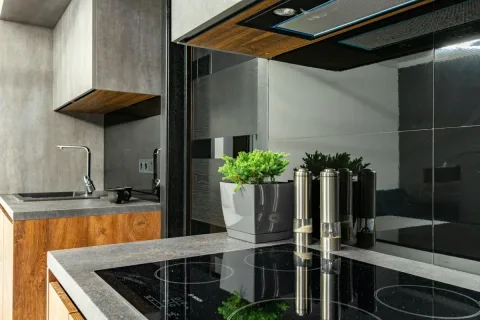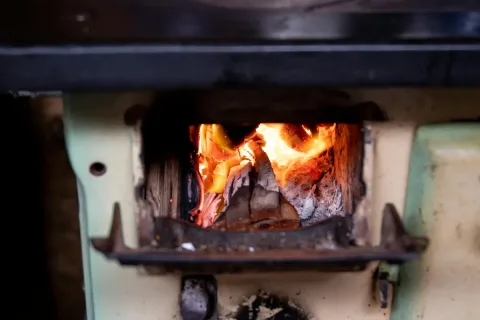

Replacing gas appliances with electric heat-pump or induction equivalents is the single largest IAQ intervention available to a homeowner who already has tight envelope and reasonable ventilation. The reason is that gas combustion inside the home produces NO2, ultrafine particles, formaldehyde, and CO directly into the kitchen and utility air, and the range hood that is supposed to capture these typically captures only a fraction in real use. RMI's 2022 review documented elevated indoor NO2 in gas-stove households at levels associated with childhood asthma incidence; the gas-stove deep dive covers the mechanism. The IAQ delta from removing gas is large enough to be visible on the dashboard within a week of conversion.
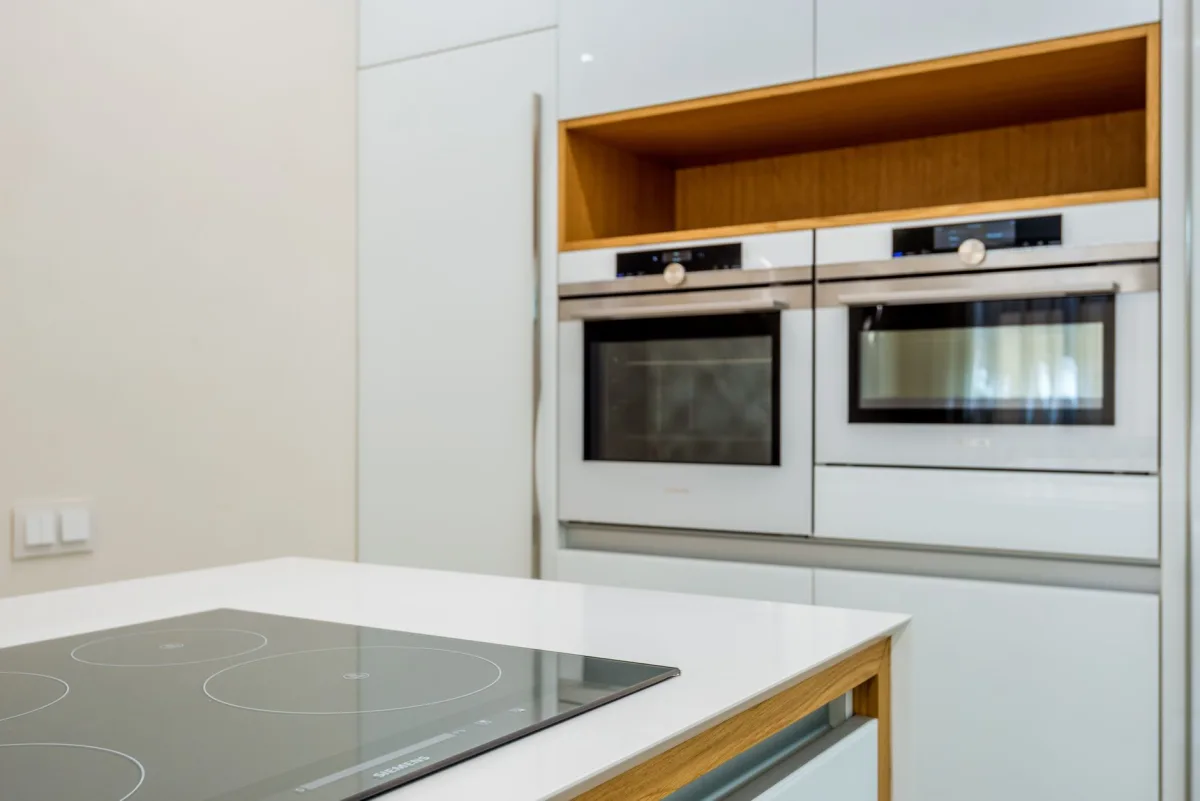
Appliance by appliance, in priority order. First, the range: induction replaces gas at roughly $1,200-3,000 installed for a freestanding 30-inch unit. The NOx index on the dashboard stops spiking at mealtimes and stays near its clean-air resting value of 1 once the gas range is gone. Second, the water heater: a heat-pump water heater runs $1,500-3,500 plus installation (often $1,000-2,500 of plumbing and electrical) and removes the largest combustion-flue source in most homes. Third and largest, the heating: ducted or ductless heat pumps run $8,000-25,000 installed for a whole-house system. The federal 25C tax credit for heat pumps and heat-pump water heaters ended with 2025 installations. The separate federal Home Energy Rebates are available in select states and can cover up to $14,000 of electric upgrades for eligible households; your state energy office has the status and eligibility rules.
IAQ deltas you should expect to see on the dashboard. Post-induction conversion: the NOx index stays near its resting value of 1 through meals, and the cooking-event PM2.5 peak drops by roughly 30-50% (cooking still produces PM from food itself, but the combustion fraction is gone). Post heat-pump water heater: the baseline VOC index in mechanical rooms drops, and in tight homes the carbon-monoxide risk from that appliance goes away (Terrestream does not measure CO, so keep your CO alarms). Post heat-pump space heating: the winter baseline indoor PM2.5 drops by a few µg/m³ in homes that previously had even a slightly leaky furnace flue. None of these are dramatic single-day changes; they show up as a step in the 7-day and 30-day charts.
Sequencing and the panel-upgrade trap. The most common failure mode for ambitious home electrification is undersizing the electrical service. An induction range needs a dedicated 240V 40-50A circuit; a heat-pump water heater needs 240V 30A; a whole-house heat pump can need 40-60A. A 100A panel that already runs a clothes dryer and an electric oven cannot carry all three additions, and a panel upgrade to 200A typically runs $3,000-6,000 and is a multi-week utility-coordination project. Plan it once at the start of the electrification sequence, not three appliance changes in. If budget is constrained, the order that maximizes IAQ improvement per dollar is range, then water heater, then space heating: cooking events are the largest acute IAQ insult per minute, and induction is the cheapest of the three to convert. See reducing NO2, wood stoves and fireplaces for the other combustion sources, and IAQ tradeoffs with energy for how to reason about the envelope side at the same time.
This is general guidance, not a substitute for professional assessment of your specific home. Major interventions (HVAC redesign, sealing a leaky envelope, mold remediation, electrical work for fans or venting) should be done with a certified professional. For chronic problems that don't respond to the steps here, see when to call a pro.
References
- RMI - Gas stoves, pollution and health rmi.org
- ENERGY STAR - Air-source heat pumps www.energystar.gov
- ENERGY STAR - Products (induction cooking) www.energystar.gov
- DOE - Energy Savings Hub www.energy.gov
- DOE - Home Energy Rebates program www.energy.gov