
At rest a typical adult moves 6 to 8 litres of air per minute through their lungs. During moderate exercise that climbs to 25 to 50 L/min, and at near-maximal effort it can reach 100 to 150 L/min. The lungs are pulling three to ten times the volume during a hard workout, which means whatever is in the air gets a three-to-ten-times multiplier on the dose delivered to the deep lung in any given minute. The ACSM exercise guidance and the broader environmental-exercise literature both treat this as the central fact: where you breathe matters more during exercise than at any other time of the day.
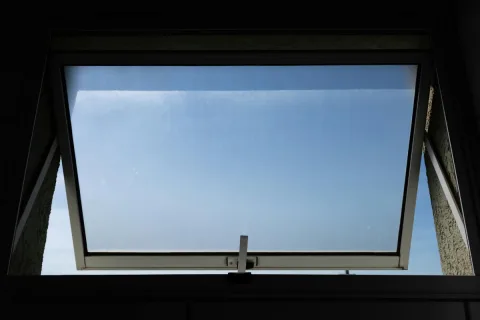
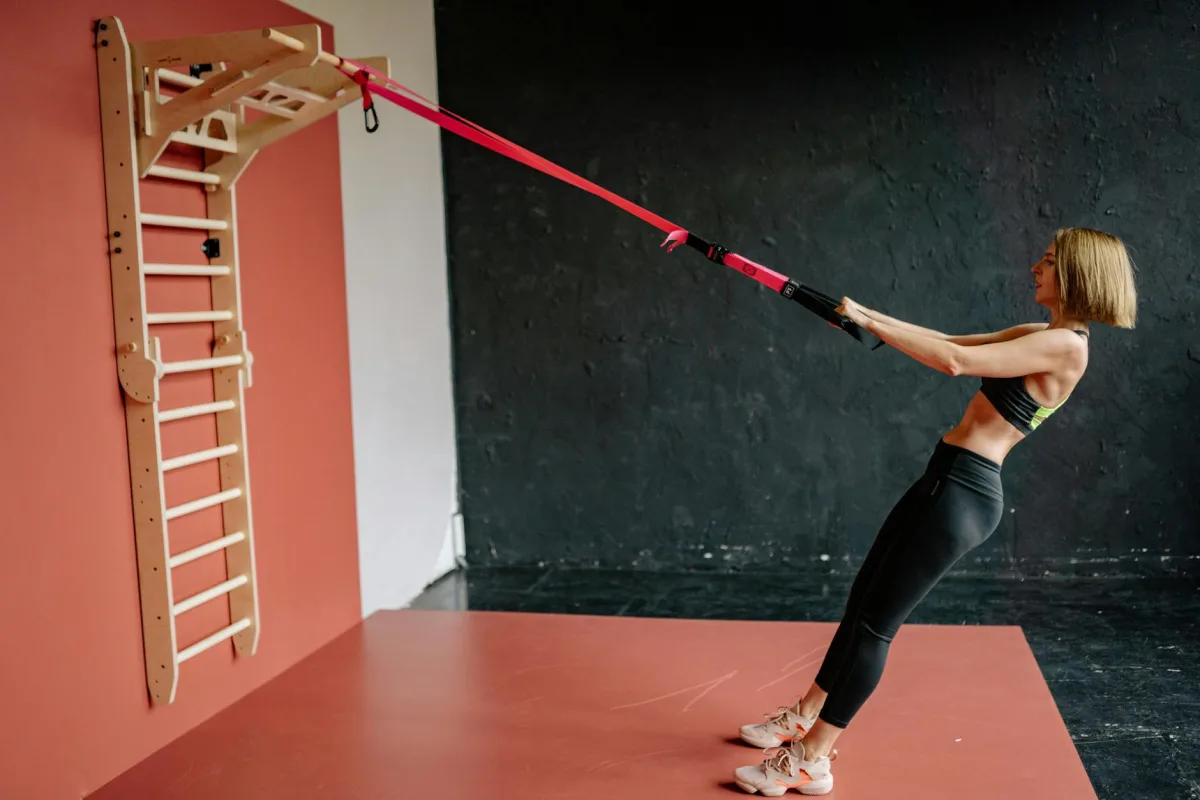
Home gyms have a CO2 problem the dashboard catches reliably. A single adult cycling hard in a closed 20-cubic-meter room (a typical converted bedroom or basement nook) will push CO2 from a 600 ppm starting point to 1,500 ppm in roughly 30 minutes, and to over 2,000 ppm in an hour. Above 1,000 ppm the Allen et al. cognitive-function work documents measurable decreases in decision quality; above 1,500 ppm most people feel the air as stuffy and report worse exertion tolerance. The fix is straightforward: crack a window or run a ventilation fan during the workout, or open the door to a larger room. ASHRAE 62.2 design ventilation rates do not contemplate single-room exercise loads, so you have to add ventilation manually for the duration of the session.
PM and VOC concerns matter at the workout-room level too. New rubber gym mats off-gas for weeks (the VOC index will sit elevated during the first month and the dashboard will show it); used or older mats are nearly silent. Treadmills, elliptical machines, and rowing machines kick up settled dust from the carpet or floor underneath, producing PM10 and PM2.5 spikes during use that did not exist when the room was unoccupied. Vacuum or damp-mop the gym floor weekly and that effect disappears. Run a HEPA purifier in the room during workouts and the residual PM problem clears within 10 to 15 minutes; the airflow doubles as a comfort benefit during the session.
The harder decision is outdoor running or cycling on a high-PM day. The respiratory-rate multiplier cuts both ways: the same outdoor PM2.5 level that a person walking past it would tolerate as a routine background does meaningful damage to a runner inhaling six times the volume. Above an AQI of 100 the recommendation is to move the workout indoors with the windows closed; above 150 most cardiopulmonary specialists recommend skipping the high-intensity session entirely or scaling it down dramatically. Wildfire-smoke events are the clearest example: a 5-kilometre run through 200 µg/m³ smoke delivers a dose that no mitigation short of a fitted N95 (impractical during exercise) will lower. Yoga, meditation, and stretching rooms have a different profile: minimal aerobic load, so CO2 climbs slowly, but practitioners care more about VOC cleanliness and stable humidity in the 40 to 50 percent range. See reducing CO2 indoors for the ventilation tactics and dose and time-weighted exposure for the integral over a typical training week.
This is general guidance, not a substitute for professional assessment of your specific home. Major interventions (HVAC redesign, sealing a leaky envelope, mold remediation, electrical work for fans or venting) should be done with a certified professional. For chronic problems that do not respond to the steps here, see when to call a pro.
References
- WHO Global Air Quality Guidelines (2021) www.who.int
- ASHRAE Standard 62.2 - Residential ventilation www.ashrae.org
- ACSM - Exercise and air quality resources www.acsm.org
- Harvard T.H. Chan - Exercise and air pollution www.hsph.harvard.edu