
PM2.5 means "particulate matter 2.5 micrometers in diameter or smaller": about 1/30th the width of a human hair. The size matters. Anything larger gets caught in nose hair and the upper airway; PM2.5 goes deep into the lungs, and the smallest fractions (PM1.0 and below) cross into the bloodstream.
It is the most strongly health-linked air pollutant we measure. The Lancet Global Burden of Disease attributes millions of annual deaths to ambient PM2.5 exposure: heart disease, stroke, COPD, lung cancer, and increasingly dementia and adverse birth outcomes.
Two different thresholds matter. The U.S. EPA NAAQS annual standard is 9 µg/m³ (tightened in 2024). The WHO 2021 guideline is 5 µg/m³. Indoors, sources include cooking (especially gas and frying), candles, wood smoke, vacuuming without HEPA, and outdoor air drifting in during wildfire smoke or high-traffic conditions.
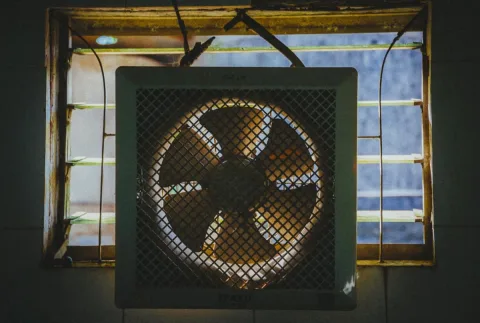
What to do: cooking on the stovetop, run the range hood and crack a window. During wildfire smoke, close everything and run a HEPA box-fan filter. The Terrestream sensor reports PM1.0, PM2.5, PM4.0, and PM10 so you can see whether a spike is fine combustion particles (smaller) or coarse dust (larger).
Terrestream Intelligence · near you
Today's air conditions in Columbus
Situation
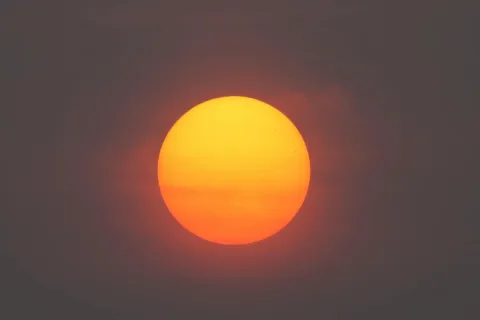
Smoke nearby · example home response
Smoke advisory conditions · AQI 62 · PM2.5 15 µg/m³ · 41° · near Columbus
Outdoor AQI · Open-Meteo · 1 h ago
Outdoor smoke information can prompt a closer look indoors. The sample readings below illustrate a possible particle increase; outdoor data alone cannot confirm smoke inside your home.
- PM2.5 (indoor) 12 µg/m³ Moderate
- CO₂ (indoor) 760 ppm Moderate
Suggested response Now
Closing up and filtration may help
- Consider closing windows
- Consider an air cleaner
Closing windows and doors, using an air cleaner, and limiting indoor particle sources may help reduce incoming and indoor-generated particles. Follow official local guidance.
For health guidance and any stay-indoors or evacuation instructions, follow AirNow and your local authorities.
Illustration: outdoor conditions are real, approximate-area data; indoor readings are modeled, not measured. No device is reporting from your home. Not medical advice.
References
- EPA - National Ambient Air Quality Standards for PM www.epa.gov
- WHO Global Air Quality Guidelines (2021) www.who.int
- EPA - Health & environmental effects of PM www.epa.gov
- Lancet - Global Burden of Disease (PM2.5) doi.org