
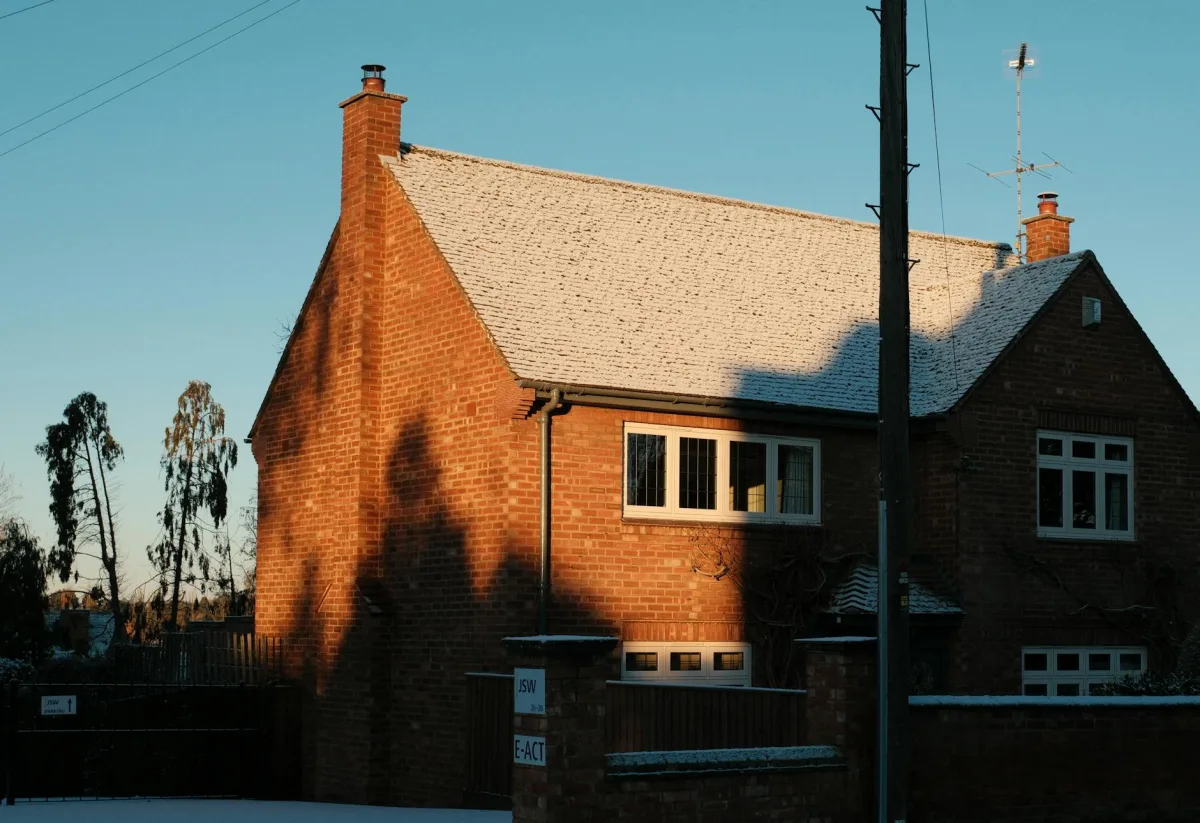
Buildings have a temperature-driven airflow loop called the stack effect, and it sets where pollutants go. In winter, the inside of the building is warmer than the outside, the warm air inside is less dense, it rises through the building, and it exfiltrates through every available leak at the top (attic hatches, can lights, upper-floor window frames). To replace what leaves, cold outside air infiltrates through the bottom (basement rim joists, slab cracks, ground-floor leaks). The "neutral plane" sits somewhere in the middle of the building where pressure inside and outside are equal. In summer with AC running, the loop reverses: the building is cooler than outside, less buoyant, and the flow direction inverts. LBNL's envelope-physics work documents stack-effect pressures in the 5-50 Pa range across typical homes, and NIST treats it as the dominant infiltration driver in cold climates.
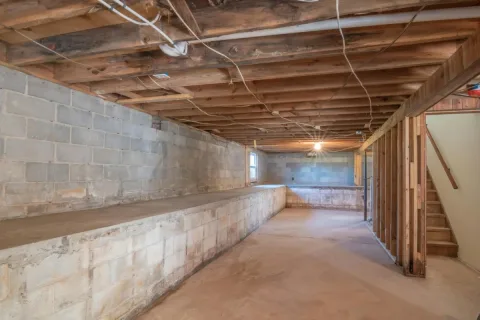
What this means for pollutants. In winter, anything in the basement (radon, stored solvent off-gas, water-heater combustion byproducts, dryer-exhaust spillage) gets pulled up through the building and out the top. The upper-floor bedrooms breathe air that has passed through the basement on the way; the basement is in some sense supplying ventilation air to the rest of the house, just routed through every leaky penetration in between. This is the physical mechanism behind radon being a whole-house problem and not just a basement problem in radon-prone soils, and it is why basement IAQ deserves attention even when occupants never set foot down there.
Pressure differentials from mechanical equipment overlay on the temperature-driven stack. A kitchen exhaust hood pulling 300-600 CFM with no dedicated makeup-air supply puts the entire house into negative pressure relative to outside; air has to come from somewhere, so it comes through every leak in the envelope and (more dangerously) down the flues of atmospheric-vented combustion appliances. This is called backdraft, and a water heater or furnace flue running in reverse delivers combustion products including CO into the building. The classic failure mode is: tight house, big range hood, atmospheric-vent water heater in the basement, occupant cooks, exhaust runs, water heater backdrafts, CO accumulates, code-required CO alarm fires hours later. The fix is sealed-combustion equipment, or a properly-sized makeup-air supply, or a smaller hood. A bath fan creates the same pressure imbalance in miniature; a clothes dryer is a 100-200 CFM exhaust that runs whenever the dryer runs.
Bedroom-at-night and how to measure. Upper-floor bedrooms with closed doors at night sit at the top of the stack with no make-up ventilation path, which is why CO2 climbs to 1,500-2,500 ppm by morning even in a house that is below 600 ppm during the day; the air leaving through the upper leaks is being replaced from below, but only at the rate the door undercut lets through. Cracking the door, adding a transfer grille, or running a bedroom-fed balanced ventilation system (an ERV) all break the symptom. To measure stack and pressure-imbalance quantitatively, a blower-door test puts the building under a controlled 50 Pa pressure and measures the resulting airflow (the ACH50 number); this is the standard diagnostic that energy-rater and building-performance contractors run, typically $300-600. See sealing and air tightness for the envelope side, wind and infiltration for the weather-driven overlay, spot ventilation for the makeup-air conversation, and bedroom overnight for the sleep-CO2 pattern.
This is general guidance, not a substitute for professional assessment of your specific home. Major interventions (HVAC redesign, sealing a leaky envelope, mold remediation, electrical work for fans or venting) should be done with a certified professional. For chronic problems that don't respond to the steps here, see when to call a pro.
References
- ASHRAE Standard 62.2 - Residential ventilation www.ashrae.org
- LBNL - Building envelope publications buildings.lbl.gov
- DOE - Building energy modeling www.energy.gov
- NIST - Building pressure research www.nist.gov