Carbon dioxide indoors
Every exhale adds CO₂ to a room. Rising readings can help you spot when ventilation is falling behind occupancy; they do not diagnose symptoms or concentration problems.

Guides & support
Set up your sensor, connect your home, and make sense of your air.
Tagged: GasesBrowse all guides
1–4 of 4 guides
Every exhale adds CO₂ to a room. Rising readings can help you spot when ventilation is falling behind occupancy; they do not diagnose symptoms or concentration problems.
Volatile organic compounds are the carbon-based gases evaporating off everything: cooking, candles, paint, new furniture. Some are merely annoying. Some are not.
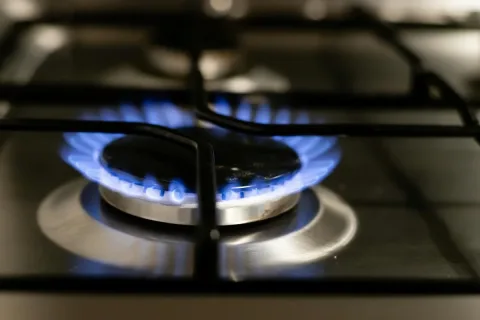
Nitrogen oxides come from combustion. Indoors, the main source is a gas stove. The health link with childhood asthma is robust.
When outdoor ozone or pollen is high, "open a window" stops being good advice.
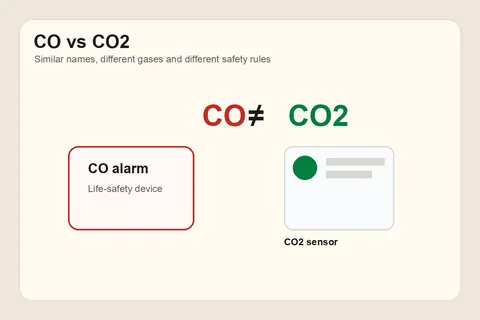
Terrestream measures CO₂ only - it does not measure CO. Use UL-listed CO alarms.
Carbon monoxide and carbon dioxide sound alike and the abbreviations look alike. They are completely different gases. Terrestream measures CO₂ only.
SO₂ comes from burning sulfur-bearing fuels: coal, heavy oil, diesel ships, volcanic activity, and wildfires. The device does not measure it; the dashboard pulls it from Open-Meteo.
Cloudy days produce less outdoor ozone. Sunny days produce more. Ozone forecasts build that in, and Terrestream reads the ozone forecast for your home's location.
Direct radiation, diffuse radiation, shortwave total. The numbers behind outdoor ozone, indoor lux, and the circadian signal all come from the same place.
Search the knowledge base.