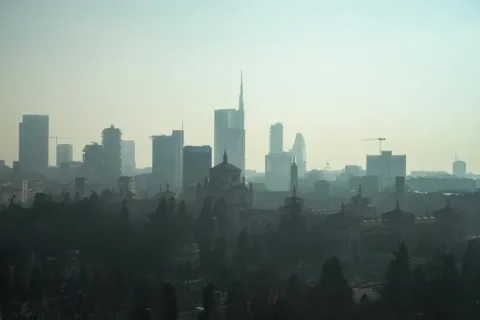

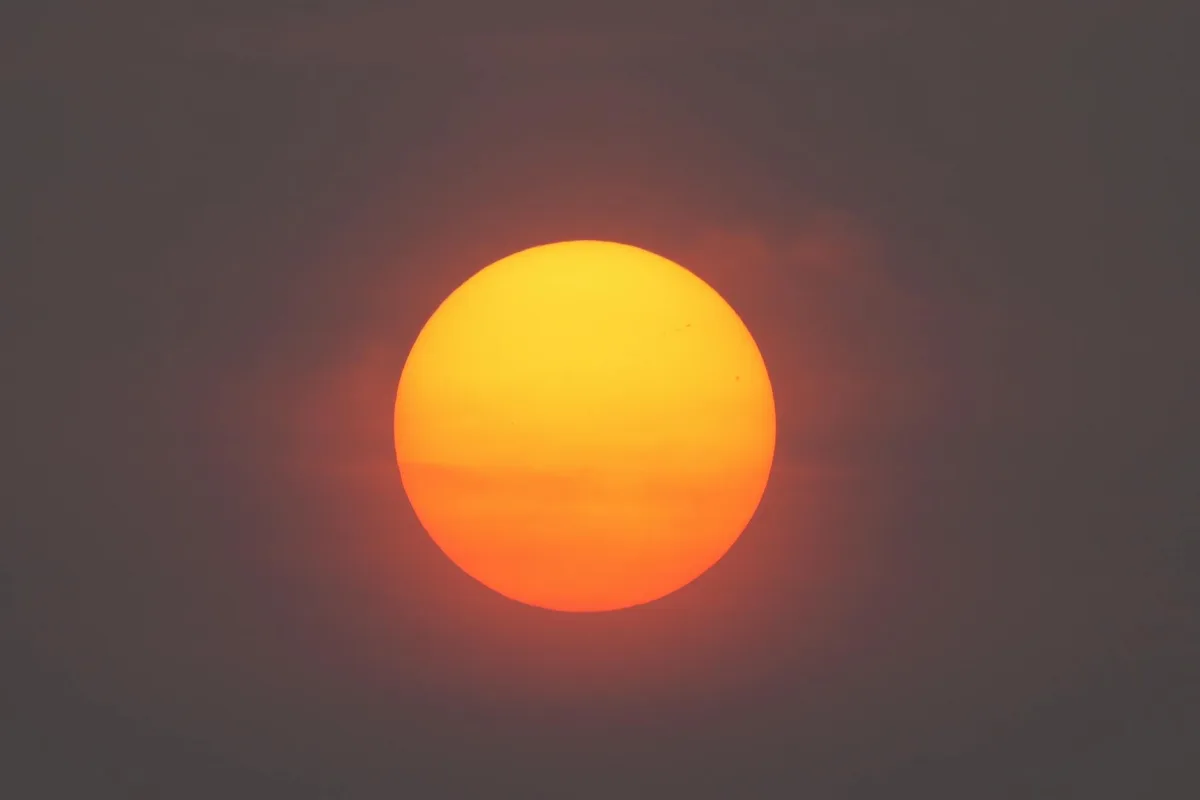
A wildfire-smoke plume is not one thing. It is a mixture of fine and ultrafine particles, vapors, semi-volatile organics, and gas-phase species. By mass, PM2.5 dominates: a heavy smoke day will push outdoor PM2.5 from a background of 10 µg/m³ to 200–500 µg/m³, occasionally higher. The EPA Wildfire Smoke Course is the canonical reference.
On the gas side, smoke carries carbon monoxide (very high near the fire, dilutes quickly downwind), benzene, formaldehyde, acrolein, and a long tail of VOCs the SEN66 will see as a sustained VOC-index elevation. NOx rises moderately. None of those gas-phase species reach acutely toxic levels at the distances most people experience smoke from, but they irritate eyes, nose, and lungs at the levels reported during heavy events.
The correct indoor response is counterintuitive: close everything. Cracking a window on a wildfire-smoke day pulls smoke directly inside. Run a HEPA purifier (or several DIY Corsi-Rosenthal box-fan filters), set HVAC to recirculate, and stay indoors. Terrestream's recommendations will not suggest opening windows while smoke is nearby or outdoor fine particles are elevated.
Recovery: once outdoor PM2.5 drops below 35 µg/m³ for several hours, ventilate to clear residual indoor smoke. Rain is the great ally, see the precipitation article. Wildfire seasons in much of North America now extend May through October; in coastal British Columbia and California, year-round monitoring is becoming routine.
Terrestream Intelligence · near you
Today's air conditions in Columbus
Situation
Smoke nearby · example home response
Smoke advisory conditions · AQI 60 · PM2.5 17 µg/m³ · 49° · near Columbus
Outdoor AQI · Open-Meteo · 20 min ago
Outdoor smoke information can prompt a closer look indoors. The sample readings below illustrate a possible particle increase; outdoor data alone cannot confirm smoke inside your home.
- PM2.5 (indoor) 12 µg/m³ Moderate
- CO₂ (indoor) 760 ppm Moderate
Suggested response Now
Closing up and filtration may help
- Consider closing windows
- Consider an air cleaner
Closing windows and doors, using an air cleaner, and limiting indoor particle sources may help reduce incoming and indoor-generated particles. Follow official local guidance.
For health guidance and any stay-indoors or evacuation instructions, follow AirNow and your local authorities.
Illustration: outdoor conditions are real, approximate-area data; indoor readings are modeled, not measured. No device is reporting from your home. Not medical advice.
References
- EPA - Wildfire smoke course www.epa.gov
- AirNow - Wildfires & smoke www.airnow.gov
- CDC - Wildfire smoke health information www.cdc.gov
- Reid et al. - Critical review of wildfire smoke health effects doi.org