

Most of the IAQ improvement available to a typical household sits in the first $0 to $200 of intervention. Beyond that, the curve flattens and each additional dollar buys progressively less air-quality benefit (a $1,500 HRV is wonderful but the marginal improvement over a $60 box-fan filter is small in absolute terms). The ladder below is ordered by impact per dollar, drawing on AHAM CADR and ASHRAE MERV performance data.
Climb the ladder in order; each rung buys less air-quality benefit per dollar than the one before it.
- $0. Walk-off mat at every entry door (use one you already own). Shoes off inside (catches PM10, allergens, lead dust, pesticide residue at the threshold). Damp-dust hard surfaces weekly instead of feather-dusting (re-suspends nothing). Open windows on opposite sides of the house for ten minutes a day, weather permitting, for cross-ventilation. None of this costs money and together it handles a substantial fraction of PM10, settled VOCs, and CO2.
- $15-30. A MERV-13 furnace filter. Even a single MERV-13 installed in place of the default MERV-8 cuts indoor PM2.5 meaningfully when the HVAC fan runs.
- $60-100. A Corsi-Rosenthal box-fan filter: $25 box fan, four MERV-13 filters, duct tape. Total CADR is in the range of a $300-500 commercial HEPA, the parts are widely available, and you can build it in 15 minutes. This is the single highest impact-per-dollar intervention available for PM2.5.
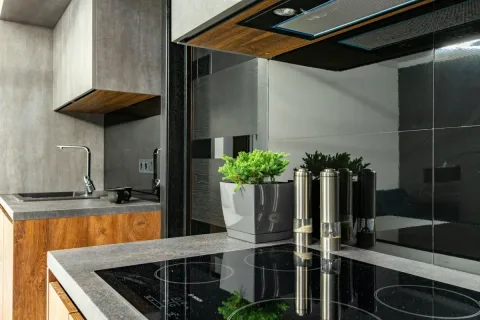
- $150-300. Replace a recirculating range hood with a vented one if your kitchen has gas appliances (used or refurbished is fine; vented to outdoors is the requirement). A used dehumidifier ($50 thrifted, $200 new) for the basement if humidity is the problem. A budget HEPA purifier sized per CADR for the bedroom.
Diminishing returns past $300. The cheap things have been done. Further dollars buy fractional improvements: a smart thermostat with humidity control ($150), a CO2 meter beyond what the dashboard already provides ($100-200), an HRV for whole-house ventilation ($1,500-3,000 installed). All real, all worth doing eventually; none of them deliver the impact-per-dollar of the first three rungs. What does not work cheap: an HRV done partially (don't), DIY UV-C disinfection (skip), or houseplants as filtration (see plants as air purifiers). For envelope work see sealing and air tightness.
References
- AHAM Verifide - Directory of air cleaners ahamverifide.org
- ASHRAE - Standards and guidelines (MERV) www.ashrae.org
- EPA - Indoor air quality basics www.epa.gov
- ENERGY STAR - Heating and cooling maintenance checklist www.energystar.gov