

Asking "is this bad?" about an air-quality reading is incomplete without specifying the time window. The same 20 µg/m³ PM2.5 is a non-event over 5 minutes, a notable indoor evening over 8 hours, and a meaningful long-term exposure over a year. So the first question about any reading is which time scale its parameter lives on.
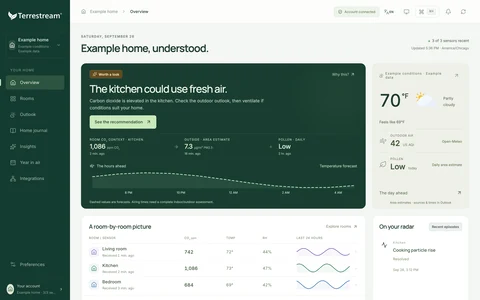
Acute, minutes-scale phenomena: PM2.5 and PM10 spikes from cooking, candles, vacuuming; VOC index bursts from cleaning sprays; NOₓ ramps from a gas burner. These show up and decay within an hour of the source ending. They matter primarily for symptomatic occupants and for setting the recovery-time clock.
Hours-scale phenomena: CO2 accumulation in occupied rooms; humidity buildup after showers; sustained VOC elevation after cleaning or with chronic off-gassing. These live on the time scale of one occupied day and are the primary domain of ventilation engineering.
Days to seasons: mold growth (wet materials can start growing mold within 24 to 48 hours, and indoor humidity that stays above 60% raises the risk); pollen seasons (weeks per species, see pollen species); wildfire smoke events (days to weeks per event); seasonal indoor-air patterns (winter dryness, summer humidity, see seasonal shifts). Years: long-term cumulative exposure to PM2.5 and NO2, which dominates the health-mortality literature. Reading each parameter on its own clock is what turns a number into an answer.
References
- WHO Global Air Quality Guidelines (2021) www.who.int
- EPA - Health & environmental effects of PM www.epa.gov
- EPA - AirNow: AQI Basics www.airnow.gov
- Lancet - Global Burden of Disease (PM2.5) doi.org
- EPA - A brief guide to mold, moisture and your home www.epa.gov