
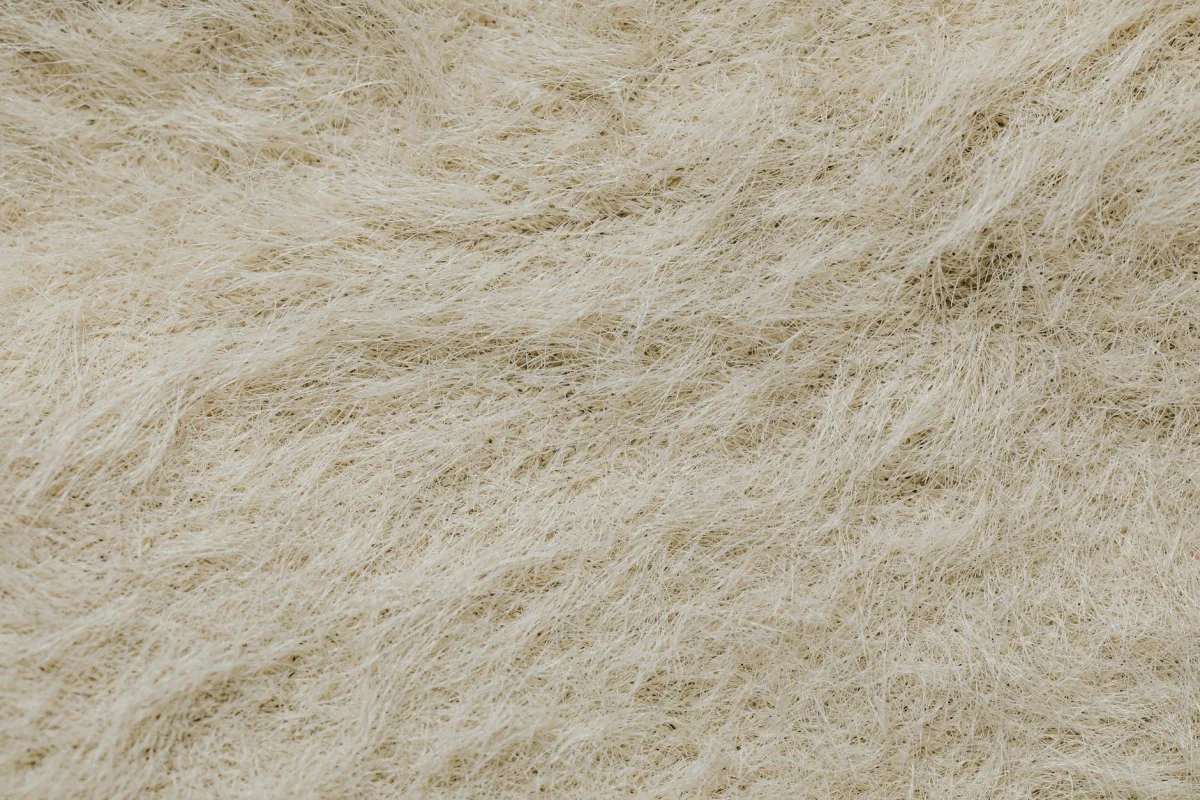
Microplastics are plastic particles smaller than 5 mm, and in indoor air they mostly show up as fibers shed by textiles. A Paris study of indoor and outdoor air found 1 to 60 fibers per cubic meter indoors versus 0.3 to 1.5 outdoors; about two-thirds of the indoor fibers were natural, mostly cellulose, and the rest were synthetic, mainly polypropylene. The fibers also settle into house dust. The researchers note that most are probably too large to inhale, so swallowing dust, especially for young children, may be the more important route.
Most microplastic mass deposits to the floor within minutes of being released, so the inhaled fraction is much smaller than the airborne-at-source count would suggest. The respirable fraction (particles small enough to reach the deep lung) is microplastics under roughly 10 µm, which is the same size range covered by the dashboard's PM10 and PM2.5 channels. Important nuance: the SEN66 measures total particulate mass by size, it does not speciate. A PM2.5 reading of 12 µg/m³ might include some microplastic mass, but the dashboard cannot tell you what fraction. Speciation requires lab analysis (FTIR microscopy, Raman, or pyrolysis-GC-MS), which is not yet available in any consumer device. The dashboard's value here is as a deposition-event detector: if PM10 climbs sharply when you start vacuuming a synthetic carpet or dry-tumble fleece, microplastics are part of what you are seeing.
Health evidence is emerging and incomplete. Microplastic particles have been found in human lung tissue, blood, placenta, and stool in studies summarized by an eBioMedicine review, but human data are still limited and no dose-response relationship has been established for any specific health outcome. The mechanistic concerns are reasonable (foreign-body inflammation, leaching of plasticizers and flame retardants, sorption of other pollutants), and reasonable concern is not the same as established harm. The EPA microplastics research program and NIEHS plastics work are both active; expect the science to firm up over the next few years. In the meantime the precautionary actions are cheap and have other benefits.
What to do if you want to reduce indoor microplastic load. Textiles: natural-fiber clothing (cotton, wool, linen, silk) where practical; cold wash and line-dry synthetics to reduce fiber shedding (tumble-drying is the single highest-shedding step in the laundry cycle); microfiber-catching laundry bags or filters reduce shed into wastewater but do not affect indoor air directly. Floor management: HEPA-filter vacuums (sealed body, not just HEPA bag), damp-dust hard surfaces (a dry duster aerosolizes settled fibers, a damp microfiber traps them), and consider hard flooring over synthetic carpet in high-use rooms. Packaging: glass and metal storage for food and pantry staples, fewer single-use plastics. The same actions that lower microplastic exposure also lower PM2.5 from settled dust generally, see reducing PM2.5 indoors and reducing PM10 indoors. For the related "forever chemicals" question see PFAS in indoor dust.
This is environmental information, not medical advice. The dashboard's readings help you make decisions about the air in your space. They do not diagnose conditions, interpret symptoms, or replace conversations with your physician. If symptoms persist, worsen, or coincide with a known exposure, talk to a healthcare professional. See what Terrestream's advice covers.