PM2.5: the fine stuff
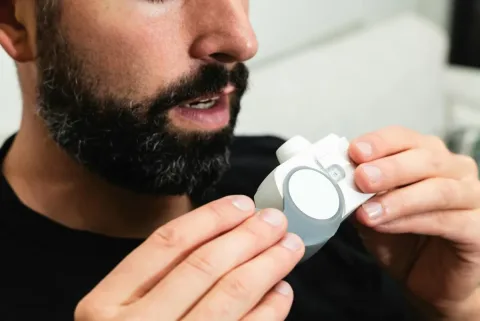
Particles smaller than 2.5 micrometers slip past your nose, lodge deep in the lungs, and cross into the bloodstream. They are the single most-studied air pollutant.

Guides & support
Set up your sensor, connect your home, and make sense of your air.
Tagged: HealthBrowse all guides
1–12 of 27 guides
Particles smaller than 2.5 micrometers slip past your nose, lodge deep in the lungs, and cross into the bloodstream. They are the single most-studied air pollutant.
Below 100 nanometers, particles get small enough to cross from lungs into bloodstream. The SEN66 sees PM₁ but stops there.
A complex aerosol dominated by PM₂.₅, with VOCs, NOx, and dozens of trace species. Indoors, the right response is to seal up and filter, not ventilate.
Terrestream does not detect mold or count spores. It reports temperature, pressure, and relative humidity - conditions that are sometimes associated with mold. Mold can also grow in conditions and places the sensor never sees.
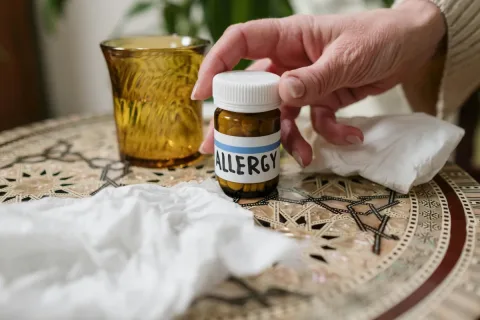
House dust mites need humidity to reproduce and warmth to thrive. The sensor reads both. Allergen is in the air whenever the bed gets disturbed.
Dander is an allergen, not a reading the sensor can identify. Here is what the particle readings can and can't tell you, how to cut exposure at home, and why birds and other pets are more sensitive to indoor air than people.
Kids breathe faster and take in more air for their body weight than adults, spend more time indoors, and have lungs that are still developing.
Asthma is the most common chronic disease in children. Several common indoor triggers leave a trace the sensor can see; others don't.
PM₂.₅ kills more people through hearts than through lungs. The mechanism is systemic inflammation, oxidative stress, and direct arterial effects.
The UV index condenses solar ultraviolet intensity into a 0–11+ scale. Above 6, take precautions. Above 8, every minute counts.
Alder, birch, grass, mugwort, olive, ragweed: European pollen forecasts track each separately, and the seasons are very different. Terrestream's pollen levels come from Google.
Tobacco smoke, cannabis smoke, and vape aerosol all show on the sensor, and their health profiles differ significantly. Here is what each looks like indoors, how it travels, and what helps.
Decisions get worse, errors rise, and absences increase as air quality drops. The literature quantifies it; the dashboard surfaces it.
A cluster of complaints with no single identifiable cause, and easy to confuse with building-related illness and multiple chemical sensitivity. The label has fallen out of fashion; the underlying problems haven't.
Test scores correlate with ventilation rates. Attendance correlates with ventilation rates. The literature is unusually consistent.
A bad afternoon and a bad decade are different problems. Dose, peaks, and several mild elevations at once: what the literature says matters for what.
Cardiovascular sensitivity, frailty, medication interactions, and time indoors all shift with age, so indoor air becomes a bigger share of total exposure.
Mold, dust mites, pet dander, pollen, mold spores. Most household allergen exposure is one of these five. The dashboard groups them as a family.
Chronic obstructive pulmonary disease affects 16 million US adults. PM2.5 sensitivity is higher than asthma, exacerbations are more dangerous, and indoor recovery matters more.
VOC bursts, pressure drops, drowsiness from elevated CO₂ preceding a migraine: the dashboard can document triggers a person knows but cannot prove.
OSA outcomes interact with bedroom-overnight conditions. The right humidity, low dust-mite allergen, and adequate ventilation can improve CPAP comfort and reduce AHI.
Recent research links chronic PM2.5, VOCs, and indoor CO₂ to depression, anxiety, and cognitive performance. The data is suggestive, not yet prescriptive.
Formaldehyde (HCHO) is the most asked-about specific VOC. The Terrestream SEN66 does not measure, report, or detect it - do not use the device to check for formaldehyde. If you suspect it, get a dedicated test or professional advice.
Benzene (C₆H₆) is IARC Group 1, present in vape aerosol, traffic, attached garages, and wildfire smoke. The Terrestream SEN66 does not measure, report, or detect it - do not use the device to check for benzene. Only speciated lab testing can identify it; if you suspect benzene, seek professional testing or advice.
Ground-level ozone is the most consequential summertime air pollutant in much of North America. The sensor cannot detect it directly; the dashboard pulls it from Open-Meteo.
CO₂ does not measure pathogens. But CO₂ and exhaled pathogen droplets share a source (occupants) and a sink (ventilation), so the indoor-to-outdoor CO₂ ratio tracks the fraction of air in the room that other people have already breathed. This is why the Aranet model was widely adopted for ventilation monitoring during the pandemic.
A newborn breathes faster, has smaller airways, and spends almost every hour of every day in the same indoor environment. That makes the nursery's air worth understanding.
Search the knowledge base.